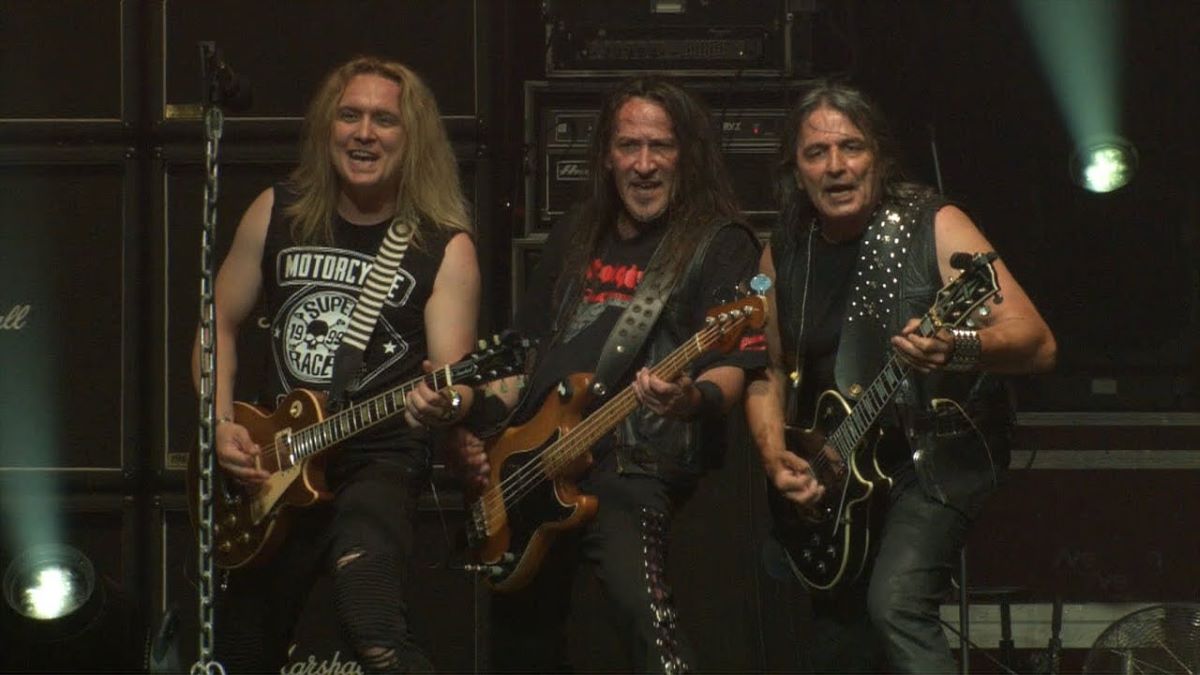
As one of the pioneers of the genre in their native country, Pokolgép has been one of Hungary’s most influential heavy metal bands for over four decades. Not only have they immortalized themselves with a number of classic Hungarian metal records; comparable to Russia’s Aria, many members have started influential bands of their own after leaving Pokolgép, the best-known examples being Omen, Ossian and Kalapács. If that isn’t a sign for a heavy metal institution, I don’t know what is. But although Omen and Kalapács are both great, and former singer Joe Rudán released a number of highly enjoyable solo albums, Pokolgép is still my favorite Hungarian band.
Pokolgép’s early work combines the grinding mid-tempo riffing of Judas Priest and Accept with speedier songs that have more melodic power metal overtones. As the group changed members, and guitarist Gábor Kukovecz would be more clearly established as the band’s main songwriter, Pokolgép’s music would start leaning more towards a more polished power metal sound, though not without its own identity. Big, bombastic backing vocals are an indispensable part of it, as are elaborate, but never overly complicated guitar arrangements, and some of the catchiest riffs in the history of the genre.
One thing that is remarkable about Pokolgép is how consistent their discography is. They never fell victim to desperately trying to keep up with the times, none of their albums feels like they were rushed out to fulfill any contractual obligations, and their quality control is admirable. Even their worst albums are solid, dependable heavy metal. If you like traditional heavy metal, and you come across a Pokolgép album, it’s a fairly safe bet. The band does have albums I hardly ever listen to, however, simply because they have done much better. Let’s start with one of those.

12. Éjszakai Bevetés (1989)
‘Éjszakai Bevetés’ is frustrating. It was the follow-up to one of the highlights of the early European metal scene – spoiler alert – and of course, expecting it to be just as good would be unreasonable. Unfortunately, taking as many steps back als Pokolgép does here does is deserving of criticism. Where ‘Pokoli Színjáték’ enhanced and sophisticated the band’s sound, ‘Éjszakai Bevetés’ simplifies it, and reduces it to its lowest common denominator. It’s not a total throwaway album, and ‘Tépett Madár’ is actually one of my favorite Pokolgép semi-ballads, but you do need a reasonable amount of patience to get there. The consensus among Pokolgéps fanbase seems to be that ‘Éjszakai Bevetés’ is the worst album of their classic line-up. I would argue it’s their worst altogether.
Recommended tracks: ‘Kár Minden Szó’, ‘Tépett Madár’, ‘Éjszzakai Bevetés’

11. Totális Metal (1986)
As far as debut albums go, ‘Totális Metal’ is fairly accomplished. There are some songs on here that would rightfully become classics, and I especially like how developed many of the melodic ideas already are. The more meat-and-potatoes, Accept-inspired mid-tempo stuff on ‘Totális Metal’ just bores me to tears. Most of the reissues come with a handful of demo tracks, of which ‘Sátán’ in particular proves they had better stuff in the vault than some of the songs that did make the album. But credit where credit is due: where many of various countries’ earliest heavy metal bands mainly owe their legendary status to simply being there first, ‘Totális Metal’ has some thoroughly enjoyable traditional heavy metal.
Recommended tracks: ‘Pokolgép’, ‘Mindhalálig Rock and Roll’, ‘A Tűz’
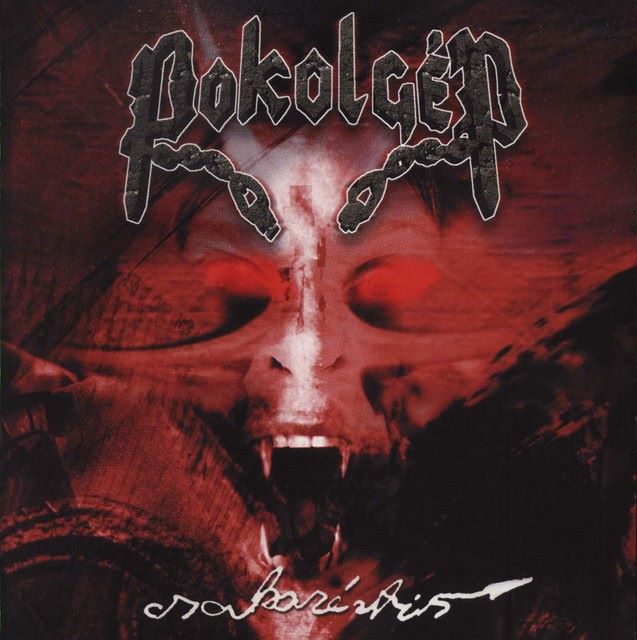
10. Csakazértis (2000)
‘Csakazértis’ is a good, workmanlike early 2000’s heavy metal album that has one major flaw: it is too long for its own good. Nearly an hour of material that doesn’t vary much in the tempo department is just too much. Looking at the individual songs on ‘Csakazértis’, however, nearly all of them are great. Even the ones that start out with fairly standard groovy modern metal riffs eventually develop into something melodically interesting. Bassist Csaba ‘Pinyő’ Pinter, who is still in the band, debuts here, and makes his presence known immediately with some of the best bass parts on any Pokolgép album. Like its follow-up, ‘Csakazértis’ is not quite classic Pokolgép, but it is a respectable album very much worth hearing.
Recommended tracks: ‘Így Kellesz’, ‘Mit Tennél, Ha Látnád’, ‘Szökevény’
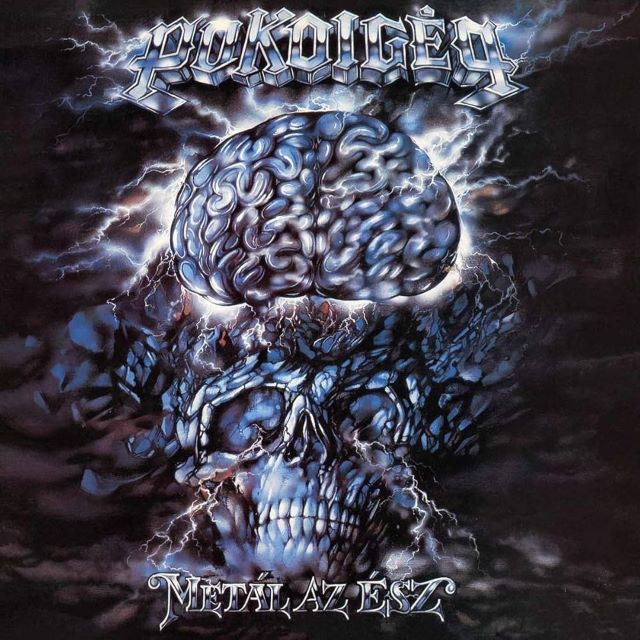
9. Metal az Ész (1990)
No way to go but up after ‘Éjszakai Bevetés’. And fortunately, ‘Metal az Ész’ does just that. The overall tempo is a bit higher, there is a seemingly endlessly larger amount of melodic variety, and there are a few songs on the album that simply are a lot of fun. It does have some sequencing issues, and it would have a much better flow if the momentum of the opening title track wasn’t immediately halted by a mid-tempo track – though admittedly a fairly good one – and a ballad. The latter half of the album is significantly better than the former, and it is quite clear why guitarists Gábor Kukovecz and László Nagyfi had to go their separate ways. But that doesn’t take away that ‘Metal az Ész’ is an enjoyable slab of heavy metal.
Recommended tracks: ‘Indulj!’, ‘Kitaszitott’, ‘Engedj!’

8. Te Sem Vagy Más (2002)
In many ways, ‘Te Sem Vagy Más’ feels like an improved version of what Pokolgép was doing on ‘Csakazértis’. While it’s a similar type of lagely mid-paced turn-of-the-century heavy/power metal, there is more variation, the songs suit Joe Rudán’s fantastic voice better, and the album is about ten minutes shorter. Many veteran heavy metal bands were attempting something roughly like ‘Te Sem Vagy Más’ around the same time, but very few of them as successfully as Pokolgép. The only distracting factor is that the drums sound programmed in a way that I cannot unhear, especially on the slower, bigger-sounding songs. In terms of songwriting, however, ‘Te Sem Vagy Más’ is excellent, and it’s a shame opening track ‘Így Szép az Élet’ became the album’s only live staple.
Recommended tracks: ‘Állítsák Meg a Hintát’, ‘Így Szép az Élet’, ‘Nézz Rám’

7. Pokoli Mesék (2007)
For some reason, ‘Pokoli Mesék’ initially felt like it had a looser rock feel than most Pokolgép albums from its era. But the songwriting is pretty much on par, and just as heavy metal. It must be a production thing; where most post-2000 Pokolgép albums sound bottom-heavy and bombastic, the production on ‘Pokoli Mesék’ is almost painfully trebly. Which is a shame, because there is some downright excellent material on the album. Most of ‘Pokoli Mesék’ feels like a bunch of old friends playing the music they love. It lacks the urgency of its predecessor and the albums that would follow Joe Rudán’s departure, which is ultimately why I rank it lower, but it’s a very good listen all the way through.
Recommended tracks: ‘Halálos Ítélet’, ‘Sajtot Oszt a Róka’, ‘Ordítom a Nevem’

6. Vedd El Ami Jár! (1992)
On ‘Vedd El Ami Jár!’, Pokolgép was bitten by the groove metal bug for the first – and really, only – time. Unlike many of their peers, however, they experimented with slower, heavier riffs without sacrificing any of their melodic sensibilities. Some of the songs would not have been out of place on its fantastic predecessor, and even the most groove-laden songs have some cool melodic moments going on. It would go a bit far to call ‘Vedd El Ami Jár!’ a hidden gem, despite the fact that it is kind of hidden, as it has never been reissued, but I would say that it deserves to be talked about much more than it actually is. The track sequencing – and the album cover – could use some work, but the songs are great.
Recommended tracks: ‘Halálos Tánc’, ‘Szakíts ha Bírsz’, ‘Feltámadt Éj’
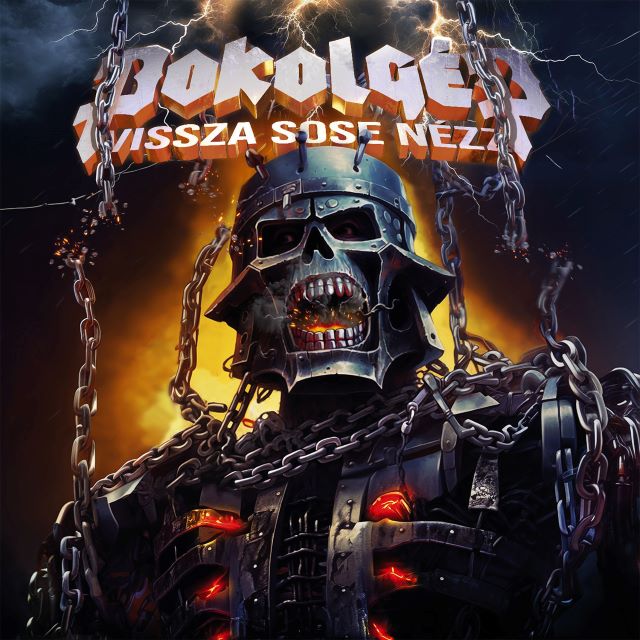
5. Vissza Sose Nézz (2024)
The most difficult part of this Tools for Discovery was deciding in which order to put Pokolgép’s latest album ‘Vissza Sose Nézz‘ and the next two entries, as they are pretty much equally great. Despite being released nearly nine years after its predecessor and featuring a new singer, ‘Vissza Sose Nézz’ picks up right where the band left off. It’s the same type of polished, but somehow still lively power metal, though perhaps slightly less immediate. Newcomer Richárd Bánhegyesi sounds like a mix of Attila Tóth and a young József Kalapács, and the songwriting is nothing short of fantastic. ‘Vissza Sose Nézz’ might be somewhat more of a slow burner, because its highlighs are further into the album than usual for the band, and it’s better than I expected a band of Pokolgép’s vintage to sound.
Recommended tracks: ‘Áldomás’, ‘Ég Veled’, ‘Fogadj El’

4. Metálbomba (2016)
‘Metálbomba‘, or ‘Metalbomb’, depending on which version you’ve got, was the first album with a completely revamped Pokolgép line-up, and it audibly gave them a shot of new energy. While I expected Joe Rudán’s departure to be an issue for me, the cleaner vocal cords of his replacement Attila Tóth are actually a good fit for the super-polished, but still highly energetic power metal sound on ‘Metálbomba’. The youngsters – drummer Márk Kleineisel was born over a decade into Pokolgép’s career – really give the band a solid, reinvigorated foundation to work with. I wish more contemporary European power metal sounded this good. Pokolgép really give a number of German Priest wannabes a run for their money with the excellent melodic elegance in their songwriting.
Recommended tracks: ‘Az Álarc Lehull’, ‘Szemtől Szembe’, ‘Ringben’
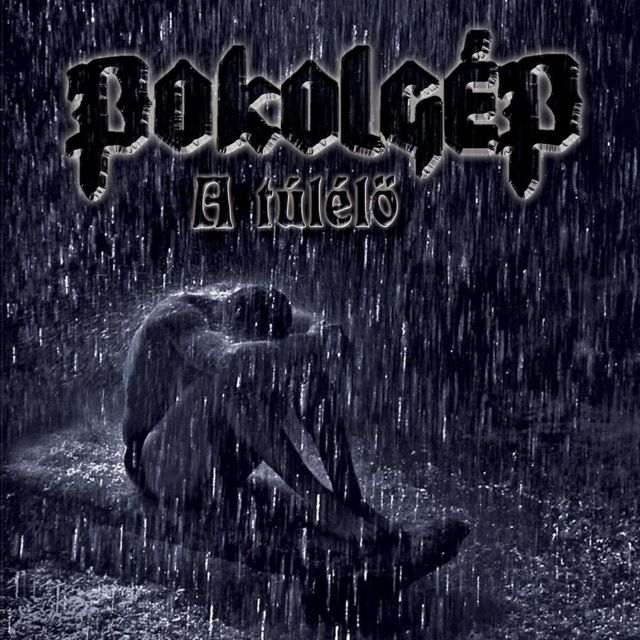
3. A Túlélő (2004)
In a way, the title of ‘A Túlélő’, which translates to “the survivor”, is appropriate. Pokolgép made it through a difficult time for their brand of heavy metal, releasing two decent enough albums in the process, only to come back and release one of their best albums to date. Storming out of the gate with ‘Farkasok Dala’, a highlight among their discography, it is clear that Pokolgép has something to prove, and they do it with style. It’s the dynamic, varied songwriting that makes ‘A Túlélő’ so much better than the average heavy metal release, and the album kind of functions as the blueprint of how Pokolgép would sound from then on: powerful and heavy, but always with a classy melodic top layer. Simply awesome.
Recommended tracks: ‘Farkasok Dala’, ‘Szivedből Tisztán’, ‘A Túlélő’

2. Pokoli Színjáték (1987)
It is difficult to believe that ‘Pokoli Színjáték’ was released only a year after ‘Totális Metal’. Pokolgép’s sophomore album is a massive improvement over their debut in every way imaginable. The speedy songs have become more sophisticated, the mid-tempo stompers have gotten a bit of melodic depth, and the songwriting as a whole was simply taken to a whole new level, to the point where ‘Pokoli Színjáték’ is simply one of the best European heavy metal albums of the era. This is also where Pokolgép got its first prominent power metal injection, and it has remained with them ever since. ‘Pokoli Színjáték’ is as close to flawless as early Pokolgép got, and it is a must-hear for everyone who loves eighties heavy metal.
Recommended tracks: ‘Tökfej’, ‘Vallomás’, ‘Újra Születnék’, ‘Pokoli Színjáték’
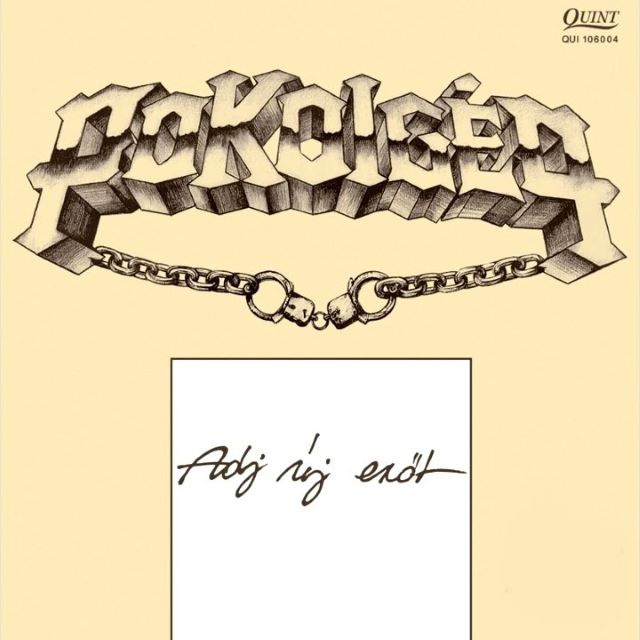
1. Adj Új Erőt (1991)
Losing two key members, one of them effectively the face of the band, could mean a death sentence for any band. Instead, Pokolgép released their greatest album yet. Every song on ‘Adj Új Erőt’ is a 10-out-of-10 song, with the exception of the still fairly decent ballad ‘Nincs Könyörület’. New singer Joe Rudán has a more forceful vocal approach than József Kalapács, and he is still my favorite Pokolgép singer. Also, with the Accept-isms and Priest influences following Kalapács and László Nagyfi to Omen, Gábor Kukovecz suddenly gets free rein to focus entirely on his classier power metal leanings. It has done wonders for ‘Adj Új Erőt’, and the band as a whole. One of the best European heavy metal albums of all time.
Recommended tracks: ‘Ad Új Erőt’, ‘Pokolra Szállsz’, ‘Aki Másképp Él’, ‘A Világot Már Nem Váltom Meg’
Now, all that’s left to do is hope for the rights of Pokolgép’s 1991 to 2001 discography to be sorted out, so that it will be possible to obtain a few of their better works on cd without it costing an arm and a leg.

 Kevy Metal
Leave a reply to Album of the Week 48-2021: Kalapács – Apokalipszis – Kevy Metal Cancel reply