

M.A.S.A.C.R.E, then simply known as Masacre, was one of the first real heavy metal bands in Peru. Their debut album ‘Sin Piedad’ might actually be the first properly recorded metal album in the country. Guitarist and main songwriter Coqui Tramontana talks us through all the highs and lows the band has faced in nearly four decades, as well as his new band that will debut soon.
‘Versos del Inframundo’, M.A.S.A.C.R.E’s most recent studio album, was released in 2016. Since then, the band has continued to play live, but Tramontana is uncertain about the future of the band. “We did our last show in March of last year”, he explains. “With our first singer, El Loco Cervantes. Our official singer Omar Pizarro lives in Spain. It’s very difficult to maintain a band with one guy living on the other side of the world. We’re just waiting for somebody who wants us to play anywhere, but I’m not sure if that is going to happen.
We had a really good period with M.A.S.A.C.R.E around 2000, when ‘Demoledor’ came out. We headlined all the festivals here and played across Peru. In 2006, Omar decided to move to Spain. It’s hard to maintain a band without playing. We’re going to play with M.A.S.A.C.R.E, you can count on that, when Omar comes and the festivals want us. He always comes between November and December. We always play a couple of shows here, and people are satisfied. But that’s it.
M.A.S.A.C.R.E is considered an institution here in Peru. Every time I go to a metal show here, people look at us as if we are legends. But it doesn’t feel like that at all.”
Saving the Music
Even ‘Sin Piedad’, which is more or less unanimously considered an essential Peruvian metal album, had a bit of a troubled release history. While it was recorded in the late eighties, it did not see the light of day in Peru until much later. “It’s a sad story, man”, Tramontana confirms. “We were so hyped, because we had a deal with CBS in Peru. At first, we wanted to release an EP and went to them with four songs. But their manager told us: make it a full album with eight songs. So we paid for new recordings. They did not give us a single penny.
We had to find a way to get the money. We were teenagers at the time. Our parents helped us a little bit, but we had to do a lot of it ourselves. And then we bought the tape. That’s how we saved our music: by buying that Ampex one-inch tape. That was our best investment. After we recorded it, it had been sitting with Miguel and Martín (Tuesta, bassist and guitarist respectively) for fifteen years.”
Because CBS demanded more tracks, ‘Sin Piedad’ was recorded in two sessions. “With two different drummers”, Tramontana nods. “By the time we got to recording the four new songs, our first drummer was in the United States, so he couldn’t make it. We hired Pelo Madueño, who was the drummer for Miki González at the time, a well-known star here in Peru.
Miki González’ manager was our manager as well. He is the one who took us to CBS. That’s how it all started. Miki was a really great guy. And he really loved Masacre. They asked him about new bands he liked in an interview in 1988, and he said that Masacre was his number one. That was really good for us. He was kind of our godfather back then.”

Not Messing Around
Tramontana stood out among teenagers playing hard rock and heavy metal in the early eighties by having a quality guitar and a collection of effects pedals, a rarity amongst Peruvian teenagers at the time. “It was difficult to find anything good”, he says. “We’ve been under military government throughout the seventies, and because of that, there were no imported products, and no commerce from outside Peru. So pedals were a really uncommon thing at the time.
My dad used to work for a shipping company. He had to go to Houston every time there was a problem with the ships. And every time he went, I asked him: I saw this little thing in a magazine, could you please find me this pedal? A Boss distortion – not the black one, the first one (the Boss DS-1) – a chorus, the first phaser, a wah…
When I started playing guitar, my dad had brought me a Peavey T-25. That was a good guitar, made in the USA, but not for the purpose of playing metal. I still have it though. Getting a Gibson Les Paul changed lot. I recorded four songs on ‘Sin Piedad’ with a Gibson Les Paul, and the other four with a Charvel/Jackson Model 4. I switched in between the sessions. If you pay close attention, you can hear the difference in sound.
That’s how we managed to have such a good sound on ‘Sin Piedad’. Also, the album was recorded in a good studio. We were really trying to make the most out of it by making it sound good. Before we went to that studio, we even went into another studio to prepare ourselves for the real studio. We weren’t messing around. Maybe we were the only band from the eighties in Peru that got a whole album recorded that well. It’s really hard to find a metal band from the eighties that has that sound.”
Underground Movement
While Masacre went through various line-up changes, the core of Tramontana, fellow guitarist Martín Tuesta and his bass-playing brother Miguel Tuesta remained intact throughout most of the eighties. “After the military government was gone and we had our first democratic government in the eighties, I met Martín Tuesta in 1983”, Tramontana explains. “There were a couple of bands around at the time. Frágil made an album, they were older than us, but there wasn’t really a movement. We later became part of an underground movement. Not only for the metal scene, but also for punk.
There were a lot of bands that were forming in schools. At the school Martín and Miguel went to, there were two bands that were already quite well-known. One is called Oxido, the first band that played heavy rock like Black Sabbath. And there was another band called G-3, which was a hardcore band. Around the same time, Martín and Miguel were trying to get Masacre off the ground.
A friend from my neighborhood, who lived one block from my house, was in the same class as Martín and Miguel. One day, Miguel came to my house and he brought me a cassette from Oxido. I still have that cassette from 1983. When he showed me that, I thought: I didn’t know there was a band that sounds like Black Sabbath in Peru. I was only listening to my albums that I bought, from Black Sabbath, Ozzy Ozbourne, Maiden… Everybody who was around in the eighties. Oxido had great lead guitar work too, I was impressed.”
The Word Was Spreading
“Two weeks later, Miguel came by again and after messing with my guitar a bit, he told me I had to learn the scales. I said: what the fuck is that? We didn’t have any information. Not a clue. We didn’t have any magazines or anything. Sometimes they played stuff like Maiden on Disco Club on tv, but we couldn’t record it, so we had to remember it. Oh my god, those times…
So he showed me the scales and when I could pull it off, he asked me if I wanted to be in Masacre. Three days later, he brought the worst drum set you could ever imagine and a couple of amplifiers, and we built a stage in my yard. We had only one song that we played about twenty times. After a while, my mother told me: you can’t play here, but we’ve got a little room in the back, you go and play there.
That’s how we got started. I’ve got the recordings of those first rehearsals. We tried for a year to get on stage somewhere, but we couldn’t make it happen. However, everybody started talking about Masacre. The word was spreading. In the meantime, we played every day. That’s how we got so good. Nobody rehearses every day anymore. But we did, for hours, every day.
It was difficult in the beginning, but when we discovered the harmonies like Maiden did – thirds – we expanded our music and started playing those in a lot of our songs. That’s how we slowly developed our own sound. We listened to a lot of Queensrÿche, Maiden, Dio, Sabbath, Judas Priest, Metallica… Everything. So we kind of got a little foundation based on that. And then we just played a lot.”
Demon
For a time in the mid-eighties, Masacre briefly broke up because the Tuesta brothers were planning on growing the band elsewhere. “Martín and Miguel went to Spain and wanted to continue Masacre there”, Tramontana explains. “At that time, I didn’t believe that we could make it. So I stepped down and they went to Europe.
When they came back, they started a new band: Sacra. I had a band called Grael myself at the time. And in the middle of that, I reached out to the Tuesta brothers again and said: let’s start Masacre again. The other guys hate me for that to this day. They hate me because I took El Loco Cervantes from Almas Inmortales, and Miguel and Martín from Sacra. So I disbanded two bands to have Masacre back again. I’m a demon, man, I tear a lot of bands apart, haha!”
Another Life
Eventually, Masacre split up before ‘Sin Piedad’ was even released. The Tuesta brothers moved to Venezuela, while Tramontana lived in Seattle for a while in the early nineties, seeing all the bands from the grunge scene before their breakthoughs in small bars. Masacre did eventually reform, but without Tramontana, who did not play on the 1999 live album ‘En Vivo Hasta el Final’ and the 2001 studio album ‘Demoledor’.
“When they called me – I think it was in 1997 – I was living another life, working for my family business”, says Tramontana. “I didn’t have much interest in playing metal at the time, since I was mostly immersed in blues or grunge. I’m not only a metal guy; I’ve always liked all kinds of music.
Miguel was struggling with cancer by the end of the nineties. They even told him at some point that he only had a few weeks left to live. But a miracle happened. He’s okay now, and it never came back. One day, he came to my house and told me: Martín is leaving the band to go to the United States and I have nobody else to play with, so I want you to join the band again.
By that time, I heard the new music from ‘Demoledor’. It sounded really good. That was also the first time I heard Omar, who was amazing. He’s amazing on stage too. He’s a savage. He has a personality I haven’t seen in anybody else here. He’s a monster.
‘Sin Piedad’ was written by Miguel and me. When I occupied Martín’s place, I kind of started to take M.A.S.A.C.R.E back, little by little. Then we decided to work with Germán Villacorta for ‘En Pie de Guerra’ (2004), but after that, we couldn’t play much. There were a lot of expectations because we were going to make our international debut at Milwaukee Metal Fest. Then they didn’t give a visa to Omar. That was really like a flat tire.”
Machinery
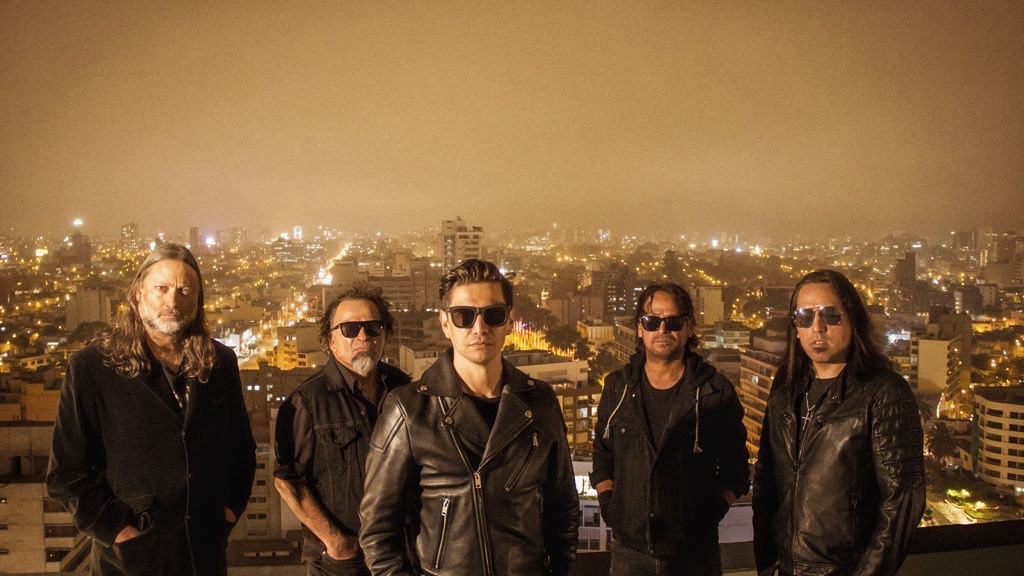
While M.A.S.A.C.R.E is on hold, Tramontana and Martín Tuesta are working on a brand new band. “Martín has been my pal since we were sixteen years old, and now we are making music”, he explains. “We will have our live debut in March, opening for one of the bigger pop bands in Peru, Mar de Copas. So I hope I can get into metal again, play some gigs and try to play at some festivals.
The name of the band is Black Mode. It’s Black Sabbath meets Depeche Mode. It’s metal, but it’s groovy. Our singer has kind of a grungy voice, but the guitars are metal. But we are not a virtuoso band. The band consists of Martín and me, and a really good singer called Diego Taboada, who is from a well-known band here in Peru called …Por Hablar. The drummer is Iván Sotomayor, and the bassist is called Picote. Picote used to be a roadie when I had just rejoined M.A.S.A.C.R.E in 2000. He was just a little kid back then, and now he plays with me, haha!
We are going to kick ass. I don’t want to sound goofy, but we are talented. We know how to make songs. The thing with M.A.S.A.C.R.E is that we couldn’t make the machinery go because the band was incomplete. But now I’ve got a band that is so solid. I’m thrilled, man. It’s metal to the core.”
Joining Forces
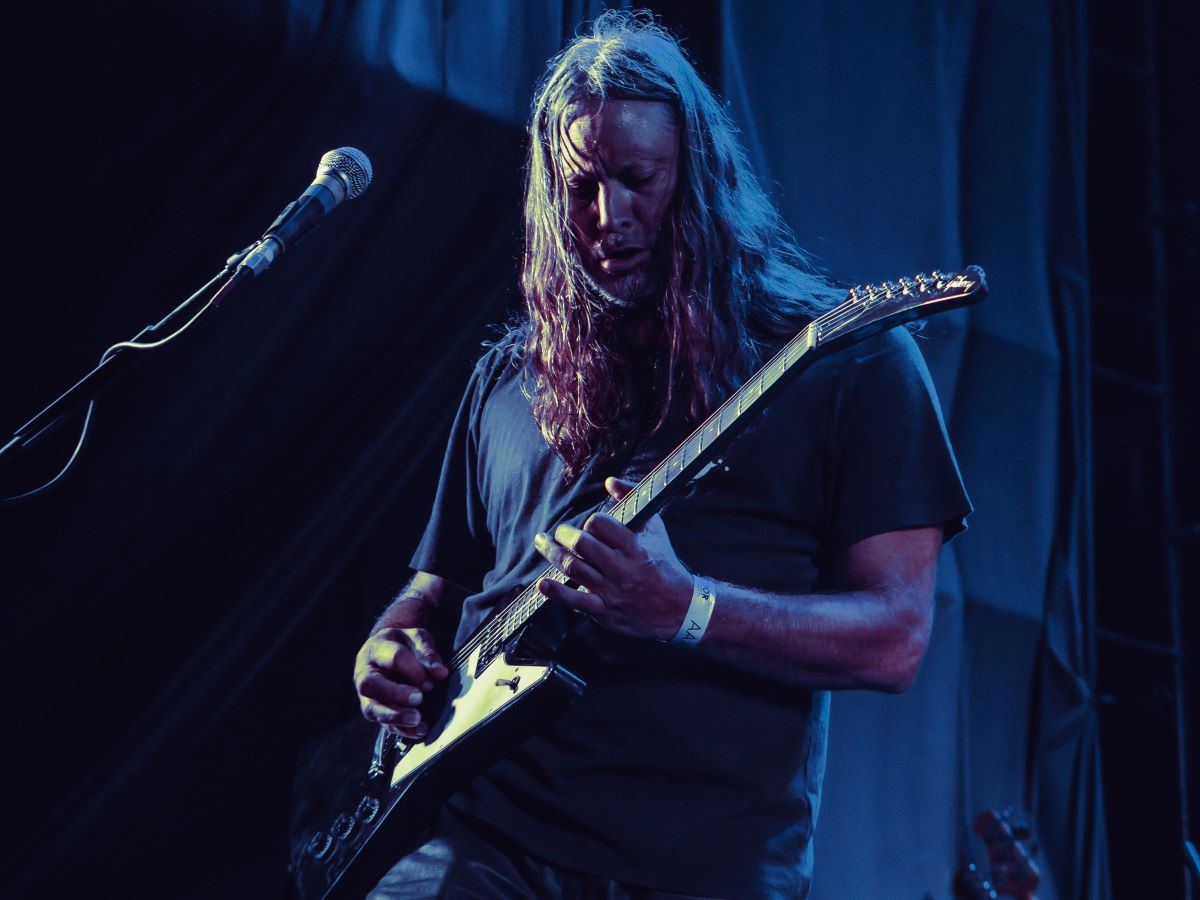
“For me, it’s something really big to be playing with Martín again right now. That’s the first guy I played guitar with. He taught me many things. It’s great to be joining forces with him again. It’s been a while. I got really emotional when Omar got back with M.A.S.A.C.R.E, I thought we were going to tour Europe and start playing with him there. But he plays with a big orchestra in Spain. He has 180 to 200 shows a year. That’s why I’m focusing on my new project right now.
This time, I have a joy that I haven’t had in years, doing these new songs that come from the gut, playing and composing with Martín. I used to compose with Miguel. When someone came up with an idea for Masacre, I often said: that doesn’t sound like Masacre. So I ended up doing almost everything. Now I am much more open to different things than in Masacre. That is why Black Mode sounds so different. Because Martín is approaching it with new rhythms and new material, totally different from what I explored before.”
Special thanks to Adrián Del Aguila for his help setting up this interview!

 Kevy Metal
Leave a reply to Album of the Week 01-2024: Masacre – Sin Piedad – Kevy Metal Cancel reply