
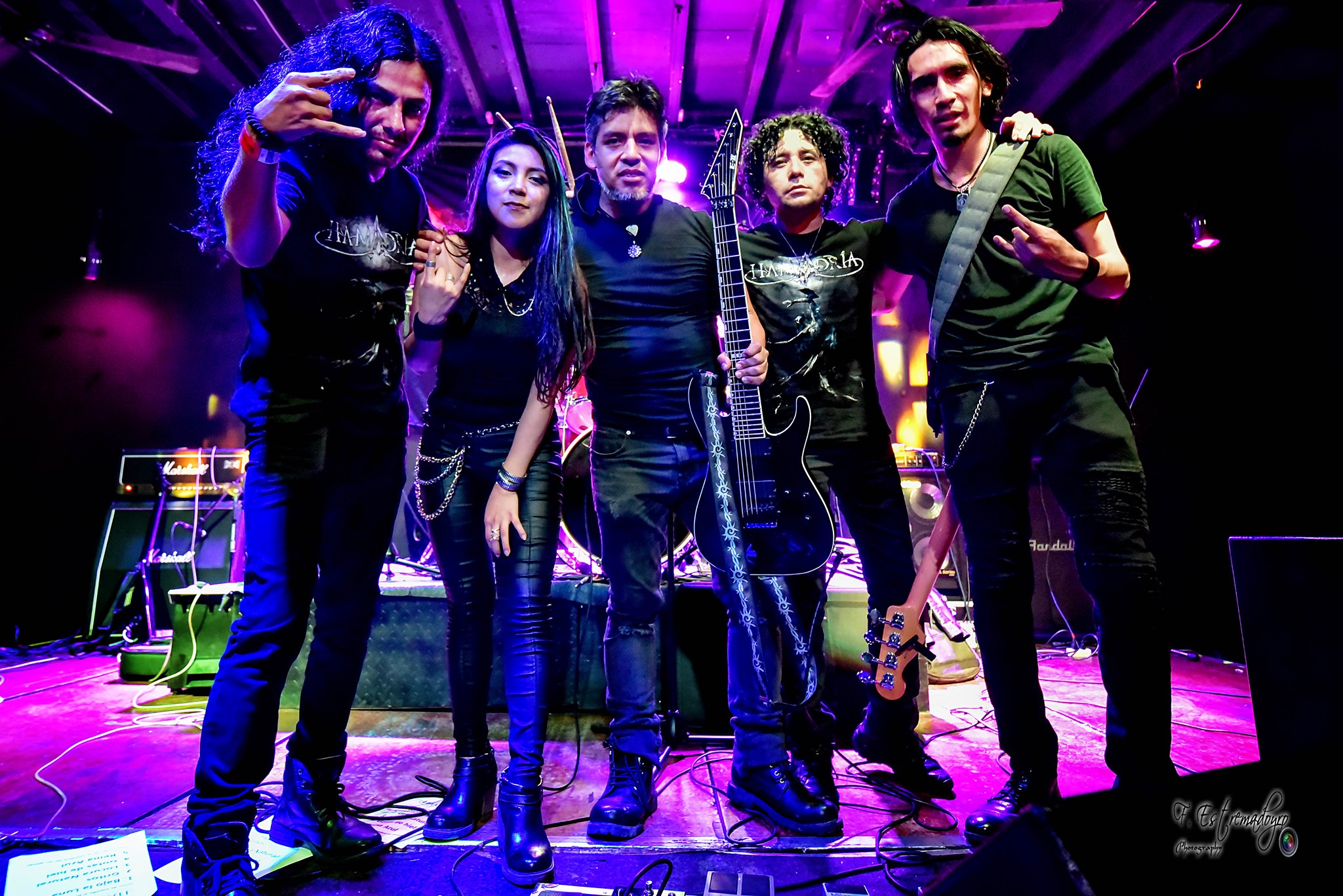
With their impeccable symphonic arrangements and exceptionally strong melodies, Hamadría is one of the brightest hidden gems of the international power metal scene. Their music was also arguably the catalyst for Peruvian Metal Month, so it is only natural to have an interview with drummer, lyricist and band leader Héctor Ilizarbe kick off the month.
My personal interest in Hamadría was reawakened by the digital EP turned full-length CD ‘Sesión de Estudio’, which serves as an introduction to the incredible vocals of Ingrid Castro, who joined the band shortly after the release of ‘Reina Azul’ in 2018. “The ‘Sesión de Estudio’ album was actually born out of coincidence”, Ilizarbe says. “We wanted to record a couple of videos with Ingrid’s voice in a live session. The record label Cuero Negro and Sonidos Latentes suggested releasing the audio as ‘Sesión de Estudio’. We thought it was a great idea.”
A large portion of the material on ‘Reina Azul’ and ‘Sesión de Estudio’ has been around since the earliest days of Hamadría. “The songs on both albums have been composed over the fifteen years since the band first started”, Ilizarbe nods. “Some songs have remained largely untouched through the years, others have gone through a significant evolution, particularly by improving the arrangements and the lyrics. For example, the composition of the song ‘Gritos’ has taken many years and we did not finish the definitive version until a few months before we started recording ‘Reina Azul’. Another example is ‘Locura Natural’, which we wrote for ‘Reina Azul’, but had been developing for years.
It took us a couple of years to learn how we could use technology to our advantage. As musicians, we learn something new every day and we are much more aware of what we want to do with each song and how we have to correct any errors we may come across. We have learned a lot about the technical side of our instruments and what we can do to our songs on a productional level. In short: we are constantly trying to professionalize our workflow as a band. Since 2018, we have become a lot more certain about how we want to sound, on our albums as well as live.”
Sincere
“The initial musical idea for Hamadría came from guitarist Cristian Gamboa, with lyrics that I had written. We have later arranged the songs with our other guitarist Miguel Cantuta. The three of us have been friends and partners since 2004, which is why we founded Hamadría in 2006. Through the years, the other members have taken part in the vocal and bass arrangements as well. Ingrid has an interesting vocal power and stage presence, while Eduardo Pinto is a powerful bassist who is able to make the band feel at ease on a personal level.
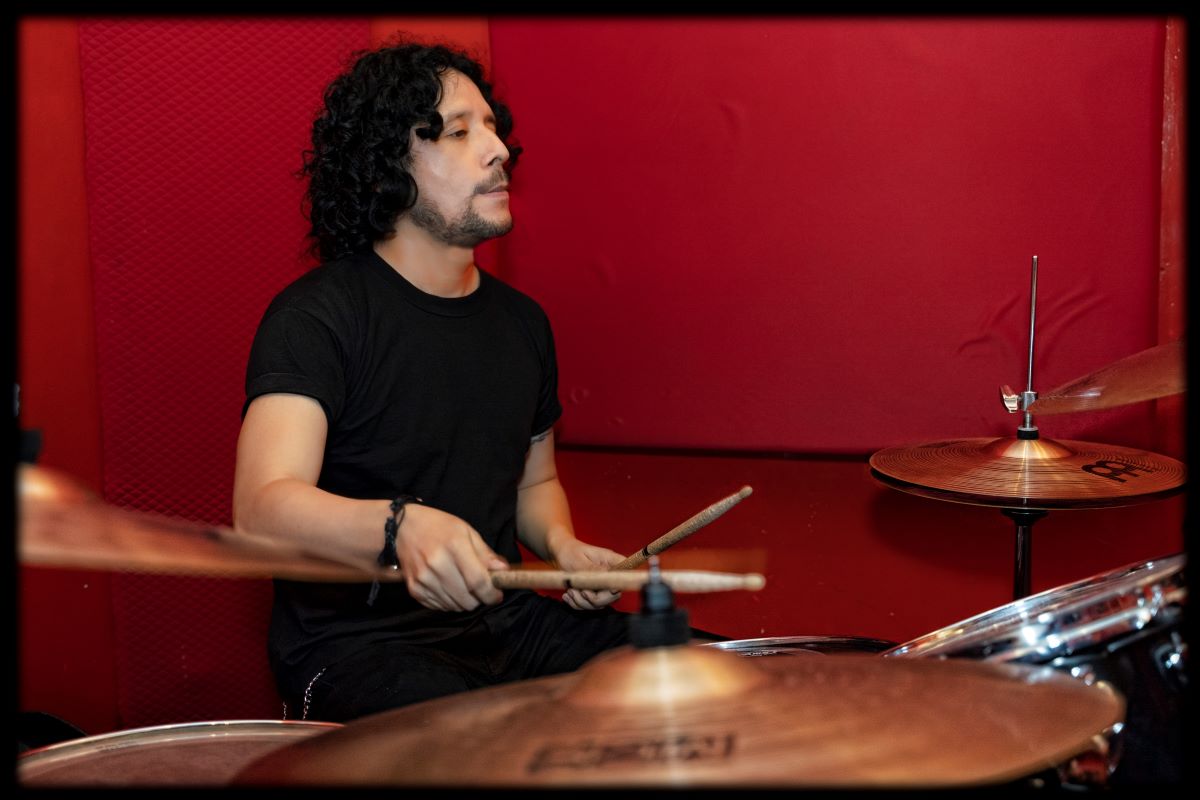
My lyrics are about the difficult moments in life, about the wounds of life. I am a melancholic person and as such, I like writing about heartbreak and sadness, but always with a glimmer of hope. Spanish is the language in which I have learned to love, hate, laugh, write and dream. The language also has amazing grammar. A lot of words more or less mean the same, which allows me to play with them. I also have the feeling I can be more sincere in my native language.”
For the ideas that don’t fit Hamadría, Ilizarbe has his own project: “I have a project named HF in which I play the songs we can’t use for Hamadría. It really depends on whether the other members of Hamadría will accept the songs. I always show my compositions to the other members. If they like it, we play it with the band. If they don’t, I will use it for my own project. Hamadría will always be my priority.”
Evolution
With the core of Ilizarbe and the two guitarists now being in their mid-forties, they came of age during a period of extreme economic turmoil in the early nineties. “It was very difficult for the band members to buy instruments in deed, because we are all from low-income families”, the drummer nods. “Because of this, each of us had to fight twice as hard to obtain our instruments. We have gained a special sensitivity to melancholy and suffering as a result. But because of our continued effort, we fortunately have everything we need to carry on making music these days.”
The hardships seem to have made Ilizarbe extra grateful for the chances the Peruvian metal scene offers them today. “The Peruvian scene is at its best at the moment”, he asserts. “There are very good bands, good album productions and first-class events. Ever since we started as a band, we have experienced a positive evolution of Peruvian metal. The bands are consistently getting more professional, and the scene in general is growing, despite limited support from the media.
We can play concerts in many different places; from bars that can hold up to 100 people to venues that can hold about 3000. It really depends on the type of event. Festivals with multi-band bills are able to have a large capacity, but we are also able to play almost intimate concerts at tiny bars. Everything is centralized in Lima, however. The difference is already evident in the number of concerts organized. There are national and international concerts in Lima just about every week, while that only happens about once a month in the rest of Peru.”
Healthy
Another change that has affected Hamadría directly is the fact that metal bands with female singers have become far more common. “When we started in 2006, there were hardly any bands with female singers in Peru”, Ilizarbe confirms. “These days, there are bands like NMK, Strogena, Crownless, Vulture, Contracara, Natthammer… The Peruvian scene is very healthy that way these days.”
That does not mean the scene is devoid of criticism for the drummer: “I would like the preference for only a limited group of bands to end. Especially when international artists come to play in Peru. There is some sort of ‘I only invite my friend’s bands’ thing going on. No one does any research into what type of band would get a bigger audience, or which band is currently getting more attention from the public.”
The rest of Latin America is starting to discover Hamadría as well. “We recently went to Bolivia and the reception was amazing”, Ilizarbe enthuses. “They treated us very well and we are planning to go back there. Our idea is to make the trek and also hit other Latin American countries, even as far as Mexico.”
And what does the future have in store? “We are currently in the composition phase of new material and plan to release some of it in 2024”, says Ilizarbe. “At least two singles. These songs have the essence of Hamadría. Our idea is to experiment a bit with some current keyboard or synthesizer sounds, but always with a touch of power metal and a lot of melodic metal.”

 Kevy Metal
Leave a reply to Album of the Week 34-2023: Hamadría – Sesión de Estudio | Kevy Metal Cancel reply