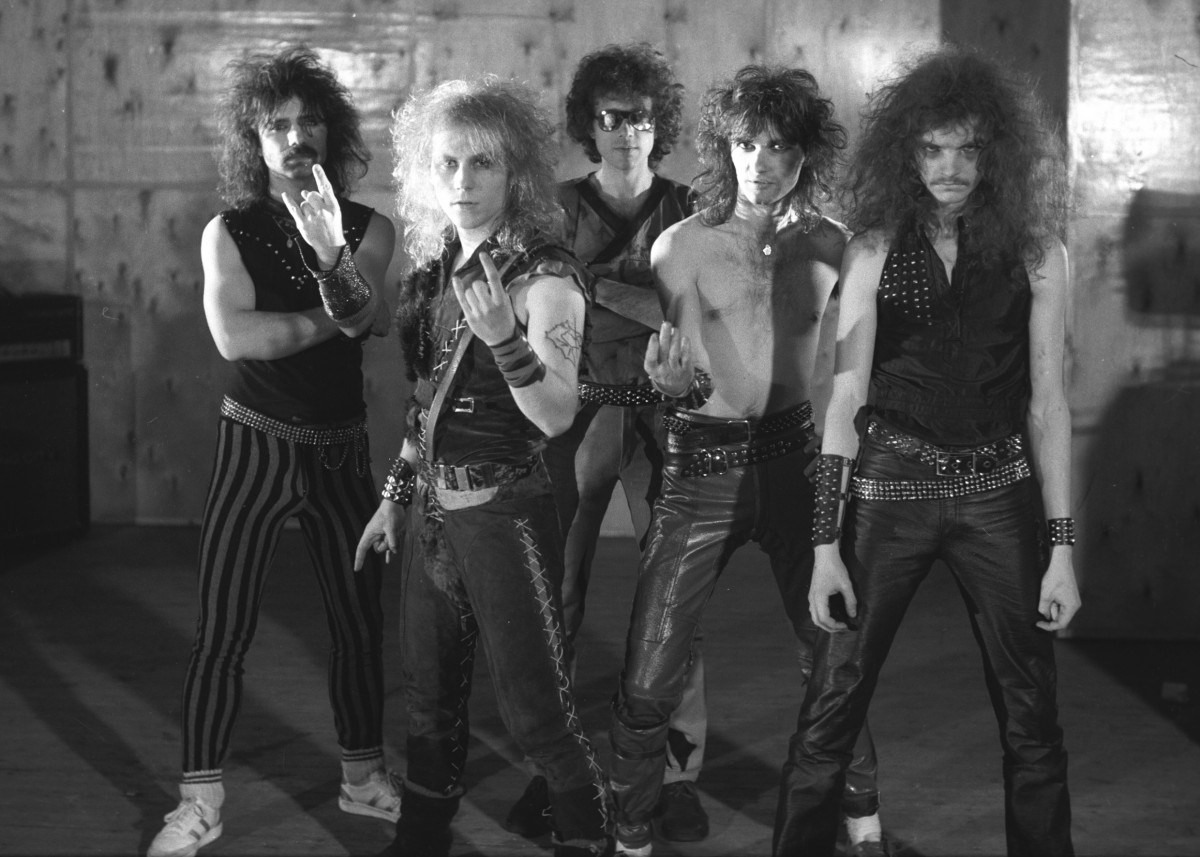
One of the most idiosyncratic metal bands of their era, Kat has a fairly unique sound that despite their wide-reaching influence – especially in their native country of Poland – has never quite been imitated. Conventional wisdom will state that Kat plays a blend of heavy metal and thrash metal, and while that description is not entirely inaccurate, it also understates just how dark, unpredictable and creative the band’s sound is on their best albums. The occult lyrical approach of late original singer Roman Kostrzewski and the overall ominous atmosphere make Kat beloved in black metal circles as well.
The earliest Kat material has a distinct NWOBHM vibe, comparable to how Venom would have sounded if they were better musicians at the time. Shortly after, their riff work transformed into something that would fit the cleverer end of the thrash metal spectrum, though with highly unpredictable compositions that somehow always are quite easy to follow. Doom metal and avant-garde influences snuck in throughout the nineties, and the band apparently released enough ballads to release a compilation of them in 1993. Don’t expect sweet love songs though; Kat’s ballads are generally dark and unsettling, though fairly emotional.
Around twenty years ago, Kat effectively split in two, with guitarist Piotr Luczyk and bassist Krzysztof Oset – who has since left – keeping the band name, and Kostrzewski forming Kat & Roman Kostrzewski with drummer Ireneusz Loth. I have decided to include releases from both outfits in the list, as they are likely to appeal to a similar audience. One thing to keep in mind is that due to Kat’s consistent high-quality output, the lower-ranking albums are generally better than they usually are in Tools for Discovery rankings.
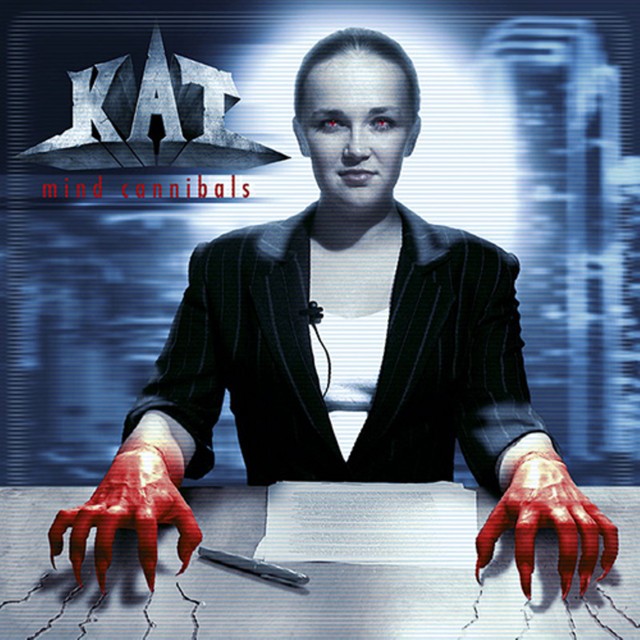
9. Mind Cannibals (2005)
Kat’s first album with English lyrics, but that isn’t why it ranks so low. While most of the riffs are still immediately recognizable as the work of Luczyk, Kat sounds like they decided to sound like a dumb American early 2000’s post-thrash band here. I feel bad for singer Henry Beck, as the semi-ballad ‘Dark Hole / The Habitat of Gods’ and the closing ballad ‘I’ve Been Waiting’ clearly show that he has a great voice, but he is most often heard being forced to sound like someone he is not here – that someone occasionally being Roman Kostrzewski, but Phil Anselmo as well. What’s frustrating is that occasional glimpses of Kat’s former brilliance can still be found on ‘Mind Cannibals’. There are just far too little of them to recommend the album.
Recommended tracks: ‘Puppet on the Strings’, ‘Uninvited Guest’, ‘Dark Hole / The Habitat of Gods’
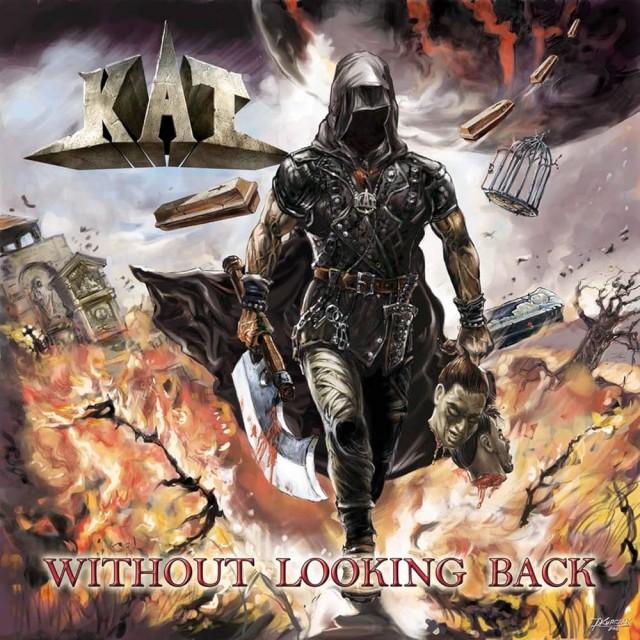
8. Without Looking Back (2019)
‘Without Looking Back’ is considerably better than ‘Mind Cannibals’, though not all longtime Kat fans will agree, because it also sounds even less like classic Kat. Instead, ‘Without Looking Back’ largely focuses on a surprisingly melodic old school heavy metal sound, just with a thick, crunchy bottom end in its modern production style, and the raspy, but still quite melodic voice of Qbek Weigel lending the music a bit of an edge. The more aggressive moments bring Japanese melodic thrashers Volcano to mind, partly because Weigel’s vocal approach is quite similar to Nov’s. ‘Without Looking Back’ may have been received better if it wasn’t released under the Kat moniker; while it lacks that special atmosphere of Kat’s best work, it’s quite an enjoyable album. It has no business being over an hour long, though.
Recommended tracks: ‘More’, ‘The Race for Life’, ‘Walls of Whispers’
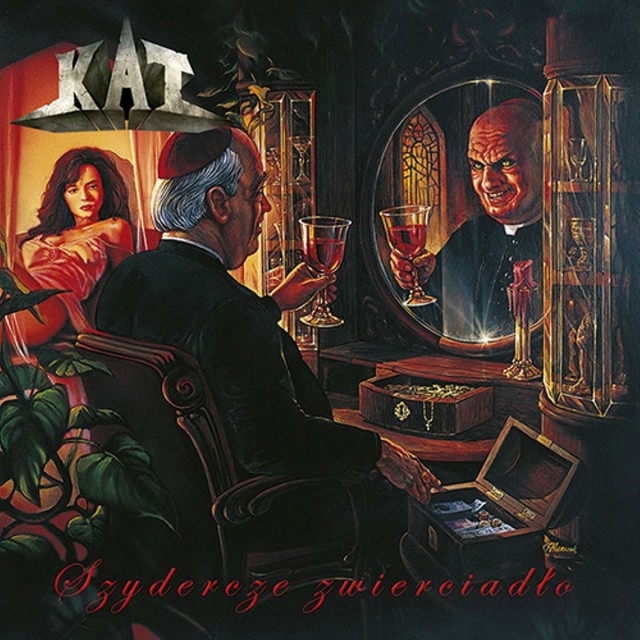
7. Szydercze Zwierciadło (1997)
Stylistically, the final album of the classic Kat line-up is fairly similar to the doomy thrash metal – or vice versa – of its predecessor, but it isn’t quite as crazy. That is ultimately why I enjoy it less. ‘Szydercze Zwierciadło’ is full of great music, but without all the idiocyncracies constantly demanding my attention, I often notice myself zoning out a little around the middle of the album. Not that the music isn’t good there. In fact, there are lots of really cool Black Sabbath-esque grooves that sound quite a bit more inspired than what most groove metal bands were doing at the time. As a whole, however, ‘Szydercze Zwierciadło’ is very frontloaded. Given that many of Kat’s peers were just embarrassing themselves around the same time, that’s not too bad a result.
Recommended tracks: ‘Cmok-Cmok, Mlask-Mlask’, ‘Łoże Wspólne Lecz Przytulne’, ‘Tak Mi Chce Samotność’
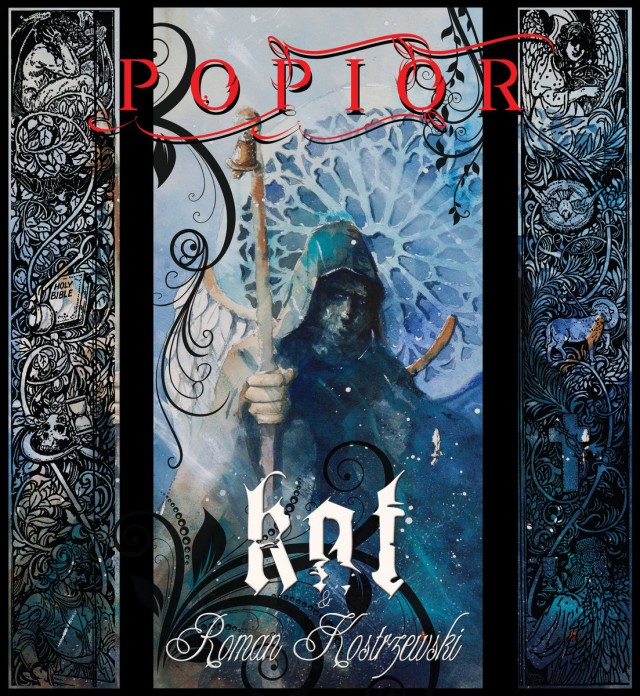
6. Popiór (2019)
The final album Roman Kostrzewski released with his version of Kat before his death in 2022 isn’t quite as oppressively dark as its predecessor, but it is another impressive work of ominous, hard-to-describe metal. Overall, the album is a bit more riff-focused and thrashy than ‘Biało-Czarna’ – and the riffs in question are generally exceptional – but it’s still this brand of thrash-doom that Kostrzewski has been infatuated with for over twenty years at that point, and for a good reason. Despite the overall subdued tempo, the songs are very dynamic, and the riffs hit really hard, while the surprisingly melodic guitar leads do a lot to enhance the atmosphere. ‘Popiór’ is a tad short, but a fitting farewell to a Polish metal legend.
Recommended tracks: ‘Baba Zakonna’, ‘Dali na Msze’, ‘Głowy w Doł Spuszczone’
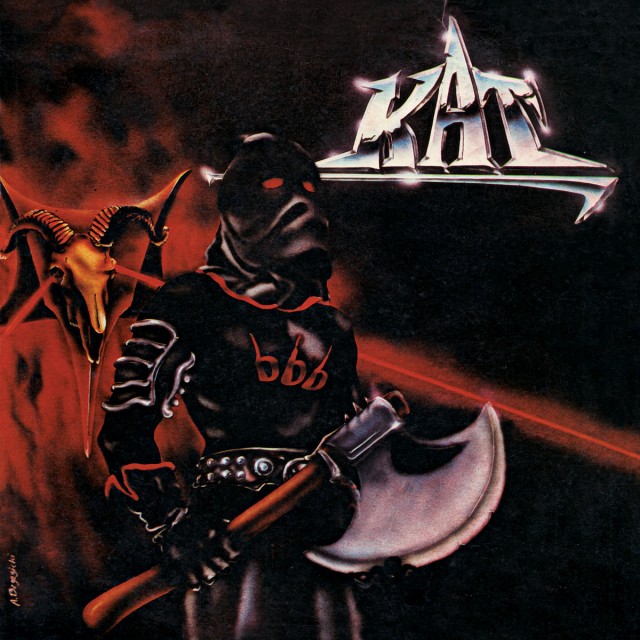
5. 666 (1985)
While the English-language version ‘Metal and Hell’ was released first, the Polish version was recorded first, and that’s how the songs clearly were written. Kat’s debut album is a great work of relatively dark NWOBHM-styled metal, which is only hampered by the fact that the songs that already hint at greater ambitions tower over the more conventional heavy metal songs, which are generally great in their own right, just not as distinctive. ‘666’ is the Kat album with the most pronounced Venom influences, but while the inspiration is obvious, Kat is a great deal more adventurous, and the guitar work by Piotr Luczyk and Wojciech Mrowiec is somewhat more melodic than a Venom reference may imply. For many bands, this would have been a high water mark, but Kat got even better later on.
Recommended tracks: ‘Wyrocznia’, ‘Morderca’, ‘Diabelski Dom Cz. I’
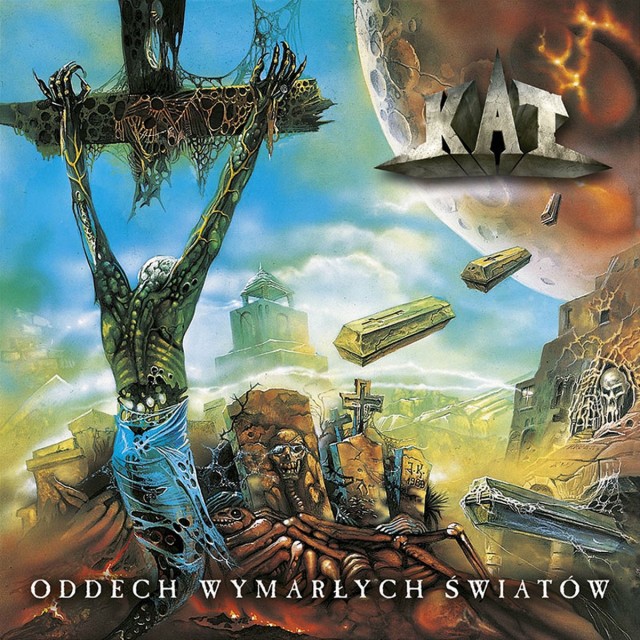
4. Oddech Wymarłych Światów (1988)
Kat’s second full-length album is their first serious foray into thrash metal. But apart from maybe the fantastic opening track ‘Porwany Obłędem’ and closer ‘Bramy Żądz’, it doesn’t sound remotely close to what most thrash metal sounded like in the late eighties. The tempos are slower, there are sudden quieter bits that drip with despair, there are atypical structures that still manage to make complete sense, all of which contributes to getting a hold of your attention and not letting go throughout the album. The only reason why I cannot rank ‘Oddech Wymarłych Światów’ higher is because other Kat albums feature slightly more memorable songwriting – some songs lack stand-out moments – and because its first half is more consistent than its back half. Nonetheless, the album’s satus as a Polish metal classic is completely justified.
Recommended tracks: ‘Porwany Obłędem’, ‘Diabelski Dom Cz. II’, ‘Śpisz Jak Kamień’
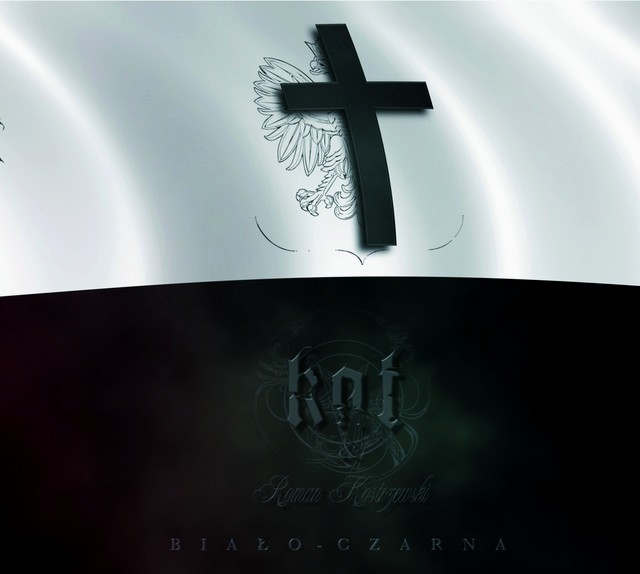
3. Biało-Czarna (2011)
The debut album of Kat & Roman Kostrzewski sounds very different from anything anyone in Kat history has ever released. Its generally slow, downtuned sound is as close as Kostrzewski and Loth have ever gotten to doom metal, and yet, it sounds nothing like one would imagine doom metal to sound. Instead, the album is full of twisted, evil-sounding riffs that sound like someone put on an early nineties 45-RPM thrash metal single at 33 RPM. This goes right down to the drum sound; Loth sounds absolutely cavernous and thunderous here. There aren’t many albums that sound quite like ‘Biało-Czarna’, but because it sounds so consistently ominous, I think it captures the spirit of classic Kat unbelievably well. Not the easiest listen, but very rewarding if you give it the time it deserves.
Recommended tracks: ‘Diabelski Dom Cz. IV’, ‘Maryja Omen’, ‘Kapucyn Zamknął Drzwi’
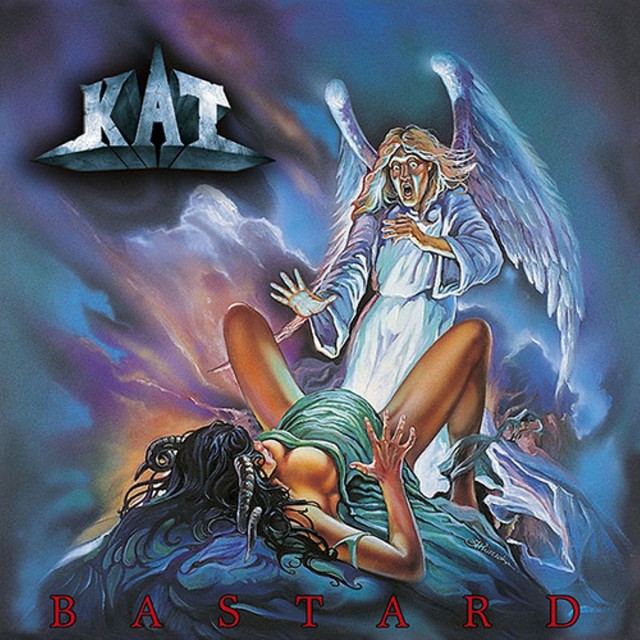
2. Bastard (1992)
Along with ‘Oddech Wymarłych Światów’, ‘Bastard’ is Kat’s most obviously thrashy album. And I think it’s the slightly better one of the two. Both the riffs and the song structures are just a bit more inventive this time around, and some of the melodies that are injected into the songs are nothing short of stellar. It hardly ever gets all that fast, but Kat manages to get a lot of mileage out of the tempos they do employ. ‘Bastard’ is one of those albums on which a lot of different things happen, but somehow, it never sounds like the band aims to disorient the listener by not giving them time to adapt to rapid changes. Thrash metal isn’t often this dark, but when it is, the results are stunning. Closing track ‘Łza Dla Cieniów Minionych’ might be Kat’s greatest ballad.
Recommended tracks: ‘Zwieszony Snur’, ‘W Bezkształtnej Bryle Uwięziony’, ‘Odmieǹcy’
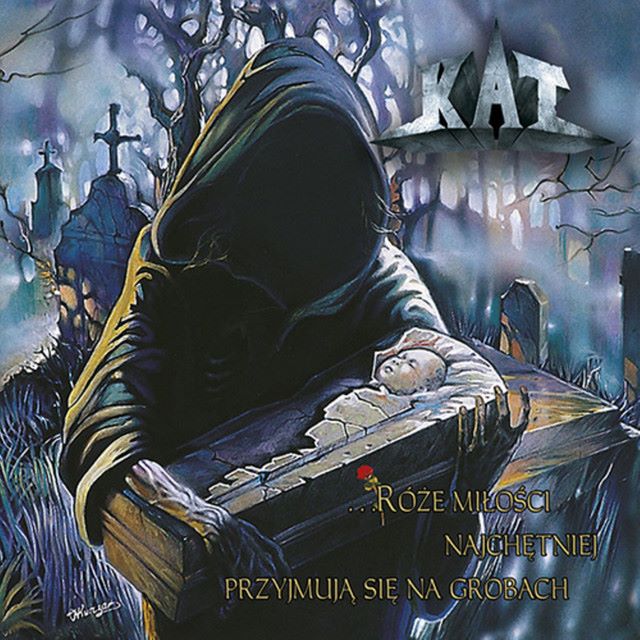
1. …Róże Miłości Najchętniej Przyjmują Się Na Grobach (1996)
Perhaps not the most obvious choice for Kat’s greatest album, but not one of the others proves just how unique the band is. While thrash metal bands left and right were getting bitten by the groove metal bug, Kat slowed down their sound even further, to the point where ‘…Róże Miłości Najchętniej Przyjmują Się Na Grobach‘ actually sounds like a monstrously heavy doom metal album, albeit one with highly unpredictable song structures and fairly frequent slowed-down thrash metal riffs. The atmosphere of the album is consistently one of oppressive horror, making it a work of art that needs to be heard to be believed. Not necessarily the best album to start your Kat journey with, but in all of its limitless unconventional creativity, it certainly is the most consistently rewarding one.
Recommended tracks: ‘Purpurowe Gody’, ‘Odi Profanum Vulgus’, ‘Wierzę’
 Kevy Metal
Leave a comment