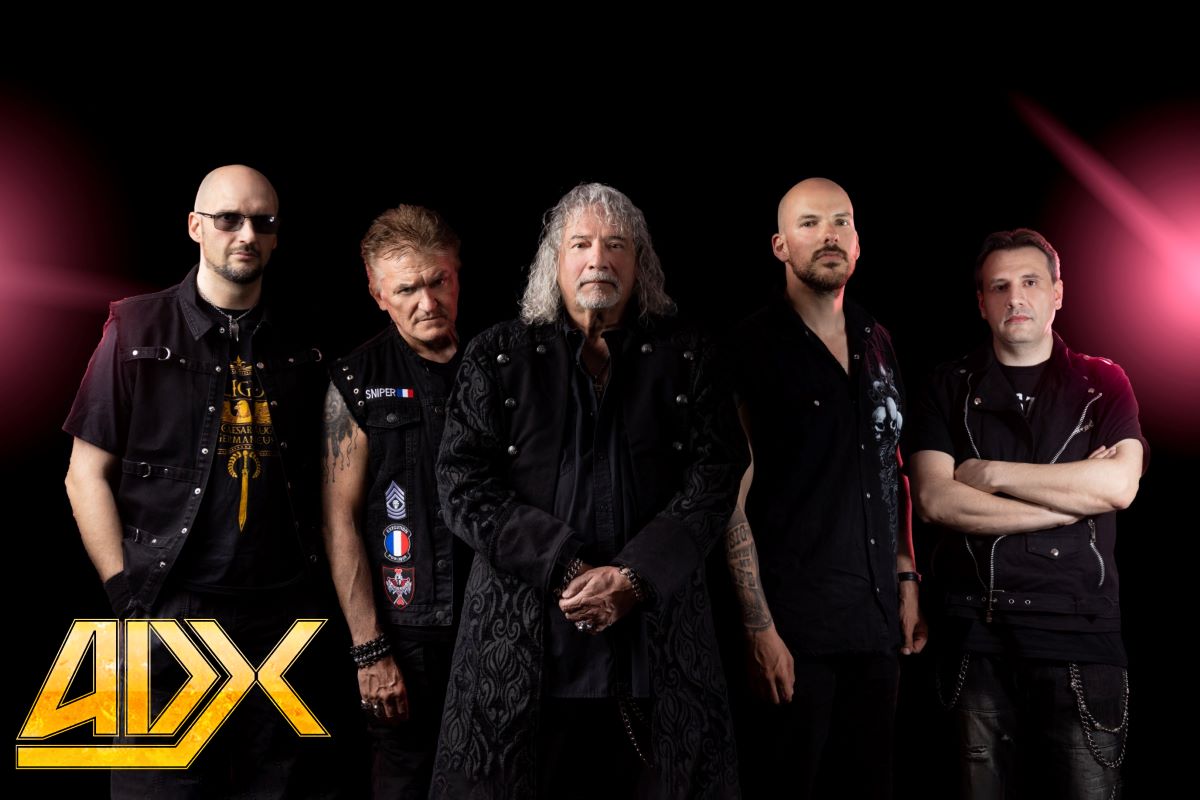
ADX has been one of my favorite French-language bands since the second I first heard them. Their music is always at risk of being too little of certain styles too appeal to people: too melodic for the thrash metal crowd, too aggressive for speed metal audiences, too rough for power metal fans, and in recent years, too modern for old schoolers. To me, the fact that they play around in that grey area between traditional heavy metal, speed metal, thrash metal and power metal is exactly what makes ADX such an appealing band.
Like many of their peers, ADX originally called it quits in the early nineties. They briefly reunited most of their classic line-up in the late nineties, then came back for good in 2006. Since then, the band has been churning out generally excellent albums that feature a contemporary interpretation of their classic sound. While the productions have been modernized, those who enjoy their eighties albums will likely enjoy their newer material as well. Singer Phil Grélaud and drummer Didier ‘Dog’ Bouchard are the only original members left, though original guitarist Pascal Betov stuck around until 2019.
Consistency is key in ADX’s discography. Unlike many eighties bands that tried again much later, they haven’t released any outright bad albums that see them desperately trying to adapt to the changing trends in heavy music. Even their most groove-focused album sounds like an ADX album. Having said that, that specific album is in fact the lowest-ranking album on this list.
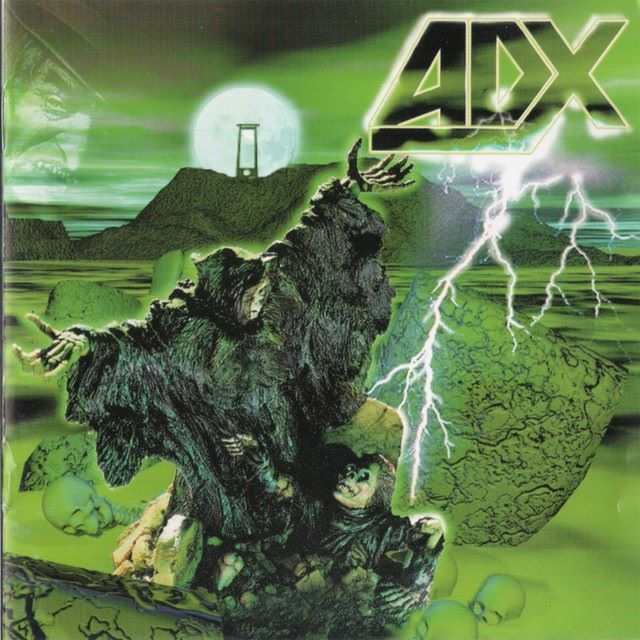
11. Résurrection (1998)
‘Résurrection‘ is widely considered ADX’s worst album, and though I agree, it’s nowhere near as bad as people make it out to be. It was their only album released during a brief reunion in the late nineties, and like many bands of their ilk, they had gone groovy at the time. What makes ADX’s groove metal experiment better than what most of their peers did is that they didn’t go full Machine Head tough-guy mode. Instead, ADX focuses on bluesy, Black Sabbath-inspired grooves for most of the album, with some Pantera-esque touches, but also a few distinct nods to their more melodic early days. The fact that the arrangements offer a little more space also makes Phil Grélaud deliver one of his better recorded performances. Flawed, and by no means a must-have, but enjoyable enough.
Recommended tracks: ‘De l’Autre Côté’, ‘Résurrection’, ‘Résistance’
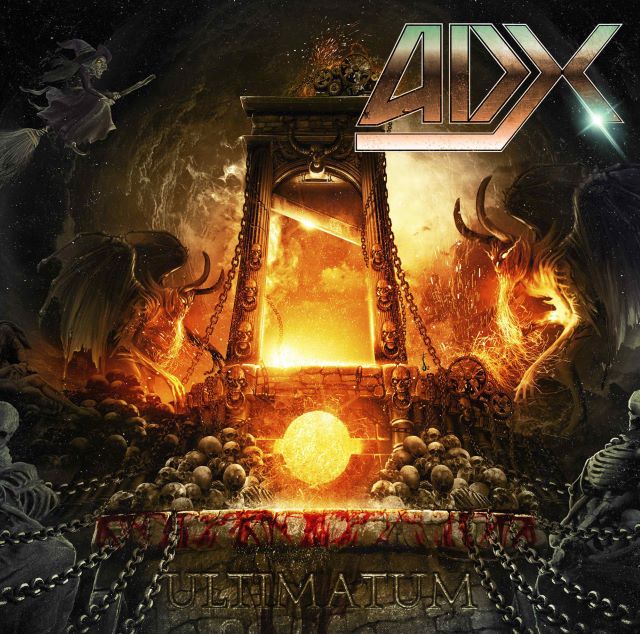
10. Ultimatum (2014)
‘Ultimatum‘ is perfectly fine album that flows pleasantly, but it is quite a bit more laid-back than both its predecessor and its follow-up. Maybe that is part of the reason why I think the album just flies by without any highlights or tracks that stand out for other reasons. That may not be entirely fair; ‘Commando Suicide’ is an excellent opener, ‘1572’ has one of the most moving choruses in the band’s discography, ‘Les Braves des Braves’ is one of the more successful attempts at a contemporary-sounding ADX song, ‘Les Cœrs Enteints’ a surprisingly earnest ballad, and ‘Divine Menace’ a nice, dynamic monster. It doesn’t help that the second re-recording of ‘King of Pain’ on 2021’s ‘Étranges Visions’ directly shows how much less energetic this recording is. ‘Ulitmatum’ is good, but not great.
Recommended tracks: ‘Commando Suicide’, ‘La Caresse du Tyran’, ‘Divine Menace’
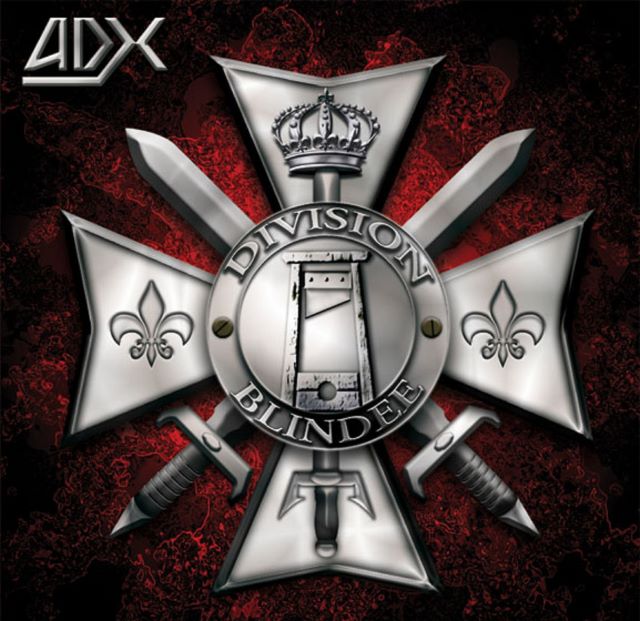
9. Division Blindée (2008)
ADX’s second comeback album is better-received overall than the first one, and that makes sense. While the modern metal leanings have not disappeared entirely, ‘Division Blindée‘ is much more focused on the melodic side of ADX. There certainly are a lot more guitar harmonies on ‘Division Blindée’, and they go together very well with the speedy, aggressive riff work. ‘À la Gloire de Dieu’ is still one of my favorite opening tracks on any ADX album, and it sets the tone for the rest of the album well. It doesn’t quite reach those heights again, and some compositions feel a little directionless, but ‘Division Blindée’ definitely puts ADX back on the right track. Its production job is a little too loose and chaotic for this type of metal, though, and it pushes Grélaud further back than he deserves.
Recommended tracks: ‘À la Gloire de Dieu’, ‘Poison d’État’, ‘Dernière Morsure’
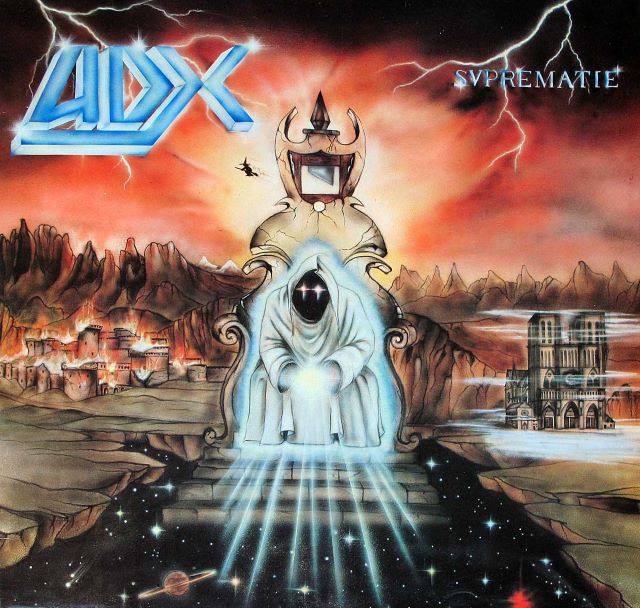
8. Suprématie (1987)
‘Suprématie’ is a solid heavy metal album, but unlike its two predecessors, it isn’t more than that. In fact, if some of the songs weren’t sung by Phil Grélaud – and, you know, in French – I could have easily mistaken them for any other European metal band of its era. ‘Le Jugement de Salem’, a dead ringer for Running Wild, is a particularly notable offender there. Another issue I have with ‘Suprématie’ is that one of the guitars is almost unlistenably loud and trebly. My ears always need to get some rest after listening to the album. And it’s specifically one guitar, as the sound is much easier to handle once it drops out in the instrumental ‘Les Secrets de l’Olympe’. It’s a shame, really, because there are plenty of good songs here.
Recommended tracks: ‘Victime’, ‘Suprématie’, ‘La Peur et l’Oubli’
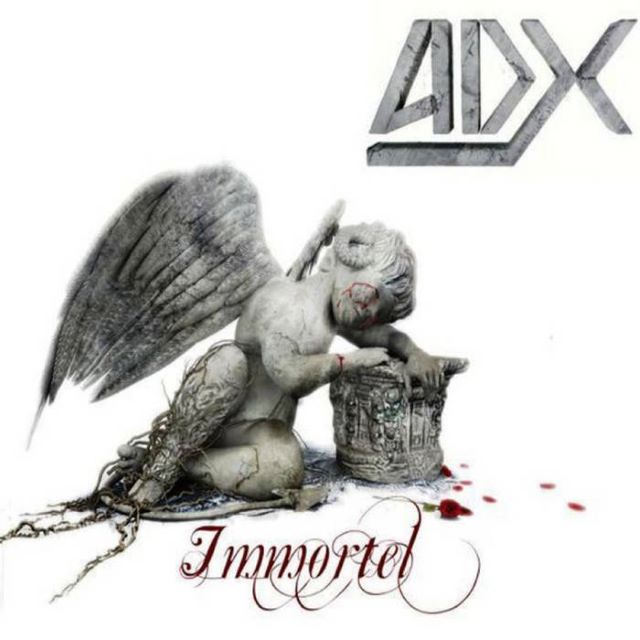
7. Immortel (2011)
After ‘Division Blindée’ put ADX back on the map, ‘Immortel‘ had to prove that it wasn’t a fluke. While it is largely cut from the same cloth as its predecessor, the riffs are a tad more memorable, insomuch that they start playing in my head when I see the song titles, and the songs are a little more to-the-point, though a few sections are among the most knotty, complex stuff ADX had released up until that time in their career. All of these developments are very welcome. Though most of them would be evolved even further on later releases, there is something very infectious about the way aggression and melody are mixed together on ‘Immortel’. The tighter, more modern production job really helps the material get the push it needs. Grélaud sounds much more commanding as well.
Recommended tracks: ‘Les Larmes du Diable’, ‘Immortel’, ‘Se Perdre’
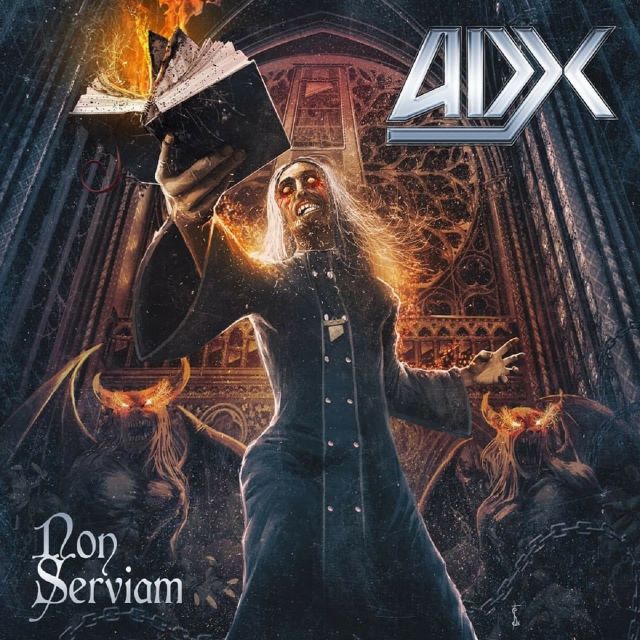
6. Non Serviam (2016)
It took hearing ‘Non Serviam‘ to realize what ‘Ultimatum’ was lacking. Although the album lacked energy, what it really needed more of was memorability. Its follow-up does a lot to correct that by going for an altogether more melodic direction, and the band also happens to end up sounding notably more spirited. Production may have been a factor as well; some songs from ‘Ultimatum’ might have come across better with this bright, sharp guitar tone. I don’t want to take anything away from the improved songwriting, though. ‘Non Serviam’ has much catchier choruses, and the band does take a few risks here and there, such as the almost black metal-esque tremolo picking in the middle section of opening track ‘La Mort en Face’. Tons of great guitar harmonies as well.
Recommended tracks: ‘Cosaques’, ‘L’Énigme Sacrée’, ‘La Complainte du Demeter’
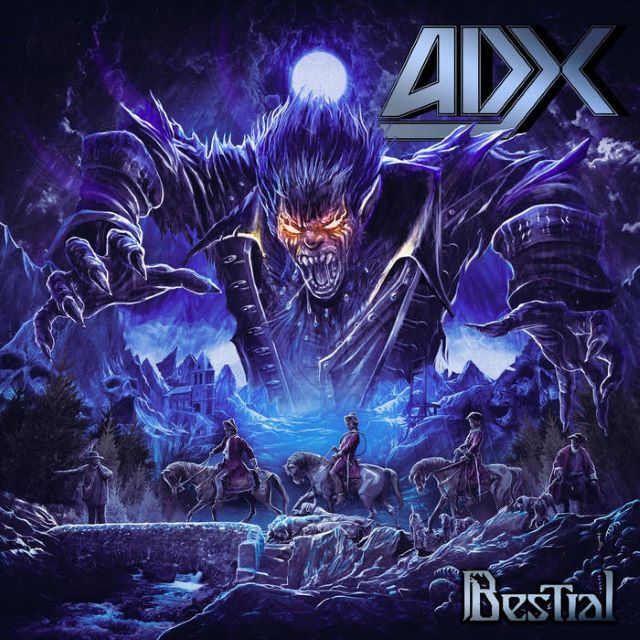
5. Bestial (2020)
There is a fairly direct connection between the number of guitar harmonies on an ADX album and how much I enjoy said album. ‘Bestial‘ is absolutely slathered with them. In that regard, it is kind of similar to ‘Non Serviam’, though it is quite a bit more aggressive overall. The riffs have a certain modern bite to them, and there is a subtle shift towards more complexity in the riff writing, which I suspect entered the band around the same time as current guitarist Neo. There are also hints of slightly progressive ambitions in that ‘Bestial’ ends with six-part suite – three songs, thee intros – though ADX wisely sticks to what they are good at rather than experimenting with hollow bombast that would only hurt the impact of their riff-focused strengths.
Recommended tracks: ‘Overlord’, ‘La Traque’, ‘Collecteurs de Chair’

4. L’Empire du Crépuscule (2024)
ADX’s most recent album at the time of writing might just be their most complex, dynamic release thus far. It finds the band somewhere between the heavier, crunchier end of European power metal and the most melodic end of thrash metal. Quite a lot happens within these songs, certainly more than the norm for modern-day ADX – I love how many songs jump to dense, contrasting sections halfway though. Fortunately, that has not gone at the expense of their keen ear for melody, and it certainly has not hurt their ability to come up with supremely catchy choruses. The chorus to ‘Tout en Puissance’ randomly pops into my head more often than I care to count. Genuinely fantastic twenty-first century heavy metal, and a must-hear for anyone who likes the recent works by the likes of Flotsam and Jetsam or Helstar.
Recommended tracks: ‘Paradis Royal’, ‘Paris un 13’, ‘Tout en Puissance’
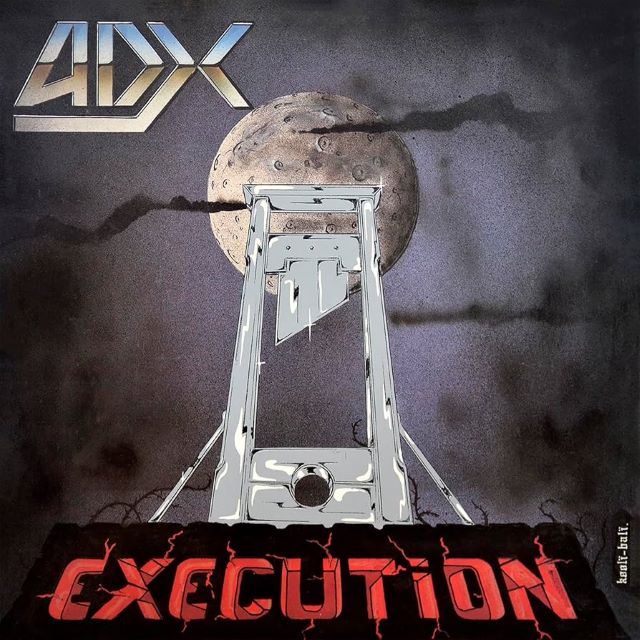
3. Exécution (1985)
An excellent debut album full of seemingly raw eighties speed metal that turns out to be somewhat more sophisticated once you start zooming in on the details. That may be surprising, as Grélaud points out in the liner notes of the reissue that ADX and Killers were the only French bands to play this fast at the time. Bands that pride themselves on doing so tend to focus on speed only, but ‘Exécution’ is highly varied tempo-wise. Sure, it’s the blazing rippers like ‘Caligula’ and ‘Déesse du Crime’ that became live staples, but there is quite a lot of upper mid-tempo stuff here that vaguely reminds me of what Anthem was doing around the same time. Some compositions are actually quite ambitious for a bunch of kids. Very well-produced for a debut album as well.
Recommended tracks: ‘L’Étranger’, ‘Prière de Satan’, ‘Le Fléau de Dieu’
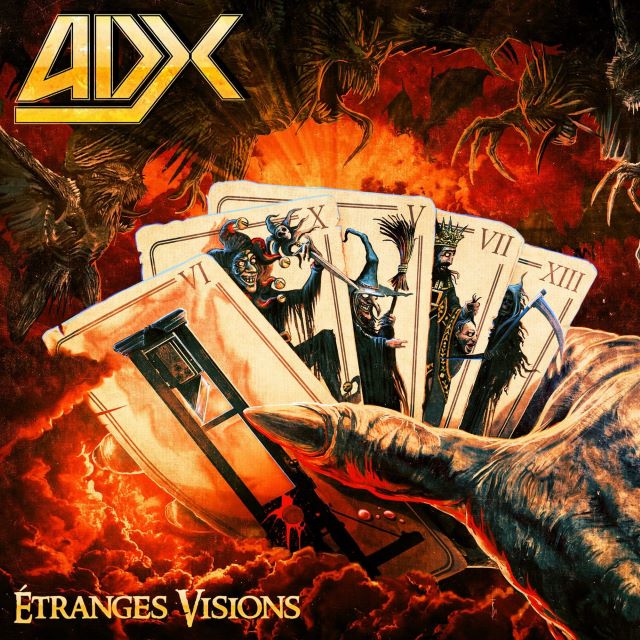
2. Étranges Visions (2021)
Originally written in French, but first released in English as ‘Weird Visions’ at the request of Noise Records in 1990. Thirty-one years later, ADX finally re-recorded the album in French, and it’s extremely obvious that these are the original lyrics. Grélaud does a decent job in English, but some emphasized syllables are in such awkward spots that the lack of choice in the matter is noticeable. Musically, either version of ‘Étranges Visions‘ features ADX at their most thrashy, though at the melodic and relatively intricate end of the style’s spectrum. The production on ‘Weird Visions’ makes the band sound similar to other melodic thrashers on Noise Records. Even with its beefy twenty-first century production, however, ‘Étranges Visions’ is reminiscent of what Death Row, Onslaught and Helstar were doing at the tail end of the eighties. Fortunately, that happens to be something I love, and now that it is available with less awkward lyrics, ‘Étranges Visions’ is easily one of my favorite ADX albums.
Recommended tracks: ‘Sacrifié pour la Cause’, ‘L’Emprise’, ‘Le Sang de l’Ennemi’
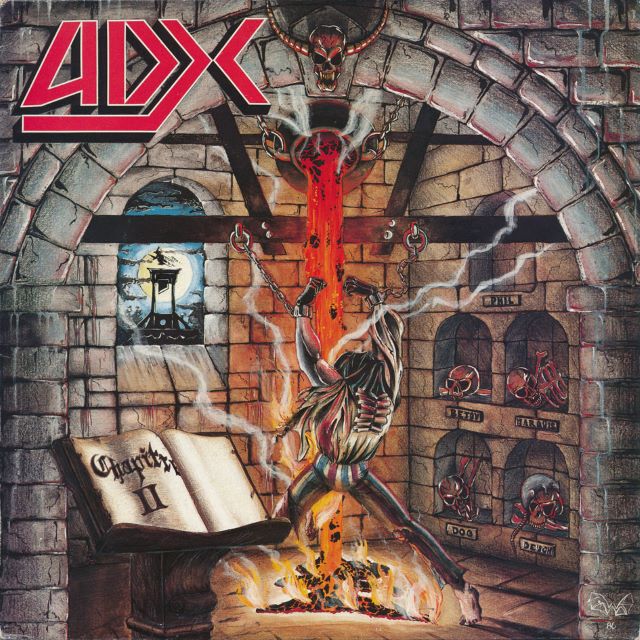
1. La Terreur (1986)
After bursting onto the scene with their debut album, ADX seeks to broaden their sound a little on ‘La Terreur’. They dial back the aggression just a little bit to create more space for the melodies – again, the album is filled to the brim with excellent guitar harmonies – though it still has the hungry aggression of a young, mid-eighties heavy metal band in spades. The songwriting is slightly more intricate than on the debut as well, although that mostly just means the riff count per song is higher; it’s not like ADX wants to dazzle you with virtuosity. That also means that ‘La Terreur’ is slightly less immediately memorable than ‘Exécution’, but I would argue that the hooks stay with you longer due to their melodic strength. Excellent stuff. ‘La Terreur’ was completely re-recorded and released alongside the original recordings as ‘Terreurs‘ in 2010.
Recommended tracks: ‘L’Honneur Perdu’, ‘N’Abandonne Jamais’, ‘Mémoire de l’Eternel’
 Kevy Metal
Leave a comment