
Along with Kat and TSA, Turbo was among the first heavy metal bands to come out of Poland around 1980, though one could argue that Turbo’s early work has as much in common with seventies hard rock as it has with heavy metal. As with many veteran bands, their history is rife with line-up changes – their incredible singer Grzegorz Kupczyk has left twice – but guitarist Wojciech Hoffmann has soldiered on since the beginning. Bassist Bogusz Rutkiewicz was there for a majority of it, and most of the current line-up has been with Turbo for at least a decade and a half.
For a portion of their career, Turbo had a habit of following trends in heavy music, most prominently thrash metal and a brief spell with post-thrash grooviness. The interesting thing is that more often than not, they managed to put their own spin on those trends, making albums from that era largely more entertaining than they could have been in the hands of a lesser band. None of the albums in this list is outright horrible, though I certainly would not recommend going out of your way to seek out the three lowest-ranking albums.
Multiple Turbo albums have been released in both English-language and Polish-language versions, since both Kupczyk and current singer Tomasz Struszczyk are fairly good at singing in English. However, the occasional exception like ‘This War Machine’ from ‘Piąty Żywioł’ notwithstanding, it’s usually obvious the song was originally written to be sung in Polish. Because of that, the only English titles in this album ranking will be the albums that were exclusively released in English. Let’s start with one of them.
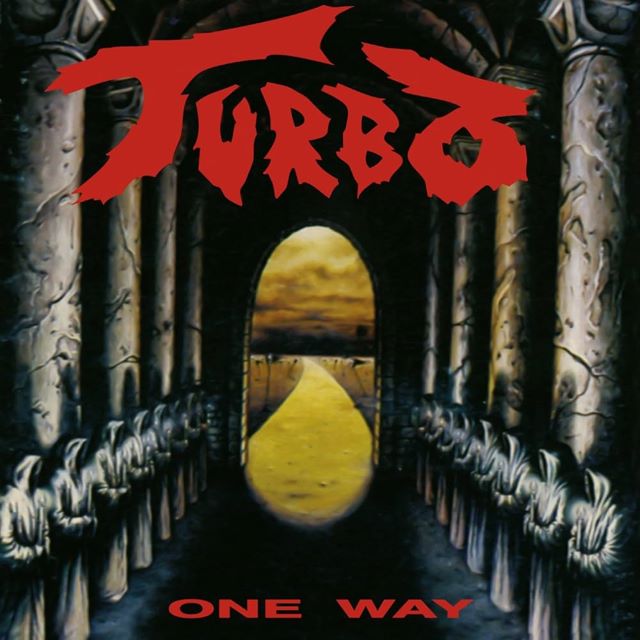
12. One Way (1992)
‘One Way’ is the closest Turbo has come to death metal, though the riffs are rooted in thrash metal. For what it is, ‘One Way’ really isn’t that bad. It sounds like it should have been produced by Scott Burns, and if you are looking for something you don’t know that sounds somewhat similar to ‘Schizophrenia’ era Sepultura, you could do a lot worse than ‘One Way’. Within the context of what Turbo is known for, however, it leaves me disappointed. Even the riffs, usually a strong point for Wojciech Hoffmann, don’t leave a lasting impression. Most songs here just feel like riffs that have been connected with little rhyme or reason. Marcin Białożyk’s decent, but dull bark can’t really do anything to elevate the material either.
Recommended tracks: ‘Blasphemy’, ‘End User’, ‘The Viper’

11. Awatar (2001)
Full disclosure: if Grzegorz Kupczyk didn’t sing on ‘Awatar’, it would probably have taken the bottom spot in this album ranking. The album is full of monotonous, meat-headed groove metal riffs, and oftentimes, Kupczyk’s passionate vocal delivery is really the only thing that gives the songs any melodic depth. He is just the type of singer who really knows how to dial up the emotional intensity of a song, and that is very welcome on some of the material here. It’s not all bad, but I can see why ‘Armia’ is the only song that survived past the tour in support of ‘Awatar’. I might be inclined to play ‘Awatar’ over the next entry based solely on the vocals, but it is undeniably worse from a compositional standpoint.
Recommended tracks: ‘Armia’, ‘Granica’, ‘Awatar’

10. Smak Ciszy (1985)
‘Smak Ciszy’ must have been such a massive disappointment when it first came out. It was released right after one of the greatest debut albums in European heavy metal history, but then Turbo – or more likely, their management – decided they should be more of a vaguely American-styled radio hard rock band. There are some really good songs on ‘Smak Ciszy’, the fantastic ‘Już Nie z Tobą’ in particular, which can easily trick you into thinking it’s better than it actually is. The ballads are generally fairly poor, though. ‘Smak Ciszy’ is better than the previous two entries on this list, and Kupczyk is fantastic as usual, but it’s the worst eighties Turbo album, and it’s not even close.
Recommended tracks: ‘Już Nie z Tobą’, ‘Cały Czas Uczą Nas’, ‘Wariacki Taniec’
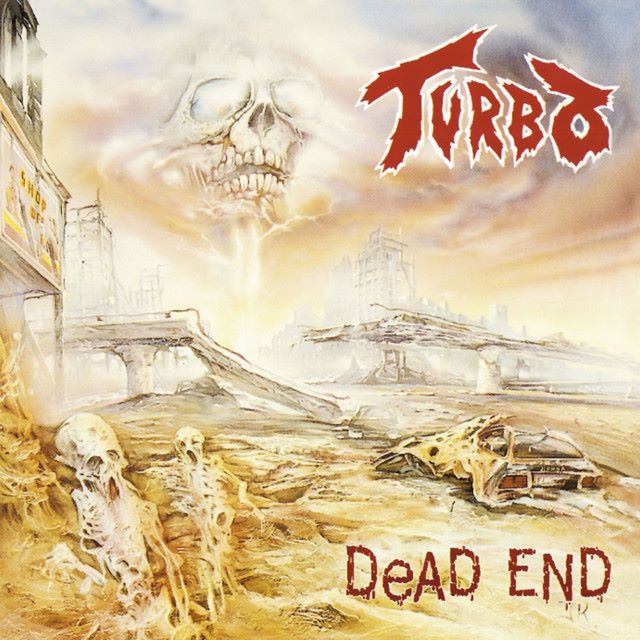
9. Dead End (1990)
Although ‘Dead End’ is largely cut from the same cloth as its follow-up ‘One Way’, I do think it is significantly better. The riffs are certainly more memorable, which is highly important for a deathy thrash metal album like this, where there aren’t any vocal melodies to take care of the memorability. Also, more things are happening within the songs. They aren’t exactly complex or intricate, but Turbo is playing with time feel changes and different tempos quite a lot on ‘Dead End’, and it just feels like the song structures were a bit more carefully considered. They are more than just collections of riffs. Also, Robert ‘Litza’ Friedrich’s barks are notably more aggressive than Białożyk’s. Still, if I want to hear Turbo, this is not what I want to hear from them.
Recommended tracks: ‘Barbaric Justice’, ‘Blind Alley’, ‘Dead End’
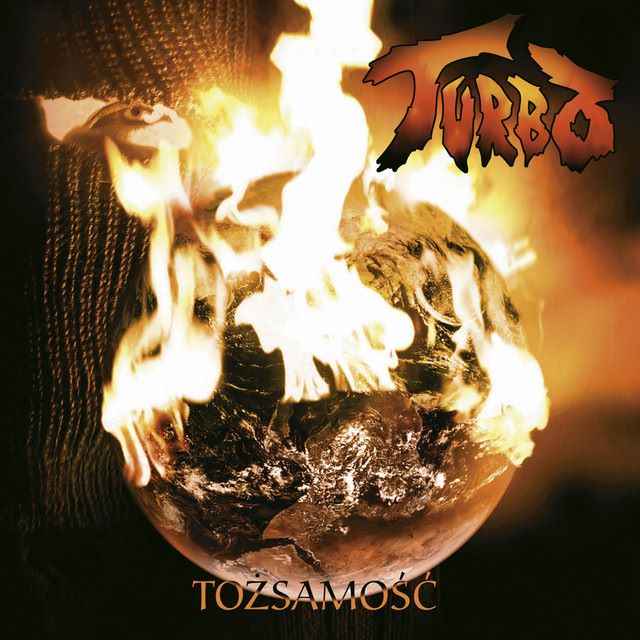
8. Tożsamość (2004)
Desperately trying to get with the times didn’t exactly work out for Turbo, so their ‘Tożsamość’ sees them going back to old school heavy metal for the first time since their debut album. Sonically, things have been updated a bit, and I suspect drummer Tomasz Krzyżaniak, who was only 23 when the album was recorded and is credited as a co-writer on every song, had a hand in that. The late guitarist Dominik Jokiel, who also makes his debut here, wasn’t much older. ‘Tożsamość’ is a strong, workmanlike album, though it lacks true highlights. It does end on quite a high note with three songs that honestly leave the album’s first half in the dust. Not essential by any means, but very much worth hearing.
Recommended tracks: ‘Otwarte Drzwi do Miasta’, ‘Maqmra’, ‘Pismo’

7. Ostatni Wojownik (1987)
If ‘Kawaleria Szatana’ showed Turbo’s first flirtations with thrash metal, ‘Ostatni Wojownik’ sees them diving head-first into the genre. Both the tempos and the aggression are dialed up to eleven, while Wojciech Hoffmann and Andrzej Łysów are throwing around cool riffs as if their lives depend on it. Ultimately, that is the album’s biggest asset as well as its major flaw. ‘Ostatni Wojownik’ is an extremely riff-driven album, to the point where Grzegorz Kupczyk barely has any room to sing. And if he does, he is basically screaming his head off ninety percent of the time. As a result, ‘Ostatni Wojownik’ is really fun while it lasts, but I can barely remember anything off it once it is over. A few extra melodies would have been a welcome improvement.
Recommended tracks: ‘Ostatni Wojownik’, ‘Bogini Chaosu’, ‘Miecz Beruda’
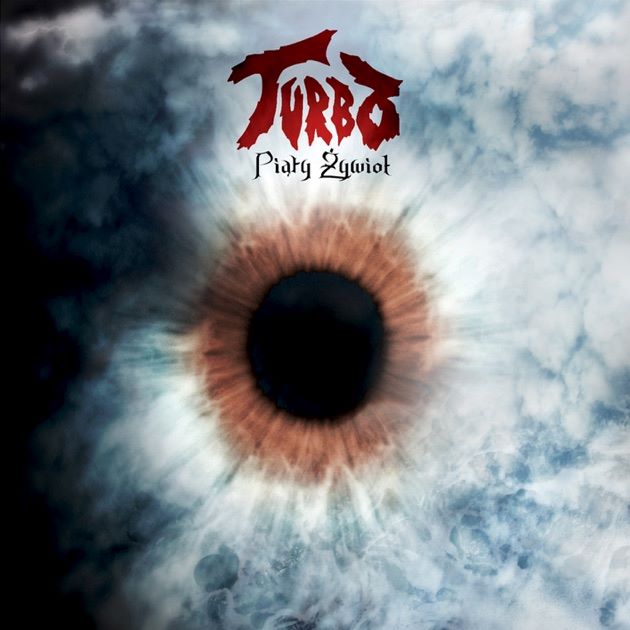
6. Piąty Żywioł (2013)
‘Piąty Żywioł’ is stylistically similar to its predecessor, with a sound that I imagine Iron Maiden would have on a hypothetical transitional album between ‘Killers’ and ‘The Number of the Beast’. It is a bit more straightforward than ‘Strażnik Światła’. The songs are generally much shorter, and since it’s not a concept album, it doesn’t quite have that supreme flow that ‘Strażnik Światła’ did have. Judged on its own, however, ‘Piąty Żywioł’ is an excellent blend of seventies-style hard rock and early heavy metal, with a tight, modern production style. Tomasz Struszczyk once again does a fantastic job on vocals, and the music feels like it has been written to make optimal use of his range and his strengths as a singer.
Recommended tracks: ‘Może Tylko Płnie Czas’, ‘Cień Wieczności’, ‘Rozpalić Noc’

5. Blizny (2025)
After the longest break between two albums in Turbo history, the band surprised me with some of their darkest, most aggressive work to date. ‘Blizny‘ sounds a bit more modern than its two predecessors, though it’s still clear that it was largely made by the same people. Where I think ‘Blizny’ succeeds, while ‘Awatar’ and the like failed, is that it treats the aggression and the modernity as another tool in the toolbox rather than the album’s character arc. Some of these songs could have been on early Turbo albums, others lean more prominently into twenty-first century heaviness. Struszczyk is versatile enough a singer to adapt nimbly to all different singing styles required for ‘Blizny’. My favorite songs still change with every spin, which is generally a sign of consistently great songwriting.
Recommended tracks: ‘Przyjdź do Mnie’, ‘Nowy Rozdział’, ‘Zawrót Głowy’
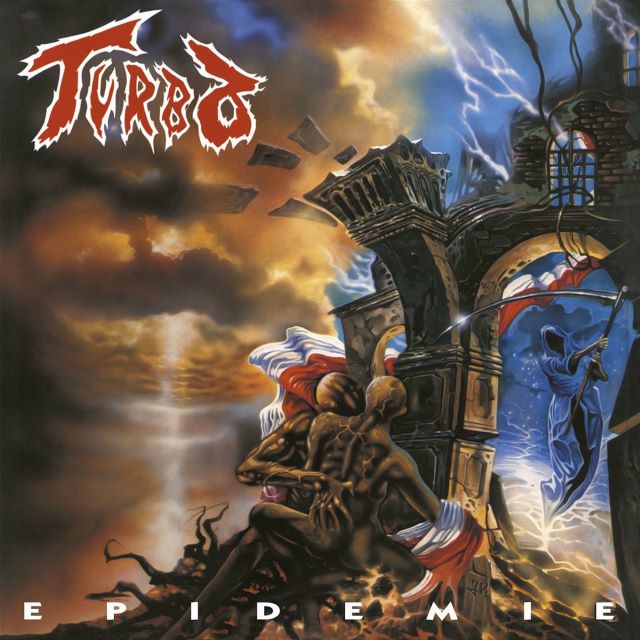
4. Epidemie (1989)
If forced to be as critical as possible about ‘Epidemie’, I would have to say that it sounds more like Wolf Spider with Grzegorz Kupczyk on vocals than Turbo. Or maybe a more aggressive version of Realm. But I can’t help it: I really love this type of technical thrash metal that doesn’t forget that melodies and catchiness exist. Nearly every riff on ‘Epidemie’ hits the listener square in the face, and on the rare occasion that one doesn’t, one that will is right around the corner. Drummer Tomasz Goehs is abolutely on fire throughout the album, and the bass lines of Andrzej Łysów – who gave up his guitarist spot to Acid Drinkers frontman Robert ‘Litza’ Friedrich here – are out of this world. Essential thrash metal.
Recommended tracks: ‘Salvator Mundi’, ‘Gniazdo Smutku’, ‘Pętla Czasu’

3. Strażnik Światła (2009)
Turbo’s first album with Tomasz Struszczyk on vocals is their most traditional-sounding since the mid-eighties. While it doesn’t entirely shed its thrash metal riff work, most of the album is a nice combination of hard rock and traditional heavy metal. Not a million miles away from ‘Tożsamość’ stylistically, but the songwriting feels tighter here. Struszczyk had some big shoes to fill, but he sounds absolutely fantastic, switching between different shades of his voice seemingly effortlessly to reflect the story developments of this concept album. Many songs are of fairly epic length, and Turbo justifies it with dynamic songwriting and a broad palette of atmospheres. It took me some time to realize just how good ‘Strażnik Światła’ is, but it honestly deserves to be mentioned among their greatest works.
Recommended tracks: ‘Na Prezkór Nocy’, ‘Strażnik Światła’, ‘Niebezpieczny Taniec’
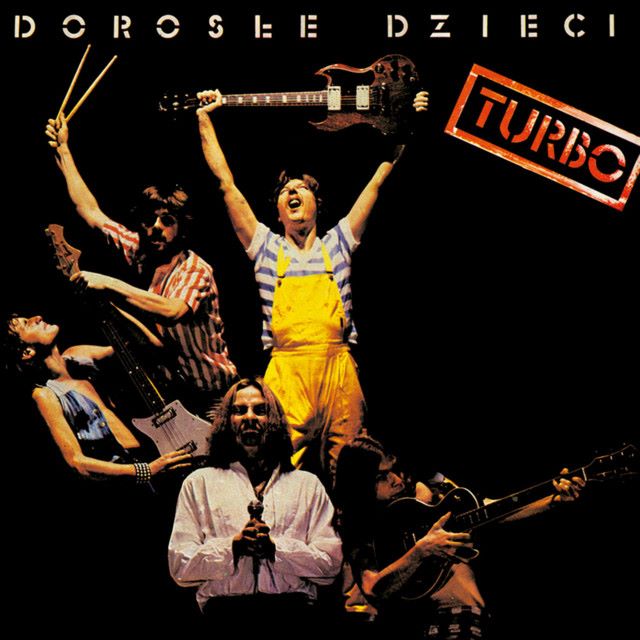
2. Dorosłe Dzieci (1983)
It will never cease to amaze me just how well-established Turbo’s sound already was on their very first album. Where most bands are still struggling to find their sound or the right way to record themselves on their first album, ‘Dorosłe Dzieci‘ is a strong, confident work by a band that knows how they want to sound. It’s also remarkably heavy for 1983. Heavy enough to call this heavy metal, but with some residual elements of the heavier side of seventies hard rock. Kupczyk’s voice is also in fantastic shape already, using his range just as effectively for his high-pitched screams as for the incredible, emotive ballad that is the closing title track. Quite likely the best debut album of the European metal scene, and the best NWOBHM album not to come out of Britain.
Recommended track: ‘Szalony Ikar’, ‘Dorosłe Dzieci’, ‘Przegadane Dni’
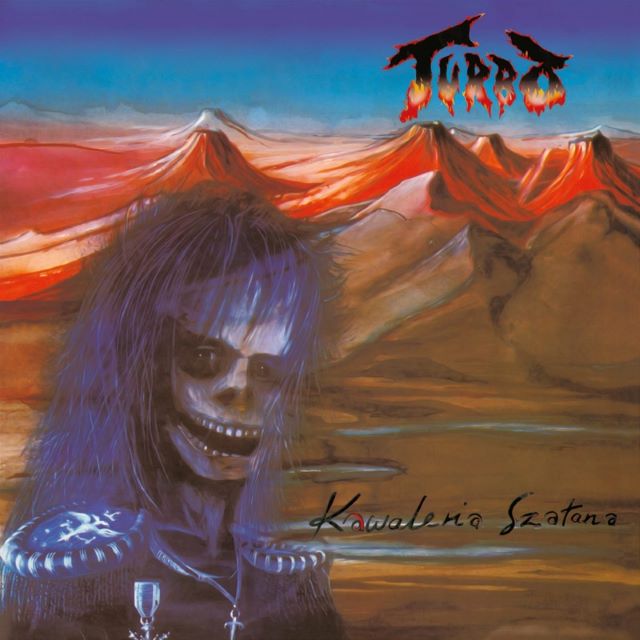
1. Kawaleria Szatana (1986)
By 1986, the first thrash metal influences had started creeping into Turbo’s music, though ‘Kawaleria Szatana’ isn’t as full-on thrash as its reputation suggests. In fact, it would not surprise me if much of this material had been written before the band had heard any thrash metal, because a majority of the album consists of supercharged NWOBHM-style songs with supremely catchy riffs. Slow them down by about 15 percent, and they would be a great fit for the debut album. The biggest advantage of this approach is that every song has a memorable hook, many of them even multiple, making ‘Kawaleria Szatana’ the perfect combination of aggression, catchy songwriting and energetic playing. Essential listening for fans of traditional heavy metal and thrash metal everywhere in the world.
Recommended tracks: ‘Ostatni Grzeszników Płacz’, ‘Kawaleria Szatana Cz. I’, ‘Żołnierz Fortuny’

 Kevy Metal
Leave a comment