

Horcas is one of the longest-running metal bands in Argentina. They were founded in the late eighties by guitarist Osvaldo Civile after leaving the highly influential V8. Their early sound can be seen as bridging the gap between traditional heavy metal and the burgeoning thrash metal scene. Later, they would go full-on thrash metal, though with some residual heavy metal elements, and struggle through the post-thrash groove metal era with varying degrees of success. In recent years, they have basically been tying the sounds of all their eras together.
There are some controversies surrounding Horcas. First off, multiple social media pages are dedicated to accusing the band of plagiarism, some of them making fairly compelling arguments. Also, part of their fanbase refuses to acknowledge anything Horcas released after Civile’s death in 1999, which is still shrouded in mystery, and which left the band with a grand total of zero original members. Bassist Topo Yáñez, guitarist Sebastián Coria, and singer Walter Meza – who has one of the best voices in this style of metal – have kept Horcas going ever since, however, releasing their most recent album ‘El Diablo‘ last year.
No matter whether you think their post-1999 output deserves to carry the Horcas logo or not, these musicians have released some quality material through the years. They arguably weathered the groove metal era with a little more dignity than many of their peers, and ended up on the other side of it with a more than respectable veteran heavy metal sound. Not all of their albums are must-haves, but I would argue that many bands in and outside of South America could take a few notes from Horcas’ sense of quality control.

11. Asesino (2006)
As far as mid-2000’s post-thrash goes, ‘Asesino’ really isn’t too bad. It’s not how I prefer Horcas to sound, but Meza can construct a good vocal melody, and there are a bunch of really cool riffs on the album. There is a downside to that as well, as ‘Asesino’ feels much more like a collection of riffs than its much better-written follow-up, making otherwise good songs like ‘Pánico’ feel like they were more or less haphazardly thrown together. Also, the melodic variation on ‘Asesino’ is so limited that unless the chorus is very memorable, the songs have a tendency to blend together a bit. Unlike most releases of thrash metal bands that operate under the groove metal umbrella for a while, however, ‘Asesino’ is fairly enjoyable.
Recommended tracks: ‘Confusión’, ‘Pesadilla’, ‘Asesinos’
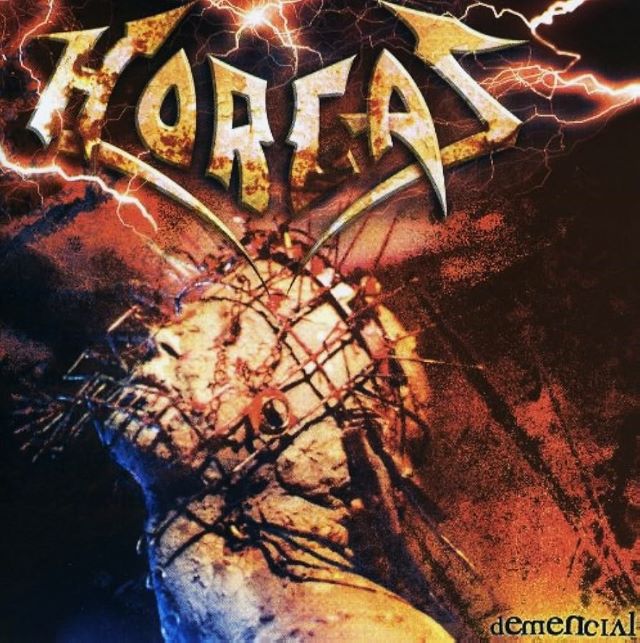
10. Demencial (2004)
While I briefly considered putting ‘Demencial’ one or two slots higher, I cannot in good faith call it a better album than its predecessor. Its performances feel more spirited, because Horcas dives into the post-thrash landscape head-first and with conviction here. ‘Demencial’ really sounds like the band is playing this style of music because they want to, and not because it was the latest trend in modern heavy music at the time. And although Meza’s vocal performance, as well as the presence of a few faster tracks, makes the album somewhat more enjoyable than the average release in this style, it does suffer from many of the same issues, the incredibly monotonous riffwork being the most prominent of them.
Recommended tracks: ‘El Cambio’, ‘El Rencor’, ‘El Agite’
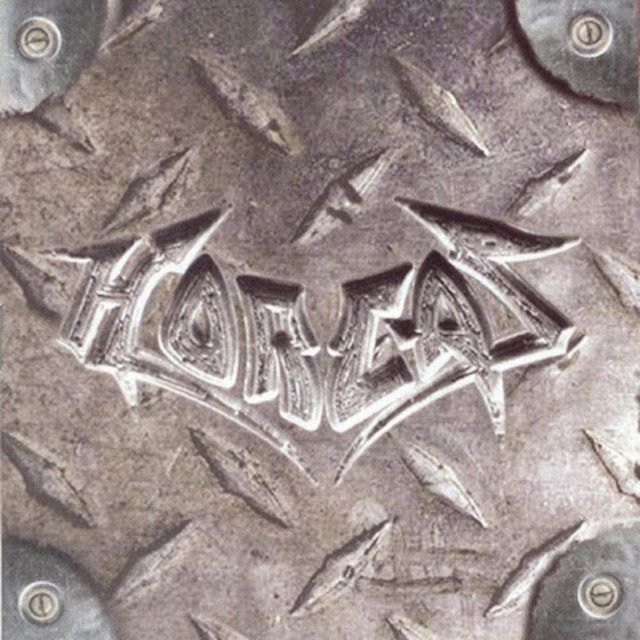
9. Horcas (2002)
The first Horcas album after the passing of Osvaldo Civile – and therefore the first one without any original members – appears to suggest that Civile was the one pushing for the faster thrash metal elements in Horcas’ sound. ‘Horcas’ doesn’t sound radically different from its two predecessors, but nearly the entire album consists of mid-tempo twenty-first century heavy metal. And while the songs are generally fairly well-written, listening to the entire album is a bit of a slog. ‘Horcas’ is just over fifty minutes long, but it feels much longer. Later live sets have shown that some of these songs work better without the context of an album seriously lacking variation in the tempo department, but I really wish the album had more songs of the caliber of ‘En Guardia’.
Recommended tracks: ‘En Guardia’, ‘Amargo Sabor’, ‘Crisis’

8. Gritando Verdades (2018)
‘Gritando Verdades’ largely follows a similar formula as its predecessor: a veteran thrash metal band combining their musical roots with a slightly more restrained modern hard rock and heavy metal sound. Occasionally, the album is even a tad more aggressive than its predecessor, which is a welcome change. And yet, the songs on ‘Gritando Verdades’ don’t quite stick with me as much. There is some really good material on the album, and I would recommend it to any latter-day Metallica fan, but it really does need the slightly higher tempos and the angrier-sounding riffwork to excel. Everything that isn’t that is a pleasant enough listen, but it’s also generally in one ear, out the other.
Recommended tracks: ‘Síndrome’, ‘Mundo Caos’, ‘Infame’

7. Reinará la Tempestad (1990)
For every clunky transition, guitar solo that doesn’t know what key it wants to be in, and underdeveloped vocal melody, ‘Reinará la Tempestad’ is actually quite the entertaining debut album. Due to Hugo Benítez’ cleaner vocal approach and the riffs being clearly rooted in traditional heavy metal, ‘Reinará la Tempestad’ feels closer to speed metal than to actual thrash metal, though the album does have bit of a general ‘Kill ‘Em All’ vibe, including seemingly random bass solos. One thing Horcas did have over many debuting thrash metal bands was their musicianship. It’s a bit looser than one might generally expect from the style, but Osvaldo Civile’s rhythm guitars and Gabriel González’ drums truly lock in. A flawed, but very enjoyable first attempt.
Recommended tracks: ‘Reviviendo las Huestes’, ‘No Habrá Piedad’, ‘La Marcha de las Ratas’
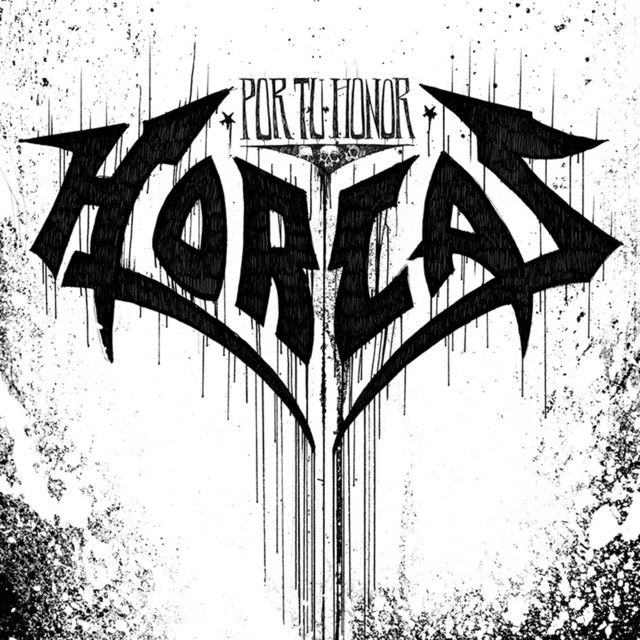
6. Por Tu Honor (2013)
After what was at the time the longest break between two Horcas albums, the band returned with a surprisingly mature sound on ‘Por Tu Honor’. Gone are the modern metal-isms of the previous three albums, and in their stead, listeners are treated to a sound that combines elements from traditional heavy metal, thrash metal, and veteran hard rock bands, somewhere between what Metallica and Accept are doing these days. Horcas displays tighter songwriting chops than Metallica, however, and a greater degree of melodic variation than Accept. Every song on ‘Por Tu Honor’ has its moments; even the ones that don’t immediately resonate with me manage to reel me back in with an interesting twist. A great example of a band with thrash metal roots aging gracefully.
Recommended tracks: ‘Ahora o Nunca’, ‘Guerreros’, ‘En la Jaula’

5. Reviviendo Huestes (2008)
Many bands in the post-Machine Head modern metal landscape can learn a lesson or two from ‘Reviviendo Huestes’. Even though I tend to approach this type of metal with a great degree of caution, I absolutely love most of ‘Reviviendo Huestes’. Of course, Meza’s passionate vocal performance helps, but part of why he excels is because the compositions allow him to. There is a little more room for melody, but the album still has an immense amount of aggression going on. In fact, much of ‘Reviviendo Huestes’ sounds genuinely angry. The riffs and choruses are very well-written. While the album could have been even better if it had been two or three songs shorter, it is highly recommended.
Recommended tracks: ‘Nacer Morir’, ‘Existir por Existir’, ‘Pegar y Gozar’
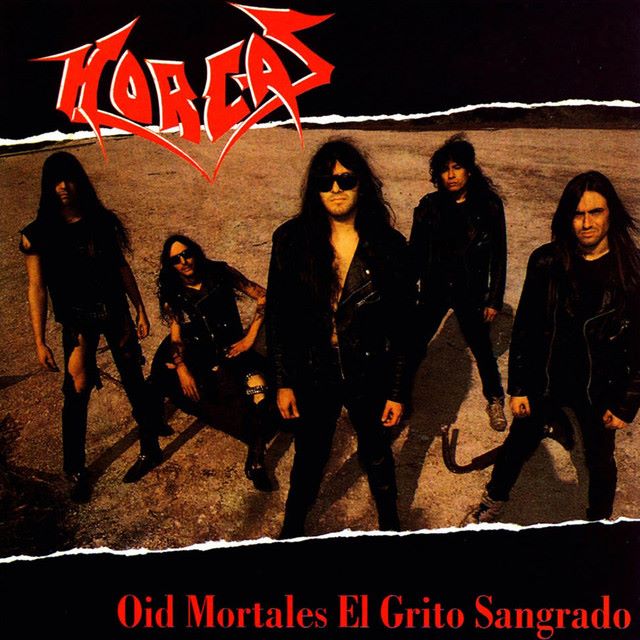
4. Oíd Mortales el Grito Sangrado (1992)
A giant improvement over their debut, Horcas’ sophomore album ‘Oíd Mortales el Grito Sangrado’ feels less like the naïvety of ‘Kill ‘Em All’, and more like the sharp, measured thrash approach of a Testament or a Xentrix, with maybe a somewhat larger amount of fast sections. It’s kind of a shame that ‘Oíd Mortales el Grito Sangrado’ is the last album original drummer Gabriel González recorded with Horcas, because he is absolutely on fire here. The band hadn’t quite gotten the hang of a good chorus yet, and Hugo Benítez’ vocal limitations are fairly apparent at times, but ‘Oíd Mortales el Grito Sangrado’ mostly seeks to dazzle its listeners with surprisingly well-composed, riffy songs, and more than succeeds at it.
Recommended tracks: ‘Solución Suicida’, ‘La Fuerza del Mal’, ‘Azotes del Mundo’
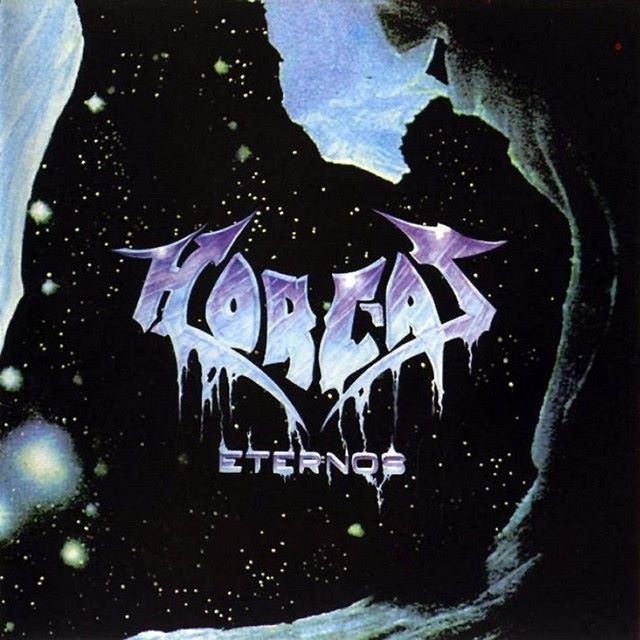
3. Eternos (1999)
Recorded before Osvaldo Civile passed away, but released after, ‘Eternos’ signals the end of an era for Horcas. It is their last album that is a thrash metal album first and foremost, and its highlights might be the best songs Horcas ever released. ‘Fuego’ is a simple, catchy track that became the live staple from the album, and opening track ‘Golpe a Golpe’ is even better, but the album is full of great thrashers. It’s not without its flaws; I thought ‘Sólo Es Diversión’ was a Spanish-language cover of Annihilator’s ‘City of Ice’ until its middle section turns out to be completely different, and some of the songs are quite similar. That is ultimately what keeps ‘Eternos’ out of the top two, but it’s a fantastic album nonetheless.
Recommended tracks: ‘Golpe a Golpe’, ‘Fuego’, ‘Canción Demente’

2. El Diablo (2024)
‘El Diablo’ took me completely by surprise. Sure, I enjoyed the overall direction Horcas was taking on its two predecessors, but it amazes me that they sound this inspired and this energetic after being active for so many years. Maybe it was the arrival of guitarist Lucas Bravo and drummer Cristian Romero that rejuvenated the band, but whatever the case, it worked. Stylistically, ‘El Diablo’ isn’t even that different from ‘Por Tu Honor’ and ‘Gritando Verdades’. The songwriting is just so much more inspired. The thrash metal influences are mainly limited to some of the riffs being rooted in the tradition of the genre, but that’s fine. What ‘El Diablo’ is, though, is a spirited, powerful twenty-first century heavy metal album, and a damn good one at that.
Recommended tracks: ‘Padre Nuestro’, ‘Ciego Para Ver’, ‘Veneno’

1. Vence (1997)
Maybe it’s the arrival of a truly good singer that encouraged them to, but Meza’s Horcas debut ‘Vence’ is the album where Horcas’ songwriting chops improved massively. The songwriting style isn’t even that much different from what the band offered on ‘Oíd Mortales el Grito Sangrado’, but by streamlining the songs ever so slightly and coming up with great choruses for Meza to sing, Horcas tightened up their arrangements, and improved upon a working formula. Part of me wonders whether ‘Vence’ really needed to be fourteen songs long, but apart from ‘Mundo Enfermo’, I think all songs are good enough to keep. ‘Vence’ might be the Horcas album with the most pleasant flow, and it’s truly one their best works.
Recommended tracks: ‘Gritos en Tu Interior’, ‘Garras’, ‘Sangre Fría’
 Kevy Metal
Leave a comment