

Internationally, the news that Golden Earring guitarist, main songwriter and occasional singer George Kooymans has died from ALS last week may have been overshadowed by the announcement of Ozzy Osbourne’s death a day earlier. Make no mistake, though: although Golden Earring is mainly known for their hit ‘Radar Love’, and they had other minor its in the shape of ‘Twilight Zone’ and ‘When the Lady Smiles’ – as well as ‘Going to the Run’, which was a monster hit in former Soviet nations when Aria covered it with Russian lyrics – they are probably the biggest rock institution the Netherlands have ever had.
When the band announced it was disbanding in 2021, rather abruptly as a result of Kooymans’ ALS diagnosis, the band had been active for no less than sixty uninterrupted years. Kooymans and his neighbor, bassist Rinus Gerritsen formed the band when they were 13 and 15 years old respectively, and the core line-up of Kooymans, Gerritsen, singer Barry Hay, and drummer Cesar Zuiderwijk had been together since 1969. They left behind a massive discography with a whopping twenty-four original studio albums, eight live albums, a great EP which turned out to be their farewell studio release, and a bunch of compilation albums.
Stylistically, Golden Earring was always very adept at morphing along with changing rock trends without losing their core sound. As a result, Golden Earring album rankings inevitably vary wildly based on who you ask. My personal ranking will probably be most useful to those approaching the band from a hard rock angle, but aren’t afraid of some poppy or progressive touches. Also, since the list focuses on full-lengths, the final Golden Earring studio release, the 2015 EP ‘The Hague’, isn’t on it. But if you find it, by all means, get it. It’s great.
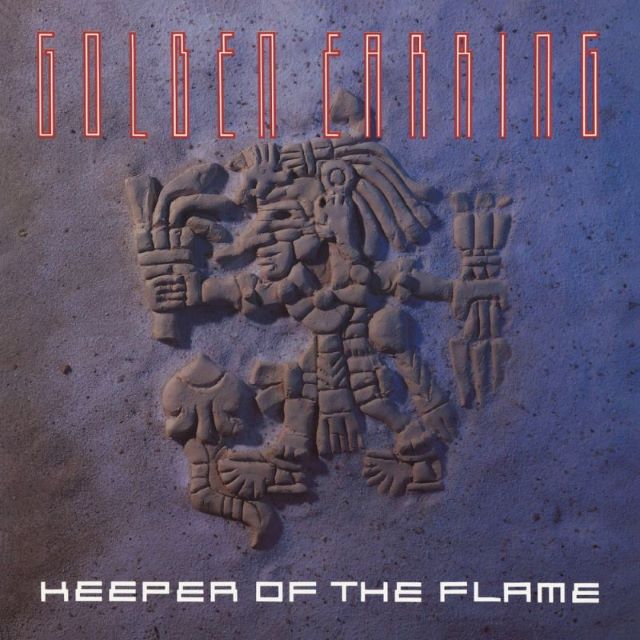
24. Keeper of the Flame (1989)
If there is one adjective that describes ‘Keeper of the Flame’ accurately, it would be messy. Here, Golden Earring sounds like they aren’t really sure where to take their sound, especially productionally. There are songs that would have worked perfectly fine as back-to-basics rockers, only to have their impact hampered by what feels like multiple layers of arena rock-ish production that make the album sound like Golden Earring trying to be Billy Idol at times. The latter half of the album is better overall, but even so, the material is better performed than written. It’s a shame, really, because the guitar tone on ‘Keeper of the Flame’ sounds like it could actually work wonders in the hands of George Kooymans.
Recommended tracks: ‘One Word’, ‘Circles’, ‘My Killer My Shadow’
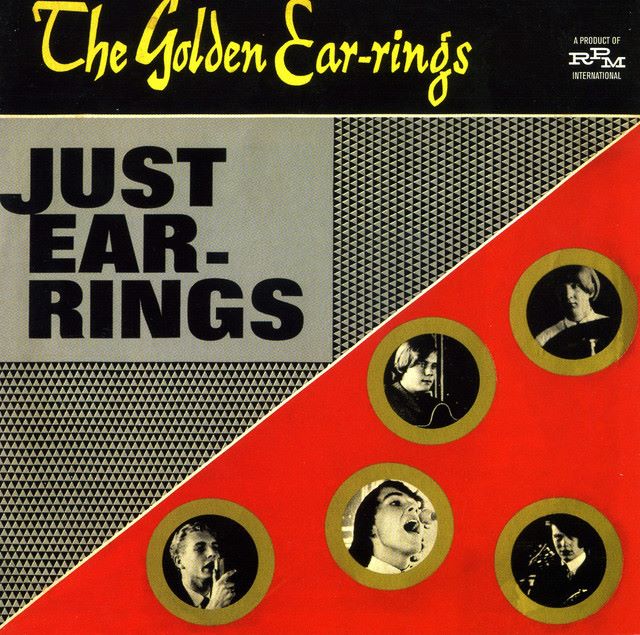
23. Just Ear-Rings (1965)
While I would love to rank the debut of the band, which was still operating under the name The Golden Earrings at the time, higher than this, the sixties beat sound that dominates ‘Just Ear-Rings’ just isn’t for me. Admittedly, the album is highly accomplished for a bunch of teenagers – only singer Frans Krassenburg was over 20 by the time the album came out. Krassenburg is the Achilles’ heel of the band, as he would be for the upcoming years, but it doesn’t stand out quite as much as on its follow-up, because the album is full of very well-executed vocal harmonies. The best songs on ‘Just Ear-Rings’ are surprisingly aggressive for the time, in an almost proto-punk sort of way. Through most of the album, however, I find myself zoning out and focusing on Rinus Gerritsen’s incredible bass lines.
Recommended tracks: ‘Lonely Everyday’, ‘Nobody But You’, ‘No Need to Worry’

22. Winter-Harvest (1967)
The Golden Earrings’ sophomore album ‘Winter-Harvest’ is undoubtedly a better album than its predecessor, but it also sounds less like you’re listening to an actual band and more like producer Fred Haayen just seeing how many different directions he can push the band. This isn’t necessarily a bad thing, but there are songs on ‘Winter-Harvest’ that put so much emphasis on the piano, the organ or the horns that Kooymans’ guitar is completely buried. As a fan of soul music, I like that the band explores that avenue, although neither Frans Krassenburg nor Kooymans can carry the soul songs vocally. ‘Winter-Harvest’ is interesting in that you can hear the band evolving musically, and the production is actually quite good for its time, but the album is too disjointed to be considered a success.
Recommended tracks: ‘Baby Don’t Make Me Nervous’, ‘Smoking Cigarettes’, ‘There Will Be a Tomorrow’
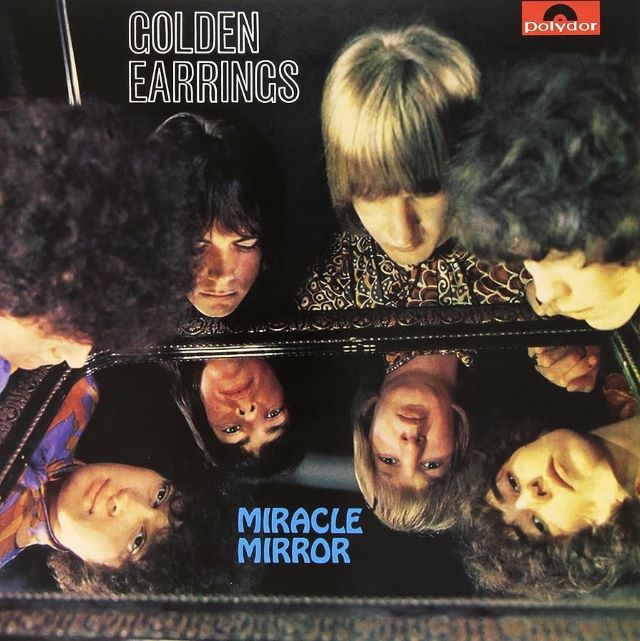
21. Miracle Mirror (1968)
If you want to hear the Golden Earrings at their most pretentious, ‘Miracle Mirror’ is the album for you. The album answers to many of the psychedelic rock trends going on in the United Kingdom at the time, and it’s a bit too all over the place to be enjoyed as a cohesive whole. There are some redeeming features here though. Replacing Frans Krassenburg with the much more powerful and convincing Barry Hay was exactly what the band needed, and the album shows the first steps towards the rock muscle that Golden Earring would later be known for, though it’s more Byrds than Yardbirds at this point in time. An interesting album, but the more upbeat side of psychedelia doesn’t suit the band.
Recommended tracks: ‘Crystal Heaven’, ‘Must I Cry’, ‘Magnificent Magistral’
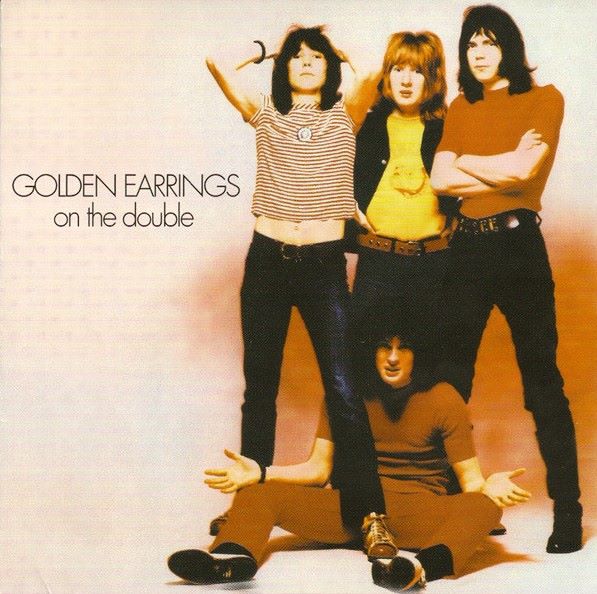
20. On the Double (1969)
Overproduced to the point that some songs barely sound like they are played by a band anymore, the only studio double album the band ever released, and the last altogether under the original Golden Earrings moniker, feels like a work by producer Fred Haayen rather than the band. Sure, George Kooymans wrote most of the songs, and while Rinus Gerritsen is credited as the keyboard player, I suspect session player Cees Schrama and the orchestrations dominate the mix. The songwriting is notably tighter than on ‘Miracle Mirror’, and the few songs where the band is allowed to rock out show how far they have come in the last two years. But holy hell, is it a slog to get to those. It’s good someone realized Golden Earring works best as a rock band after this.
Recommended tracks: ‘Song of a Devil’s Servant’, ‘I’m a Runnin”, ‘Just a Little Bit of Peace in My Heart’

19. Switch (1974)
‘Switch’ feels like Golden Earring decided to dial the prog factor up a bit because its vaguely proggy predecessor did so well. That sounds like it should be right up my alley, but unfortunately, the songwriting on ‘Switch’ isn’t really up to snuff. Most songs just end up meandering for longer than they should, even though most of them really aren’t all that long. What’s more frustrating is the fact that flashes of brilliance are here. The ominous ‘Kill Me (Ce Soir)’ is a masterpiece, and the album does pick up towards the end a bit. Unfortunately, however, it’s too little, too late at that point. It speaks volumes that the intro is one of the best songs on ‘Switch’.
Recommended tracks: ‘Kill Me (Ce Soir)’, ‘Intro: Plus Minus Absurdio’, ‘Troubles and Hassles’

18. No Promises… No Debts (1979)
My main issue with ‘No Promises… No Debts’ is that I have forgotten how many of the songs sound the second they are over. This is strange, because hooks have always been George Kooymans’ forte, and they would be once again shortly after the album. ‘Weekend Love’ was the big single from the album, and it’s still played on Dutch radio reasonably frequently, but I actually think it’s one of the band’s weaker singles. Most of the album sounds strangely overproduced, yet somehow underdeveloped. ‘Don’t Stop the Show’ is the understandable live staple here – the song title, but also the song’s energy, something most other songs are sorely lacking, unfortunately. The first few songs are fairly enjoyable though.
Recommended tracks: ‘Sellin’ Out’, ‘Don’t Stop the Show’, ‘Heart Beat’
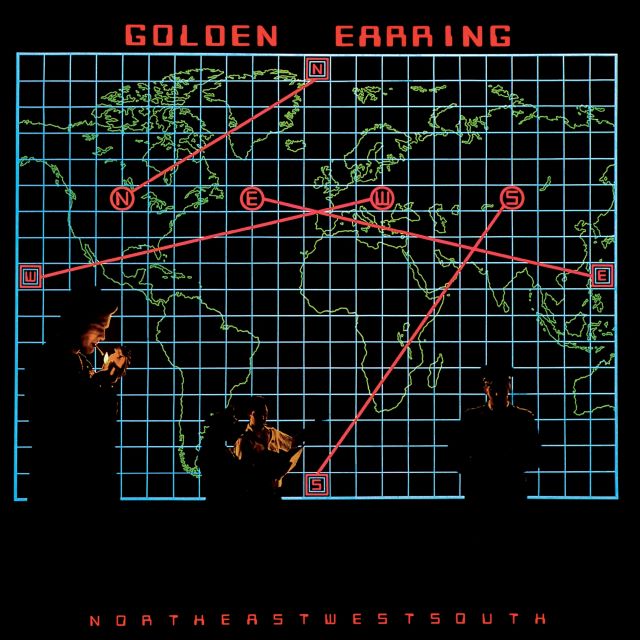
17. N.E.W.S. (1983)
While it wasn’t the only album they released that decade, ‘N.E.W.S.’ is the most eighties-sounding Golden Earring album, and it’s not even close. Generally, this stiff, mechanical production style, fueled by drum and synth pads, just doesn’t gel with me. However, there are moments when ‘N.E.W.S.’ actually works surprisingly well. One reason why is that the use of drum pads and triggers never goes at the expense of Cesar Zuiderwijk’s swing, and some of the songs are just very well-written. It’s the most dated-sounding Golden Earring album by a significant margin, and the experiments that make up most of the album’s middle section are too weird for me to enjoy, but there are too many good songs bookending ‘N.E.W.S.’ to dismiss it entirely.
Recommended tracks: ‘Enough Is Enough’, ‘Clear Night Moonlight’, ‘Mission Impossible’

16. The Hole (1986)
‘The Hole’ is sort of the forgotten Golden Earring album. Its bland album cover doesn’t exactly do it any favors, and neither does its production. The sound of the album is quite eighties, with the massive gated drum sounds, but unlike ‘N.E.W.S.’, the songs on ‘The Hole’ actually sound like they were written for the band to be recorded as live as possible. Had it been released a decade later, with the more earthy rock productions that were common at the time, the same songs would probably have sounded a lot better. As it stands, though, ‘The Hole’ is a fine album full of Golden Earring’s trademark boogie rock style with a few distinct new wave touches. It’s short on true highlights, but it’s a fairly consistent album.
Recommended tracks: ‘Save It for Later’, ‘Quiet Eyes’, ‘Jump and Run’

15. Grab It for a Second (1978)
After carefully streamlining their sound a little on its predecessor, ‘Grab It for a Second’ really shows Golden Earring stripping their sound down to its bare essentials: a handful of powerful riffs, melodies that stick, and no unnecessary frills. It’s just a shame that they seem to run out of steam after the three songs that kick the album off in high gear. ‘Tempting’ in particular is an energetic rock ‘n’ roller that I would have loved to have heard more of. There is more to enjoy on the album, though, even if it is a little more subdued. Closing track ‘Cell-29’ is one of the better atmospheric Golden Earring tracks. ‘Grab It for a Second’ doesn’t quite deliver on its own promise, but when it’s good, it’s exceptional.
Recommended tracks: ‘Tempting’, ‘Cell-29’, ‘Leather’

14. Cut (1982)
Strictly speaking, ‘Cut’ is the second Golden Earring released in the eighties, but it’s the first one that sees them carefully updating their sound to the rock trends of the decade. It’s not a full-on eighties album like its follow-up ‘N.E.W.S.’ is, but the massive hit ‘Twilight Zone’ – present here in its glorious eight-minute form with two fantastic lengthy guitar solos courtesy of George Kooymans, which should really be the only studio version receiving airplay – is made possible by evolving technology. Opener ‘The Devil Made Me Do It’ is righfully considered a classic by the band’s fan base as well. Some of the other songs outstay their welcome by about a minute, which is why I can’t rank this one higher, but the highlights alone make ‘Cut’ worth your time.
Recommended tracks: ‘Twilight Zone’, ‘The Devil Made Me Do It’, ‘Secrets’

13. Paradise in Distress (1999)
When I seriously got into music, ‘Paradise in Distress’ was the current Golden Earring album, and I liked the faux-gospel rock of the opening title track, a fairly successful single here in the Netherlands. Those expecting a full-on rock album after years of mainly touring unplugged might end up disappointed though. ‘Paradise in Distress’ sounds extremely nineties, with a number of songs sounding like trip-hop as interpreted by a rock band. The weird thing is that it works most of the time. A less desireable nineties aspect about ‘Paradise in Distress’ is that it’s much longer than it should be. There is a seriously good fifty-ish-minute album in here somewhere, had they focused on the rockers and the trip-rocky songs. It’s better than what most of their peers were doing at the time though.
Recommended tracks: ‘Evil Love Chain’, ’42nd Street’, ‘Desperately Trying to Be Different’
12. Face It (1994)
‘Face It’ was released in a middle of Golden Earring’s unplugged phase, and many songs sound like they were written specifically to work without amplification. On the other hand, the production is quite elaborate, and ‘Liquid Soul’ is built on the biggest, heaviest riffs Kooymans had played in a while at that point. The worst thing I can say about ‘Face It’ is that it’s a workmanlike rock album. The best thing is that it works because Golden Earring isn’t trying to be anything here, they seem to just want to come up with the best songs possible, and it has some of Rinus Gerritsen’s best recorded bass playing. Also, my hatred of the accordion is well-documented, but I’ll be damned if the sultry ‘The Unforgettable Dream’ isn’t one of the most awesomely unique entries in Golden Earring’s discography.
Recommended tracks: ‘Liquid Soul’, ‘Legalize Telepathy’, ‘The Unforgettable Dream’

11. To the Hilt (1976)
For some reason, I used to think ‘Switch’ and ‘To the Hilt’ were two sides of the same flawed progressive or experimental coin. That is why to this day, it surprises me how much I enjoy ‘To the Hilt’ every time I listen to it. Sure, it is part of the same attempt to be as progressive as possible as its predecessor was, but the songs are just much better this time around, and the extended jams feel a lot more inspired. Admittedly, some songs go on a bit longer than they should, and not all of them hit the bull’s eye, but there are plenty of hooks here to give the songs a lasting impact. Some of them I would even qualify as hidden gems.
Recommended tracks: ‘Nomad’, ‘Sleepwalkin”, ‘Why Me?’
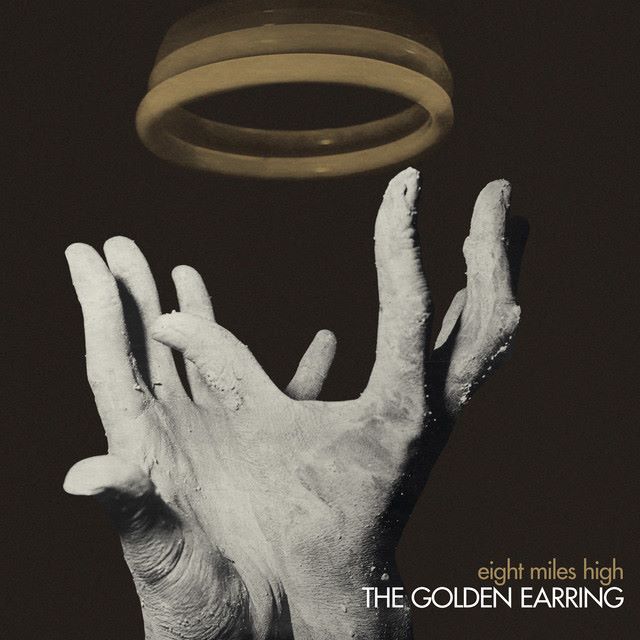
10. Eight Miles High (1969)
Easily the most psychedelic album Golden Earring ever released, ‘Eight Miles High’ sees the focus shifting away from their trademark hooks a bit, though they are still there. The centerpiece of the album is the title track that takes up the entire B-side of the original vinyl, a well-done 19-minute Byrds cover. The rest of the album shows a similarly dark, at times borderline doomy vibe that no Earring album before or since has had, only in much more concise packages. Admittedly, the psychedelic leanings take away a bit of the focus that make the best Golden Earring albums so good, but the original material here ranges from good to downright fantastic. The band would find a better balance between incredibly heavy riffs and their songwriting skills on the next album though.
Recommended tracks: ‘Everyday’s Torture’, ‘One Huge Road’, ‘Landing’
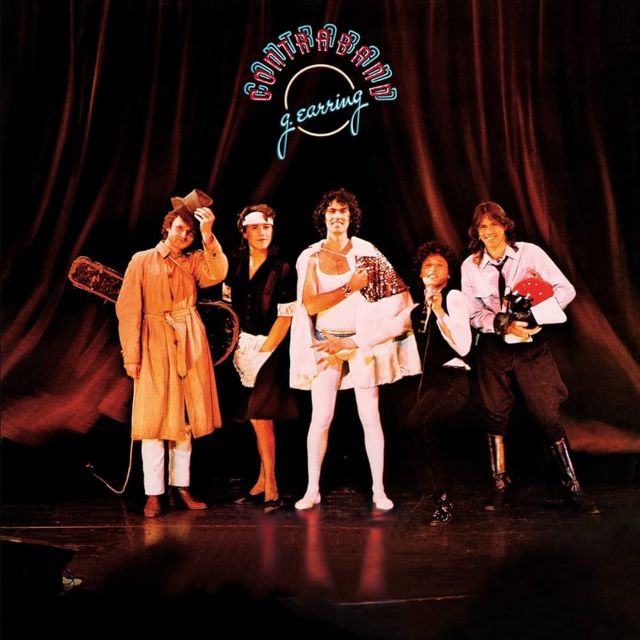
9. Contraband (1976)
‘Contraband’ actually used to be a top three Golden Earring album for me, but when listening to it these days, the teasing, climactic ‘Mad Love’s Comin” and the spritely opening track ‘Bombay’ are doing a lot of the heavy lifting there. That does not mean that there is nothing else to enjoy here. The riffs of ‘Sueleen’ are delicious, and the stately ‘Fightin’ Windmills’ is a fairly unique epic. Slimming their sound down to more accessible hard rock was exactly what the band needed to do at this point. ‘Contraband’ is very heavy on country influences, however, and I simply don’t enjoy country music in general. ‘Contraband’ might be two or three places higher for anyone who does, though.
Recommended tracks: ‘Mad Love’s Comin”, ‘Sueleen’, ‘Bombay’

8. Millbrook USA (2003)
Sometimes, I wonder if ‘Millbrook USA’ has been promoted completely wrong. The album came out around a time when Golden Earring was mainly touring theaters with unplugged shows, and both singles – ‘A Sound I Never Heard’ and the folky stomper ‘Albino Moon’ – have an acoustic foundation. Because of that, people may have gotten the impression that there aren’t any rockers on it, but that could not be further from the truth. In fact, the strong opener ‘The Hammer of Love’ rocks harder than the band had in a while. From then on, it’s pretty much an even split between rockers and acoustic stuff, both delivered with conviction. Bonus points for the Delft Blue cover on an album named after a town in New York.
Recommended tracks: ‘The Hammer of Love’, ‘Kingfisher’, ‘Albino Moon’
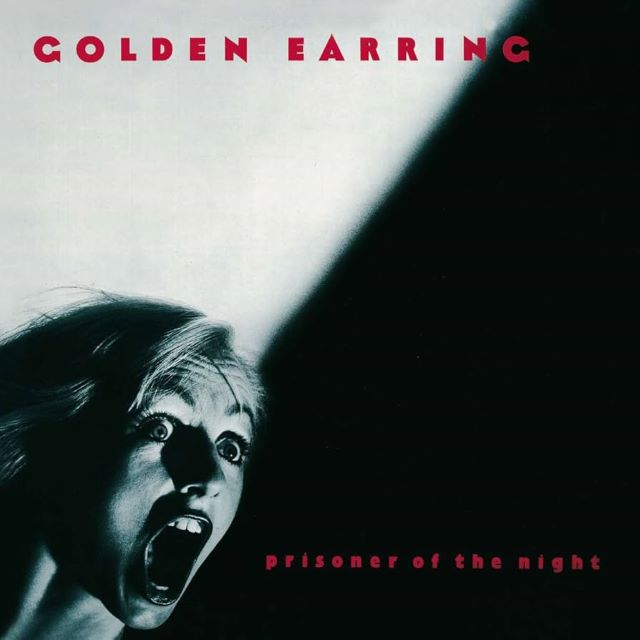
7. Prisoner of the Night (1980)
‘Prisoner of the Night’ followed two albums on which Golden Earring traded its quasi-progressive leanings for a more poppy approach, which I generally thought worked better for the singles than for the album format. However, ‘Prisoner of the Night’ proves that it’s perfectly possible to fill an album with catchy rock songs and make it entertaining all the way through. It rocks slightly harder than its two predecessors, and the band sounds notably more confident, though it’s still late seventies pop rock at its core. Although the first half of the album is stronger than the latter, every song has a strong hook to draw you in and none outstays its welcome. ‘Prisoner of the Night’ is a fairly good introductory release for those unfamiliar with the band.
Recommended tracks: ‘Long Blond Animal’, ‘No for an Answer’, ‘Will & Mercy’
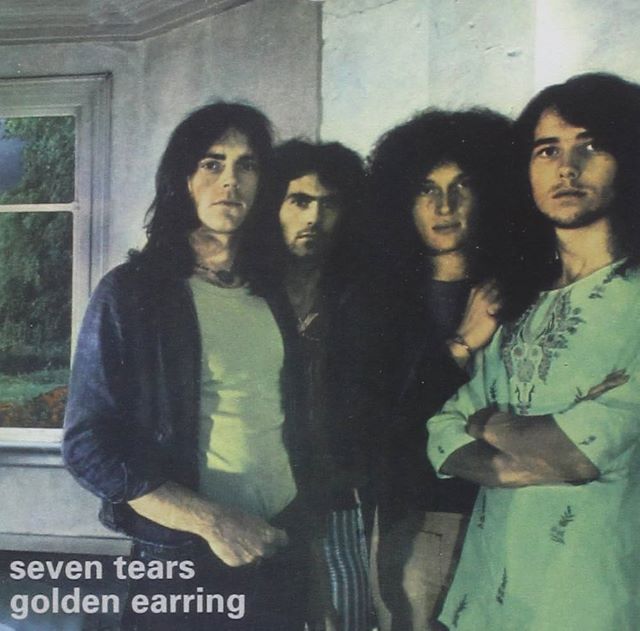
6. Seven Tears (1971)
A minor case of ‘Fireball’ syndrome. ‘Seven Tears’ shows a Golden Earring intent on exploring more epic territories, and quite enjoyably most of the time, but the songwriting isn’t as strong as on its predecessor, while its riffs and grooves aren’t quite as good as those on its follow-up. The crushingly heavy riffs in ‘The Road Swallowed Her Name’ come close, though. Having said all that, ‘She Flies on Strange Wings’ is one of the band’s greatest epics, especially because its more riffy sections rock significantly harder than those of the average prog band, and there are some interesting experiments here. Not sure if the spacey ballad ‘Silver Ships’ was the best track to kick off ‘Seven Tears’, but it is one of the hidden gems in Golden Earring’s oeuvre.
Recommended tracks: ‘She Flies on Strange Wings’, ‘Silver Ships’, ‘The Road Swallowed Her Name’

5. Bloody Buccaneers (1991)
After being adrift throughout the eighties, ‘Bloody Buccaneers’ shows a Golden Earring with an increased focus delivering a collection of hard-driving, yet always accessible rock songs. There are a few residual eighties elements here and there, most prominently the beefy drum sounds and how the choruses are produced, but that isn’t really an issue here, as it actually enhances the band sound rather than replacing it. The exquisite power ballad ‘Going to the Run’ became one of the band’s biggest hits, and the rockers deserve to be held in a similar regard. Going for an early nineties hard rock sound really brings the qualities of the band front and center again. Yes, the album cover is an eyesore, but you truly should not judge ‘Bloody Buccaneers’ by that. This is an awesome rock album.
Recommended tracks: ‘Temporary Madness’, ‘In a Bad Mood’, ‘Going to the Run’

4. Together (1972)
Atypically for Golden Earring, ‘Together’ focuses on riffs and grooves rather than hooky songwriting. While that would be a flaw under normal circumstances, the grooves on ‘Together’ are so good that the album’s set-up works to its benefit, and it is quite a unique entry into the band’s discography. Since these songs are mostly built around musical interaction rather than memorable choruses, there aren’t many live staples on ‘Together’ – the catchy ‘Buddy Joe’ being the obvious sole exception – but the album does kind of feel like a live album without audience noise. It’s also a hell of a lot more concise than most seventies live albums. Since it is low on quote-unquote hits, ‘Together’ is not often mentioned among the best Golden Earring albums, but it damn well should.
Recommended tracks: ‘Brother Wind’, ‘Avalanche of Love’, ‘All Day Watcher’
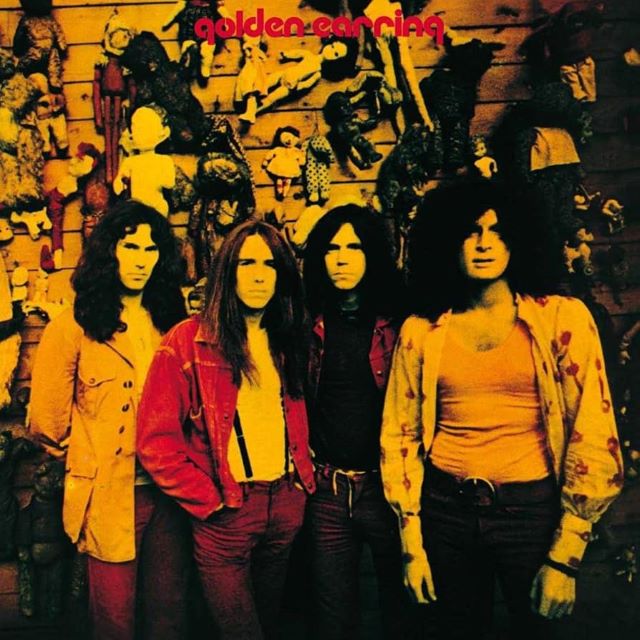
3. Golden Earring (1970)
Some might be tempted to call the first album of what is now considered to be the classic Golden Earring line-up just another mildly folky late sixties, early seventies hard rock album. This is really good hard rock for the era, though. The band has never sounded so much like early Led Zeppelin – ‘This Is the Time of the Year’ is a dead ringer for ‘Thank You’ – but there is quite a bit of the earliest Black Sabbath here as well, as well as some lingering sixties psychedelia and hints of Jethro Tull, mostly due to Barry Hay’s flute. ‘As Long As the Wind Blows’ is one of my favorite Golden Earring ballads, but perhaps even more importantly, the album contains some of the band’s finest riff work to date.
Recommended tracks: ‘As Long As the Wind Blows’, ‘The Loner’, ‘Back Home’

2. Tits ‘n Ass (2012)
Yes, that’s what it’s called, and yes, it ranks this highly. As soon as I heard opening track ‘Identical’ in a televized live performance, I knew it was the best Golden Earring song in decades, and the entire album shows a band unburdened by expectations and trends. ‘Tits ‘n Ass’ is the sound of a band doing what they enjoy most. In this case: hard-driving boogie rock and a handful of well-written acoustic ballads. In all honesty, I did not realize Golden Earring still had an album this good in them fifty-one years after their inception. The power that the rhythm section of Rinus Gerritsen and Cesar Zuiderwijk exudes is just insane. It’s a bit long at 14 songs, but the fact that I wouldn’t know which songs to cut speaks volumes about the album’s consistency.
Recommended tracks: ‘Identical’, ‘Stratosphere’, ‘Dope Runner’

1. Moontan (1973)
‘Moontan’ is generally seen as one of the best Dutch rock albums of all time. It’s difficult to separate that from the fact that the band’s biggest worldwide hit ‘Radar Love’ is on it, but interestingly, it isn’t even the best song here. ‘Suzy Lunacy (Mental Rock)’ stands out like a sore thumb, but every other song is 10 out of 10. The way Golden Earring combines driving hard rock, soulful horns and quasi-psychedelic song structures here just works. None of these elements is new, but I haven’t heard them mixed this way anywhere else. The adventurous, almost Rush-esque closer ‘The Vanilla Queen’ is my favorite Golden Earring song – that finale has to be heard to be believed – while the other nine-plus-minute track ‘Are You Receiving Me’ is built upon some of Cesar Zuiderwijk’s finest drum parts. The shorter songs are fantastic as well. A must-hear for seventies hard rock fans.
Recommended tracks: ‘The Vanilla Queen’, ‘Are You Receiving Me’, ‘Candy’s Going Bad’

 Kevy Metal
Leave a comment