
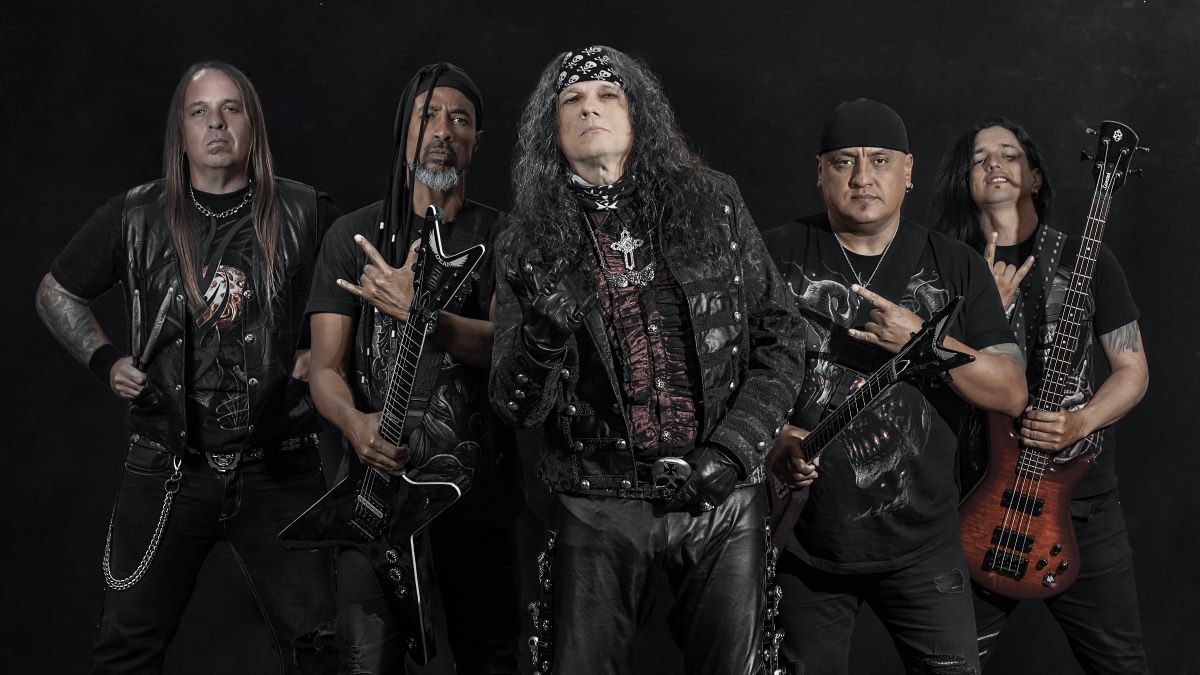
Paul Gillman is a pioneer of the Venezuelan hard rock and heavy metal scene. In the late seventies – before many European countries even had a single heavy metal band – he formed Power Age, which evolved into Arkangel, one of the earliest South American heavy metal bands alongside fellow countrymen Resistencia. Since then, Gillman has more or less become the face and the voice of Venezuelan heavy metal. But while his works with Arkangel are justified classics, I personally think he recorded his best work under his own name after leaving the band. That’s when he really dove head-first into heavy metal.
According to his liner notes in the anniversary version of debut album ‘Levántate y Pelea’, Gillman decided to start his own band with guitarist Ernesto Ferro out of dissatisfaction with Arkangel adding a keyboard player to the line-up and moving in a more commercial direction. Three adaptations of songs he had worked on with Ferro eventually ended up on ‘Represión Latinoamericana’, Gillman’s 1983 farewell album with Arkangel, by his admission a contractual obligation. Since then, he has consistently released great albums. If his cover albums are anything to go by, Gillman’s primary musical love is early seventies British hard rock, but nearly all albums under the Gillman moniker are excellent heavy metal.
To the uninitiated, Gillman’s discography can come across as a convoluted mess of cover albums, re-recordings of his own material, and the occasional studio album. In order to keep things as comprehensible as possible, this list focuses on his all-original studio albums, with one justifiable exception. It is worth noting that most albums bearing the Gillman name are worth hearing, and some re-recordings are improvements over the originals. All of Gillman’s albums are available for download through Bandcamp, and clicking the album titles in the list will take you straight to said album.
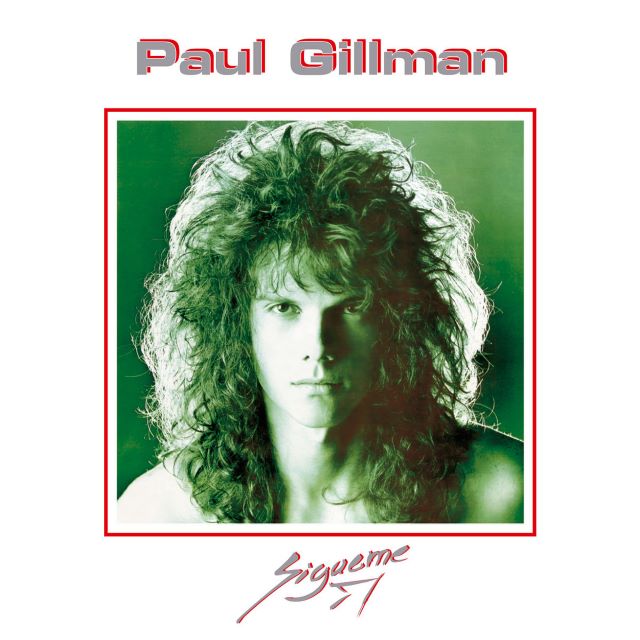
9. Sígueme (1988)
For a while, I wasn’t sure whether I should even include ‘Sígueme’, as it is technically a solo album – it’s Gillman’s only all-original album with his first name on the cover – and it is clearly aimed at a different audience than his other work. Not much imagination is needed to picture Gillman in a cocktail suit singing ‘Sólo Tú y Yo’ in a swanky bar. ‘Sígueme’ is a very slick, poppy album with a big, glossy eighties production job, which makes it sound significantly more dated than the first two Gillman albums that came before it. The production also hurts the good songs that, admittedly, are here. ‘Buscador de Horizontes’ is, in fact, one of the best ballads Gillman ever recorded.
Recommended tracks: ‘Buscador de Horizontes’, ‘En la Oscuridad’

8. El Regreso del Guerrero (1990)
The title of ‘El Regreso del Guerrero’ strongly suggests the need to convince the audience that this is a different beast than its direct predecessor ‘Sígueme’. And it is. It’s not a full-on return to Gillman’s heavy metal roots, as a majority of ‘El Regreso del Guerrero’ actually consists of rowdy rock ‘n’ roll covers, holding off on the most metallic songs until the very end. Ultimately, I prefer Gillman as a heavy metal band, though ‘Sudor y Acción’ is quite a cool melodic rocker, and the bluesy vibe of ‘Vuelve’ works surprisingly well. But the back half of the album proves that heavy metal is what Gillman does best, and the biting rhythm guitar sound practically begs for more of it.
Recommended tracks: ‘F-27’, ‘Los Muertos de Buena Vista / Dr. Kanoche’

7. Levántate y Pelea (1984)
Judged in a vacuum, Gillman’s debut album is better than where I rank it, but my enjoyment of ‘Levántate y Pelea’ is impaired by the fact that much better live versions and re-recordings exist of a majority of the songs. The re-recording of the title track in particular is a massive improvement that helps the song reach its full potential. Also, some songs on here could have some of their fat trimmed. Having said all that, ‘Levántate y Pelea’ is a debut album to be proud of, and it definitely succeeds at getting back the raw power of heavy metal that Arkangel had lost at that point. Given the choice, however, I would listen to the 40th anniversary version full of re-recorded versions rather than the original any time.
Recommended tracks: ‘Corazón del Rock Pesado’, ‘Agonía (Q.E.P.D.)’, ‘Levántate y Pelea’
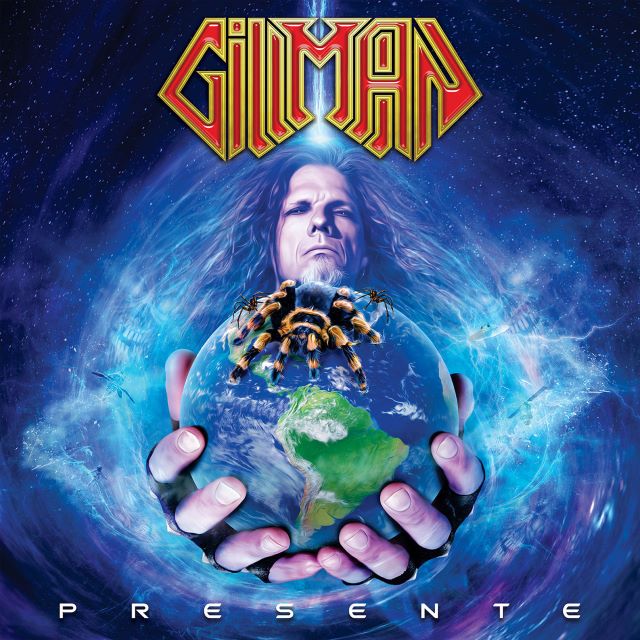
6. Presente (2021)
At the time of writing, ‘Presente’ is Gillman’s most recent studio album, and it’s a rock-solid offering of the sort of traditional, but contemporary-sounding heavy metal that Paul Gillman has been pursuing with guitarist Luis Loyo for the last decade and a half or so. The worst thing I can say about ‘Presente’ is it’s not really anything special, but given the fact that Gillman is still releasing quality albums with over forty years of musical experience under his belt, it doesn’t really need to be. It just needs to be good, and that’s exactly what ‘Presente’ is. It does surprise me, however, that there are live videos from after ‘Presente’ was released in which Paul Gillman’s voice sounds a lot better than it does on these studio recordings.
Recommended tracks: ‘Batalla de Carabobo 2021’, ‘100 Años y Aquí Estoy’, ‘La Parca’
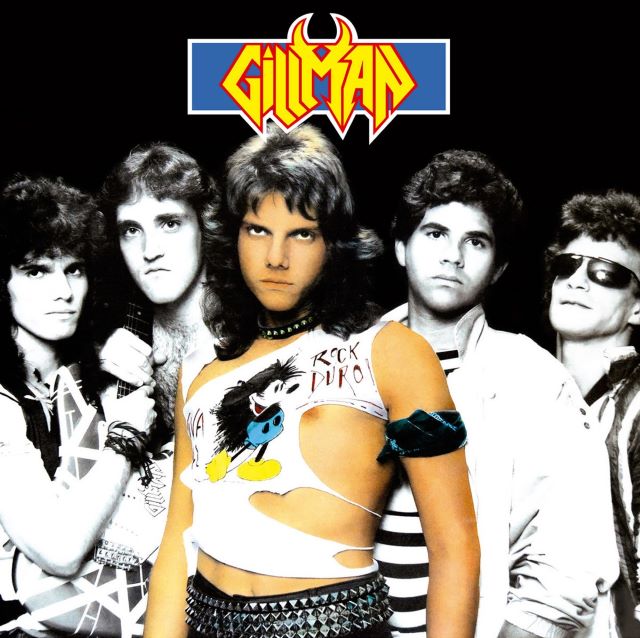
5. El Guerrero (1985)
Compared to ‘Levántate y Pelea’, its follow-up ‘El Guerrero’ is a much tighter album. Not only because it runs for not much more than half an hour, but also because it focuses on Gillman’s harder-edged sound. Two Resistencia members had joined Gillman by that time, and the equal parts hard rock and heavy metal sound of ‘El Guerrero’ – to the point that it could really be categorized as either – isn’t miles away from what Resistencia did on their first two albums. The production is very raw and extremely loud, but that fits the songs, which are generally simple and uptempo. ‘El Guerrero’ could have been a lost NWOBHM classic, had it been made in a different part of the world.
Recommended tracks: ‘La Serenata del Estrangulador’, ‘Impostores’, ‘Dime’
4. Cuauhtemoc (2003)
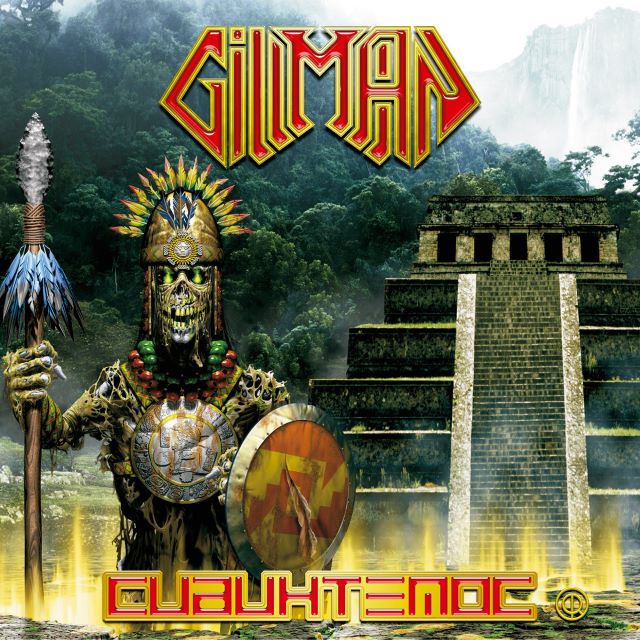
Despite being released nearly a decade later, ‘Cuauhtemoc’ was the follow-up to the successful ‘Escalofrío’, and it largely follows a similar formula. The crushingly heavy riffs courtesy of Facundo Coral and Eduardo Nieto form the perfect foundation for Paul Gillman to tell his stories of Venezuelan history and legends with his powerful vocal cords. The peaks aren’t quite as high as those of the original albums ‘Cuauhtemoc’ is bookended by, but it’s a solid and highly consistent album that plays to all of Gillman’s strengths. Also, ‘Contaminación’ signals the first time Gillman explores the possibilities of an epic, slow-building semi-ballad, and does so well that I don’t understand why it is the only instance of it in Gillman’s discography.
Recommended tracks: ‘Guaicaipuro Cuauhtemoc’, ‘Contaminación’, ‘Avestruz’

3. Escalofrío II… La Conclusion (2012)
‘Escalofrío II… La Conclusion’ is the only Gillman album with a lot of re-recordings that is included in this list, because there is a lot of new material here, and the inclusion of the re-recorded tracks makes thematic sense within the overarching framework of Venezuelan legends, myths, and historical figures. Stylistically, the new material on ‘Escalofrío II’ roughly follows the same formula as the first chapter, only with a slightly less bottom-heavy production, moving it further away from nineties post-thrash and closer to modern power metal. Every song being preceded by narration halts the album’s momentum a bit, but I actually enjoy the context these little vignettes provide. ‘Escalofrío II’ is prime latter-day Gillman, and an essential listen for fans of the style.
Recommended tracks: ‘El Anima Sola’, ‘La Llorona’, ‘Faustino Parra’
2. Inevitable (2007)
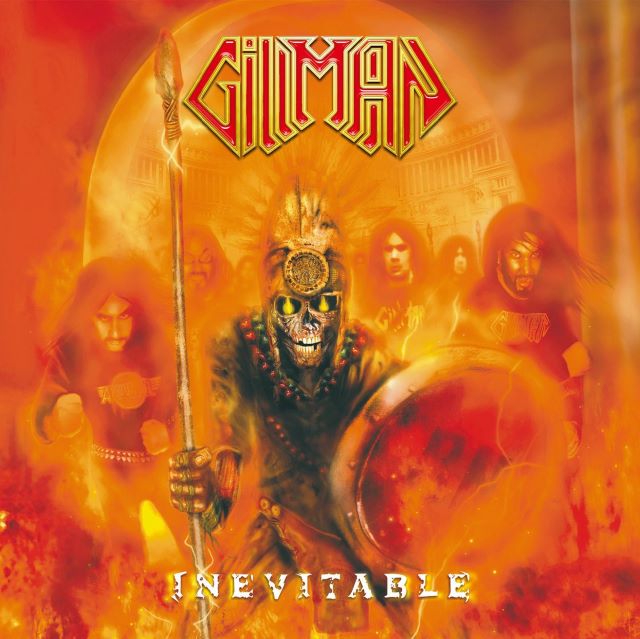
While ‘Inevitable’ is often overlooked as far as Gillman’s live sets go, with only closing track ‘María Lionza’ occasionally appearing, it is honestly one of the best Gillman albums. It expands upon the formula set by ‘Escalofrío’ and ‘Cuauhtemoc’ by adding just a splash of additional melody on top of the heavy, aggressive riffs. The result ends up sounding like something Saber Tiger could have done around the turn of the century, especially when wide chords enter the picture like they do in ‘No Tendrán Cuartel’, albeit a bit more straightforward compositionally. Tightening up some of the drum fills could have improved ‘Inevitable’ even further, but on such a consistently fantastic collection of heavy metal songs, that is really only a minor complaint.
Recommended tracks: ‘La Fuerza de la Unión’, ‘No Tendrán Cuartel’, ‘María Lionza’

1. Escalofrío (1994)
‘Escolafrío‘ was such a leap forward for Gillman in every way imaginable that it’s hard to imagine their sound being what it is today without this album being there first. The riff work of newcomer Facundo Coral is deeply rooted in the post-thrash tradition pioneered by Pantera, but because Paul Gillman’s powerful clean vocals are different than what usually comes with such riffs, there is a lot more melodic depth on ‘Escalofrío’. The Venezuelan legends and folk stories go a long way in giving the album its own character as well. It’s very difficult for me to find anything wrong with ‘Escalofrío’, though the spoken introductions before every song might bother some. The 2013 full re-recording of ‘Escalofrío’ sports a slightly brighter guitar sound, and while I prefer the original production, it is also very much worth checking out. Either version is a masterpiece start to finish.
Recommended tracks: ‘El Poema Negro’, ‘El Hachador’, ‘El Tirano Aguirre’
Many thanks to Ariah Records for factchecking and providing the photo.

 Kevy Metal
Leave a comment