
A couple of months ago, I did something I wouldn’t normally do, and replied to a YouTube comment. It was a comment someone made on the video of ‘The Sun in My Hand’ from Heathen’s new live album ‘Bleed the World’, and it read “who listens to live albums these days?” Well… I do. I have for decades, and likely will continue to do so. This commenter did – perhaps unwittingly – bring up an interesting point though: live recordings are more readily available than ever, but live albums aren’t anywhere near as common as they used to be. And yet, I think it’s important to keep taking the produced live recording seriously as a medium. Please let me explain.
My Personal History with Live Albums
Back when I was an early teenager in the late nineties, file sharing was in its infancy, and streaming media, though it existed in some form or another, wasn’t a viable medium due to limited internet speed and paying per minute for dial-up connections. Getting a band’s albums and listening to them was the easiest way to get acquainted with their music. But what is your starting point as someone who doesn’t know the band’s full discography yet, especially if you’re a 13-year-old with a paper route as your only source of income?
Compilation albums appear to be the answer. However, these tend to contain only the best-known songs of a band, the ones that make the album a guaranteed sell if casual listeners only look at the titles. Those don’t always give the best impression of what a band’s body of work actually sounds like. The devout fanbase of a hard rock or heavy metal band would want to hear the deeper cuts, the album tracks that don’t necessarily become a hit singles. Those are exactly the songs that would be live staples, which is why they generally end up on live albums as well.
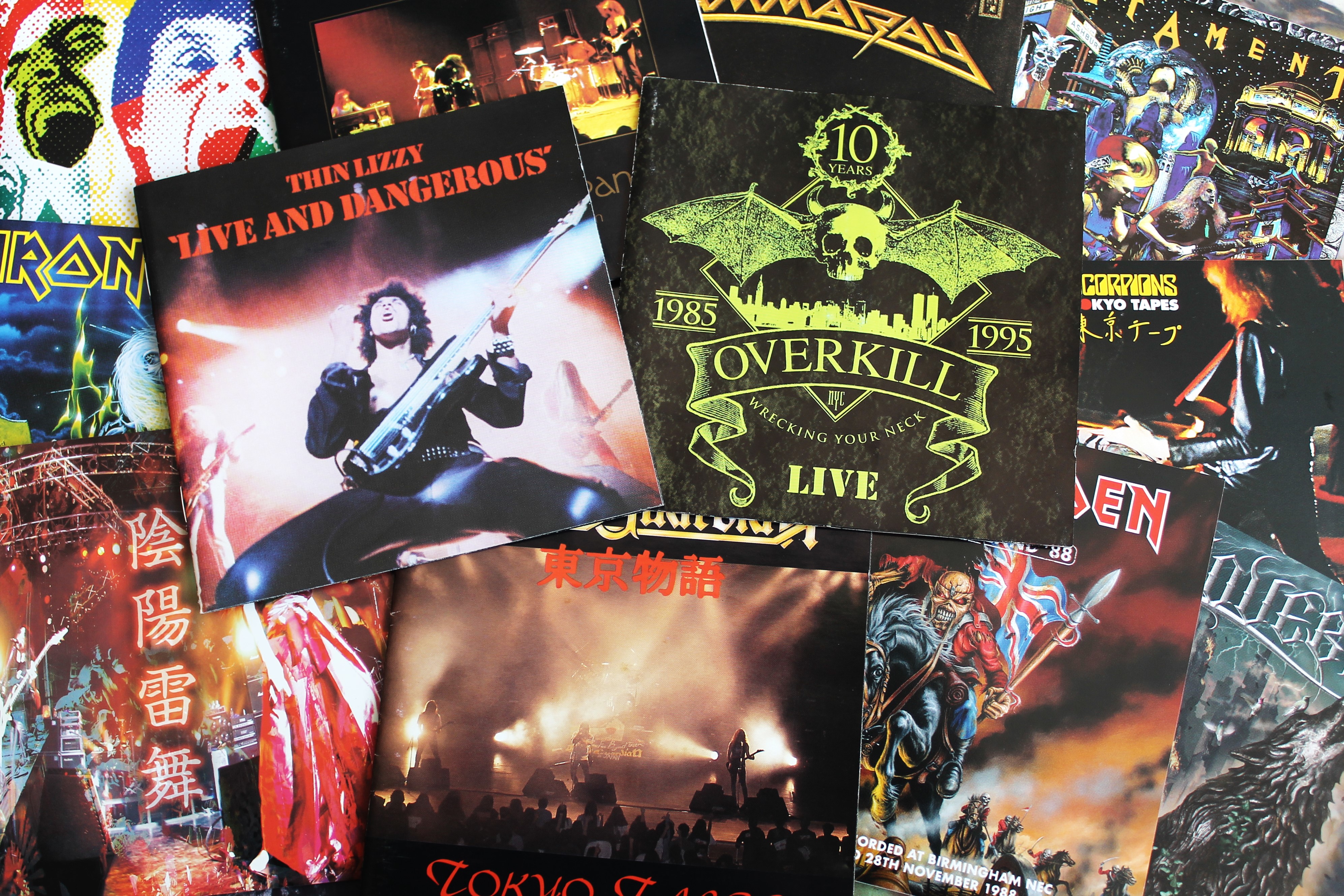
And so, live albums were often the first thing I heard from bands I ended up loving. ‘Maiden England’ made me an Iron Maiden fan, ‘Wrecking Your Neck’ made me obsessed with OverKill, ‘Live at the Fillmore’ was the only Testament album I had on cd for the longest time, ‘Tokyo Tapes’ and ‘Tokyo Tales’ were my introductions to the Scorpions and Blind Guardian respectively, and I spent a full summer listening to Iced Earth’s ‘Alive in Athens’ almost exclusively. ‘The Time of the Oath‘ was my first Helloween album, but I couldn’t wait to get my hands on ‘High Live’ after that.
Why Release Live Albums at All?
As introductory releases, one could argue that the arrival of reliable high-speed internet and streaming platforms made live albums obsolete. There is some room for nuance there, of course, as not every band’s discography is available through the major streaming platforms, and you could still choose to listen to a live album before touching any of a band’s studio work. But for the sake of argument, I will concede that there are easier ways to get acquainted with a band’s material than buying a live album these days.
Then what about the industry reasons for releasing a live album? It used to be a relatively cheap way to bridge the gap between two studio releases, especially if an artist didn’t quite have enough material for a new one yet. Also, and I think this reason is often somewhat overlooked, it gave record labels and managements the chance to show off the popularity of their artists. After all, a successful live album requires a certain amount of material that gets people enthusiastic enough to cheer, which could serve as evidence of the success of promotional activities.
Artistically, live albums are potentially interesting as well. Perhaps less so for contemporary metal bands who try to replicate their albums down to every last detail on stage, but I’d argue those bands have bigger problems than not releasing live albums. The stage can bring a whole different energy to existing material, though, especially if there is an improvisational element in the music. Also, if you would like to show how a new line-up or improved musicianship has enhanced existing material, live albums offer a sneaky way to circumvent re-recording albums, which are often controversial.
Justified Criticism of Live Albums
Of course, live albums are also often criticized, and sometimes, the criticism is justified. Whether they have additional value in general is a discussion for a different day, but there are plenty of bands whose live albums really don’t sound all that different from their studio-recorded material. This might be the result of a band excessively overdubbing their live albums – which, as someone who counts Thin Lizzy’s ‘Live and Dangerous’ among his top five albums of all time, I don’t necessarily see as a problem – or the band simply isn’t all that interesting live.
Another potential turn-off for people are the long, extended jams that come with live albums in certain styles. These potentially elevate live versions of songs to new levels. On many live albums from the seventies in particular, however, the musicians involved were just too high or otherwise wasted to notice their jams had stopped being interesting minutes ago. Much of their audience was as well, but an album you can play at home is a significantly different experience. Despite being a massive Led Zeppelin fan, I have to admit every single one of their live releases suffers from this issue.
Then there is the “why not release new material instead?” argument, which in a vacuum, and as a “songwriting first” kind of guy, I would agree with. However, that new material might not exist yet. And if music history has proven anything, it would be that rushing the writing process is more detrimental to a band than stopgap releases, generally speaking. Live albums with new original material exist, either partially or entirely, but I suspect those are not treated as regular live albums by those who don’t like them.
Did Streaming Video Kill Live Albums?
Okay, that subheader might be overstating it a bit. After all, new live albums are still frequently released, especially in certain scenes and styles – more on that later. Looking at what makes people less than enthusiastic about the prospect of a live album these days, however, I would argue that streaming video, and to a lesser degree streaming audio, has had a significant impact on the demand for live albums. Within seconds, you can pull up a live recording from any band you’d like to hear, and a good number of them are professionally recorded.
The problem is more nuanced, though. And much of that has to do with how people consume streaming media. Professional and experienced film crews are often present at big festivals, which means that a slick-looking, good-sounding recording of a full live set should not be a problem. However, this is where it becomes clear that a live recording and a live album aren’t necessarily the same. Obviously, I’m generalizing here, because there are people who do a fairly good job at them, but a surprising amount of these soundboard recordings are mixed atrociously.
Properly mixing and mastering a live recording takes time. And skill, but time is the main issue here. Many comsumers of streaming media demand their content to be available as quickly as possible, which means taking the time to put together a somewhat decent audio mix is going to cost you views and – at least in YouTube’s case – ad revenue. The relative lack of live albums would not annoy me as much if these (free) recordings were mixed well, and some channels do actually take the time to do so, but I generally vastly prefer a live album.
Where Have Live Albums Gone?
Despite all that, live albums have never gone away. In fact, in some scenes, they are much more common than new studio albums. Every time Joe Bonamassa farts, they release a live album of it; since 2014, he released six new studio albums and thirteen new live albums, usually combined with some kind of video release. The progressive rock scene fares similarly. Steve Hackett and IQ, for instance, have released staggering amounts of live albums over the past decade. My theory is that this is because the target audience of these acts is older; the kids have moved out, so they have disposable income to spare.
Another factor is the familiarity with the physical medium. In markets where music is still relatively frequently bought on physical media, such as Germany and Japan, live albums, dvd’s, and Blu-rays are much more common than outside of those markets. And that isn’t necessarily genre-specific. German pop sensation Helene Fischer releases a live album and video for just about every tour she does, and bigger acts in Japan are almost expected to put out at least one live release in between two studio albums. That would not happen if nobody bought them.
The covid lockdowns also caused a small peak in live releases. Some artists were quite creative in finding a source of revenue – or simply joy – when they could not perform in front of physical audiences, and many of the livestreams have found their way onto cd’s, vinyl and video formats since. An interesting case of live releases and streaming media actually enhancing each other. In all honesty, that resurgence may have been temporary in nature, but I hope that it reminded some artists of the excitement of a live release.
There Is Still a Market for Live Albums
So let’s stand up for the live album. Especially if the bands you enjoy are really good live bands, even the ones that may not have the big visual stage show that encourages immortalizing it on video. Today, it’s easier than ever to record concerts in a way that sounds good enough for release, and there is clearly a market for it. How else can you explain that the likes of Pearl Jam, Metallica, Jack White, and Bruce Springsteen still release every concert they play, though not always physically anymore?
Let me play my part in standing up for the live album by sharing some of my favorite recent live albums as playlists below, the first two of which get bonus points for being audio-only releases. Most of these are available in physical formats as well, but only listening to live albums en masse will alert the industry that there is still a market for them. And for what it’s worth: I still think it’s the perfect way to get acquainted with an artist’s biggest hits as well as their fan favorites in one go.
 Kevy Metal
Leave a comment