
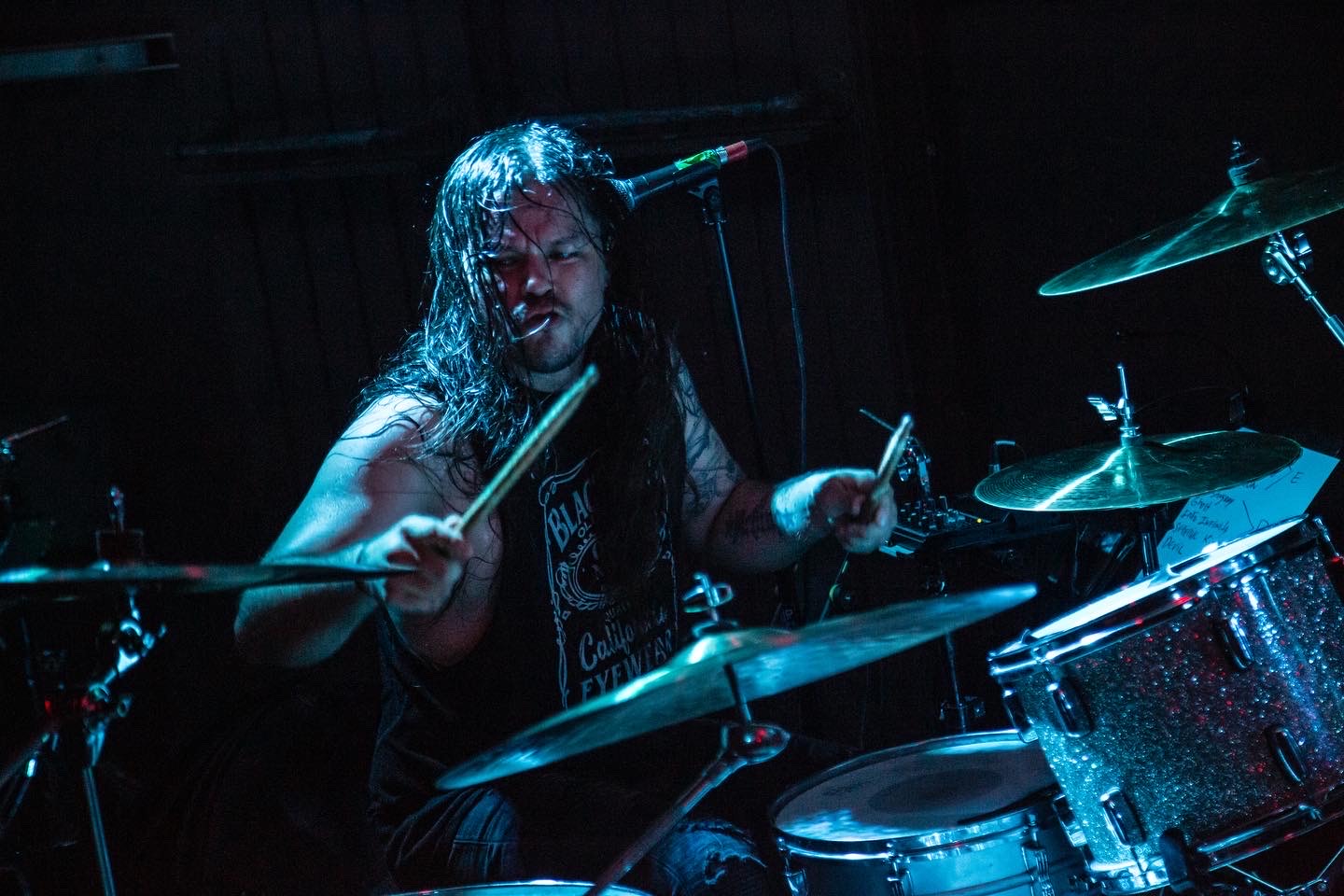
There aren’t many Peruvian drummers with a schedule as busy as that of Fred Aching. That was the case when he still lived in Peru, but his resume has expanded significantly ever since he moved to California. Between session gigs, he has recently found time to do his own thing with Dead Groove, with his American partner Holly West on bass and vocals and Peruvian guitarist César Gonzales Salaverry, with whom Aching used to play in Mauser.
My conversation with Aching takes place shortly before he goes back to Peru to play a concert where Dead Groove and Mauser share the bill. “I’m pretty stoked to go back to Peru and see everybody”, he smiles. “Almost all of the musicians I have ever worked with are going to be there. Also, I will finally get to see Mauser without me playing with them at all. It’s the first time! So it’s going to be fun.”
While Aching and West are there, there are other plans for Dead Groove as well. “We’re going to record two new songs”, he explains, “After that, we’re going to be working on new material. It’s going to be similar to what we did before, but a bit simpler. There’s a new song we have been working on which has kind of a Jimi Hendrix’ ‘Fire’ kind of vibe, but more modern.”
Natural reaction
“Dead Groove is where I finally get to do my own thing”, Aching explains the need to start the band amidst his busy schedule. With the members spread out over California and Peru, the logistics are a challenge. “We came up with this band near the end of the pandemic”, says Aching. “So everything we did happened through Zoom. César and I would get together. He would send me some acoustic audio files and I would come up with some ideas. Then he would put the whole structure of the song together.”
The guitarist’s experience as a producer plays an important part in the songwriting process. “He has a different perspective”, Aching nods. “He doesn’t really care all that much about guitar parts. His focus is more on the song being easy to the ear and trying to have some hooks in there. And I’m going always for a natural reaction to what the riffs are. Pretty organic.
When Holly comes up with the melodies, the most difficult part starts. She doesn’t speak Spanish and César doesn’t speak English very well, so I’m in the middle trying to make their suggestions clear to each other. But we’re always open to what’s best for the song. Now that we are going to be able to finish writing this new song together, it’s going to be different for sure.”
Time to Shine
Aching’s career trajectory is an unusual one. And that has been the case since the beginning. “My dad was in a band when I was about thirteen, and I was the drum tech”, he says. “Later, when I was sixteen, I started playing in that band. Because of that, I had to learn everything: cumbia, merengue, salsa, all these Latin rhythms. But also drums, congas, timbales and all other sorts of percussion. I think that is actually what made me a good musician: just knowing all these different genres. One song in the set was a rock song. That was the best part of the night for me: this is my time to shine!
When I was seventeen or eighteen, I started getting calls for different gigs. I ended up working with Victor Hugo Glenny, a really good guitarist from Lima. We had a power trio and we started out playing old Andy Timmons stuff. We rehearsed those songs to perfection. Later on, we put out a record. Then, one time, I was opening for the band Piranha. Mauser’s singer Alex was the singer in that band, César was their guitarist and Luis, the other guitarist in Mauser, was their bassist. We were about the same age. That’s how Mauser came about.
That’s when I started playing more metal and rock, with original material. At the same time, I was also recording with a lot of different producers as a session drummer for various artists. That was my job in Peru. I’ve also done a lot of tributes. When I was in Peru, I did a Tool tribute, a Pantera tribute, Alice in Chains and Soundgarden with Mauser… Tributes help a lot to make you a better musician.
However, when my dad brought all kinds of instruments home, I wouldn’t be interested. I was just drawing and painting and my sister would be playing all the instruments. When I finished high school, my mom said I should study something else than music, so I went to graphic design school for four years while I was gigging in Peru. That was the best position to be in, because now I have a job at Cleopatra Records as a graphic designer.”
Gone for the Summer
While the move to California has been good for Aching’s career, it wasn’t necessarily planned as such: “In Peru, I was gigging with a bunch of bands. I was playing with a popular eighties rock band called Rio, with Mauser… Basically the same thing I’m doing here; I was playing with about five bands, but Mauser was my main band. I met somebody here in the United States when I visited the NAMM Show. Then she invited me to come here, and then we got married, so I ended up staying.
I would come here every year to take drum lessons with drummers here, such as Glen Sobel, who played with Alice Cooper, and Thomas Pridgen, who used to play with The Mars Volta. And many more. I would just come here, take lessons and get better. I never went to a music school, I’ve always been a private lesson guy. What I would make from playing with my dad – which wasn’t a lot, because I was thirteen – I would use to pay for private lessons.
When I left Peru, I told the guys in Mauser: I will be gone for three months during the summer, which in Peru is from January to March. But I’m going to leave you guys my clothes. Here’s my jacket if you want it, things like that. And they thought: oh shit, he’s not coming back. And I didn’t. They have a great left-handed drummer now, Hans Menacho, who played with Masacre and …Por Hablar.”
Craigslist
“When I came here, I had to start from zero. Nobody knew me. I was a mover for about a year. Then I started meeting people here and there, using Craigslist a lot. Craigslist is the most shady thing to look for a job. But it saved me, absolutely. I was about to take some gigs at churches. There would be some pastors calling me: on Sunday we have this thing and we need a drummer. But I never ended up doing that, because there were a bunch of bands asking for touring drummers.
That’s how I got to play with this band from San Francisco named Castle. They’re really cool. We found each other through Craigslist and that was how I got my first tour with a band from America. That was back in 2017. After that I joined a band in LA called UnderHander. Fusion, kind of like Screaming Headless Torsos from New York, but more rock. Another band I found through Craigslist.
The producer of this band was Billy Graziadei from Biohazard. When I contacted them, they said: come to Billy’s studio, we will meet there. That’s how I got to meet Billy for the first time. He really liked what I did when he saw me play. When I saw photos of his band Powerflo without a drummer, I reached out to him and said: just so you know, I just got my green card and I can play here in the US or in Europe, just let me know if you need me. And he told me: we’re actually going to audition drummers, can you be there?
I went to the audition and there were about ten to twelve drummers. I did the audition and after a month, I thought: okay, I guess I didn’t get the gig. But a month later, Billy calls me: alright dude, everybody wants to play with you, it’s your gig. That was the first time that I played in Europe.”
A New Way of Playing
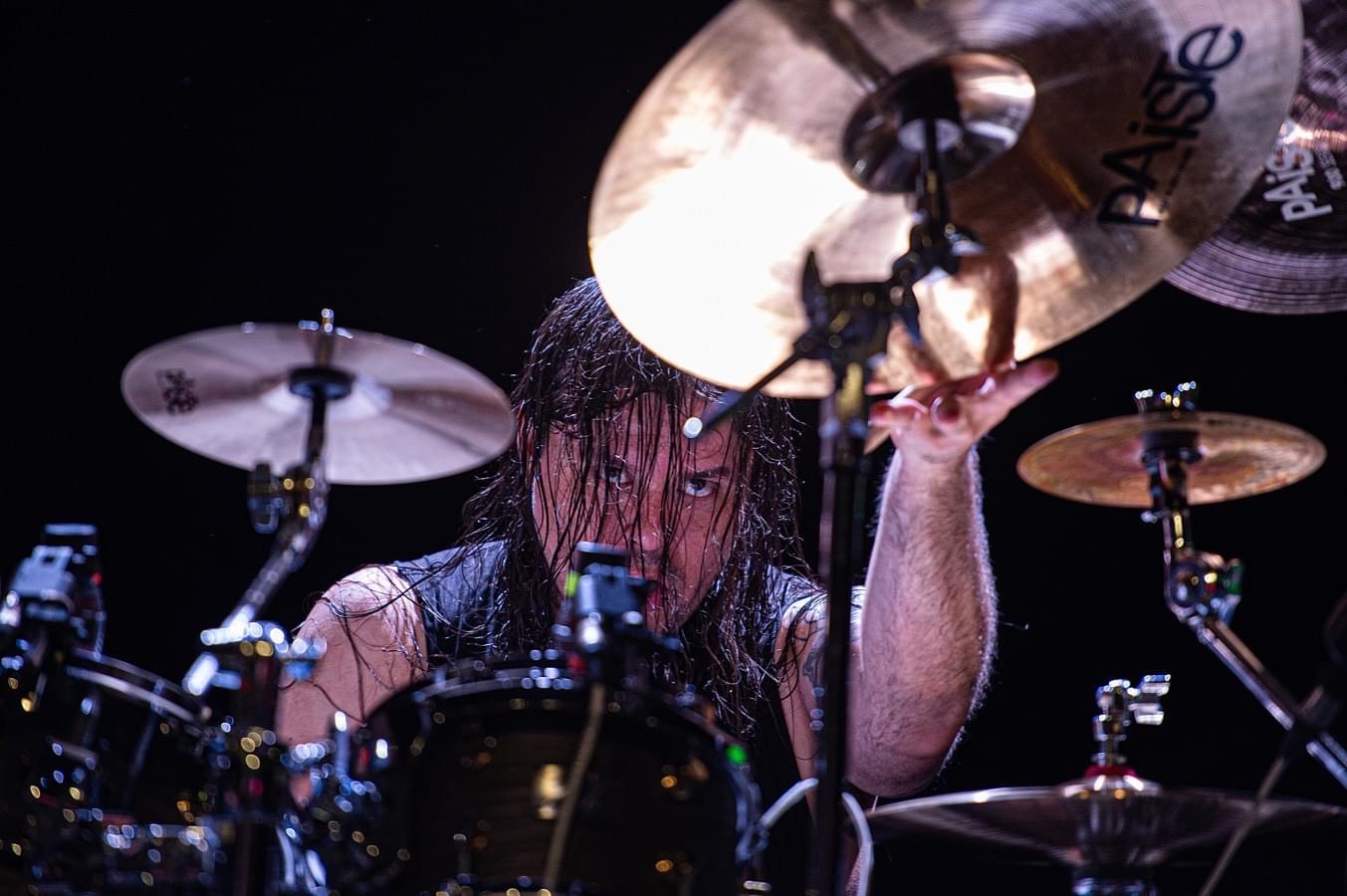
“After Powerflo, Billy told me he had some issues with the drummer for his own original band BillyBio and he asked: can you play it? And I said: yeah, sure. I just said yes without even listening. I just heard ten seconds or something. Growing up, I was never into punk. I was a Dream Theater nerd; I even have Dream Theater tattoo. But I listened to BillyBio’s songs and I thought: alright, I’m going to learn a new way of playing!
It was great. Everything came easy, we went on tour with Madball. That was the second time in Europe; we did a tour called the Persistence Tour. It was Agnostic Front, Gorilla Biscuits, BillyBio and a bunch of other bands. Ten shows in a row. It was awesome! That was when I fell in love with punk. It was a really cool scene. It was crazy, but they are all sober, all straight-edge people. Very interesting.
All this time, I would be playing jams here in Hollywood that were set up by a guitar player and his wife. Somehow I got in there. A friend of Billy’s was going to sing a Rage Against The Machine song and needed a drummer. I got in there, and the guitarist and his wife got to see me. Then they started calling me to play with the guitarist. His name is Ira Black, who played with loads of metal bands. Ira would call me every time, because he knows I will learn everything I don’t know.”
Working Band
“Then I went to Peru to record ‘Maverick’ and ‘The Book of the Dead’ for Dead Groove, and I got a call from Ira’s wife: hey, there is this hard rock gig, the band is called BulletBoys. Ira plays guitar with them and Y&T’s bass player… It was a really good gig; it’s a really good working band that plays way more than what I was doing. We’ve been playing together for two years now and last year I got the gig with the Megadeth guys.”
The Megadeth guys Aching refers to are part of Kings of Thrash, the Megadeth tribute band featuring former members David Ellefson, Chris Poland and Jeff Young. “That also came from the jams”, Aching emphasizes. “There was a Big 4 tribute and I was the house drummer that night. They saw me playing Slayer’s ‘War Ensemble’ and thought: that’s the guy.
I had been playing Megadeth songs since I was sixteen with my cousins in a neighborhood band. At the time, I couldn’t even imagine that I would be playing with guys like Chris Poland and Ellefson. The stuff I was playing at the time was mostly the stuff with Marty Friedman, so I did really have to learn twenty songs for the set, but it all worked out great.”
Bubble
Aching is grateful for the opportunities the move to America has given him: “The thing in Peru is that it’s really difficult to make it as a band. To start with, Lima is divided into two parts. You have the urban downtown area and that is where you have all the metal. All the heavy stuff is in downtown Lima. Some of the venues there are like the CBGB’s of Peru. The seediest venues for metal. All the metalheads are there, because all the cool bands play there.
But then you also have areas like Barranco, which is the other side, on the coast of Lima. And that’s a totally different crowd. They are more like hippies and surfers. So you’ve got your two crowds there. If you play in downtown Lima, the people from Barranco don’t go there. And the other way around.
Mauser always played for both audiences. In Lima, we opened for Cavalera Conspiracy and the Argentinian band Carajo. When I already lived in the US, they opened for Black Label Society. I’ve always told the guys, even after I left the band, that they should maybe record two or three songs in English. But nothing came of it yet. However, if you want to get out of the Latin-American bubble, you have to do something else.”

 Kevy Metal
Leave a comment