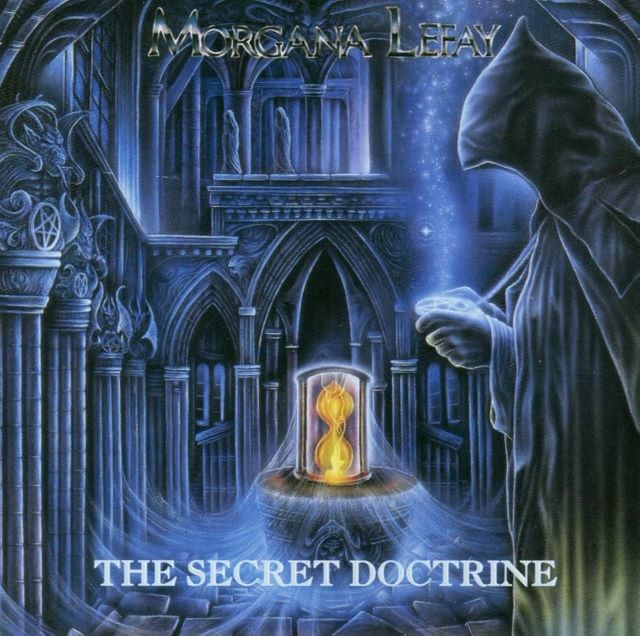
Possibly topping my list of metal bands that never got the recognition they deserved because the nineties happened is Morgana Lefay. Being mislabelled is part of the problem, as the Swedes were always lumped in with their country’s power metal scene, which doesn’t do them any justice. Morgana Lefay’s music was always darker, generally slower and much more contemporary than that of their peers. Also, Charles Rytkönen is one of the most amazingly expressive lead singers in metal history. While the band would get even better, ‘The Secret Doctrine’ proves they had most of their strengths figured out early in their career.
In a way, I understand the mislabelling issue. Morgana Lefay isn’t the easiest band to categorize. There are vague similarities to Crimson Glory and ‘Into The Mirror Black’-era Sanctuary, but Morgana Lefay isn’t quite as proggy. The riffs of Tony Eriksson and Tommi Karppanen are significantly heavier as well, which combined with the moderate, almost doomy tempos of most of their material makes the music feel like a bit of precursor to the later groove/thrash trend. Those bands never had the degree of theatricality the Swedes have though, with Rytkönen’s clean, but raw vocals often drawing somewhat justified comparisons to Savatage’s Jon Oliva.
Whatever this type of metal is called, however, it’s excellent. Eriksson and Karpannen kick in your teeth with their thick riffs, which despite their obvious thrash influence get quite a great deal of their power from the slow tempos. Their palm mutes are incredibly punchy, but they don’t overpower the mix. Because of these subdued tempos, the somewhat faster tracks like ‘Paradise Lost’ and ‘Dying Evolution’ immediately feel like ripping thrashers without interrupting the overal bleak atmosphere. Elsewhere, the steep contrast between bright-sounding acoustic guitars and crushing heaviness justifies the “power” in power ballads ‘The Mirror’, ‘Alley Of Oaks’ and ‘Last Rites’.
Another reason why ‘The Secret Doctrine’ is the best early Morgana Lefay record is the relative lack of filler. Sure, ‘Last Rites’ and the title track are remakes from their (extremely limitedly distributed) debut album ‘Symphony Of The Damned’, but they fit the overall atmosphere here. Only the juvenile ‘State Of Intoxication’ is a bit shallow, but that is abundantly compensated for by excellent mid-tempo crushers like ‘Rooms Of Sleep’, ‘Nowhere Island’, ‘What Am I’, ‘Cold World’ and the vaguely oriental-sounding ‘Soldiers Of The Holy Empire’. Even the unimaginatively-titled ‘Lord Of The Rings’, which literally quotes the opening poem of ‘The Fellowship Of The Ring’, is a surprisingly entertaining stomper.
Though ‘The Sacred Doctrine’ is not quite as good as the band’s 2004 masterpiece ‘Grand Materia’, it is an early highlight in Morgana Lefay’s discography and without a doubt the best album to pick up if you want to know more about the origins of the Swedish band. Ulf Petersson’s (and the band’s) production is a clear product of the early nineties, but not unlike Scott Burns’ Morrisound productions, I actually think that works in the music’s favor. It gives the guitars a claustrophobic, pulsating feel that fits Morgana Lefay’s downtuned riffing perfectly. If you like your metal darker and more aggressive than the average European power metal band without sacrificing any of the theatricality, there are hardly any better options than Morgana Lefay.
Recommended tracks: ‘Rooms Of Sleep’, ‘The Mirror’, ‘Dying Evolution’, ‘What Am I’
 Kevy Metal
Leave a comment