
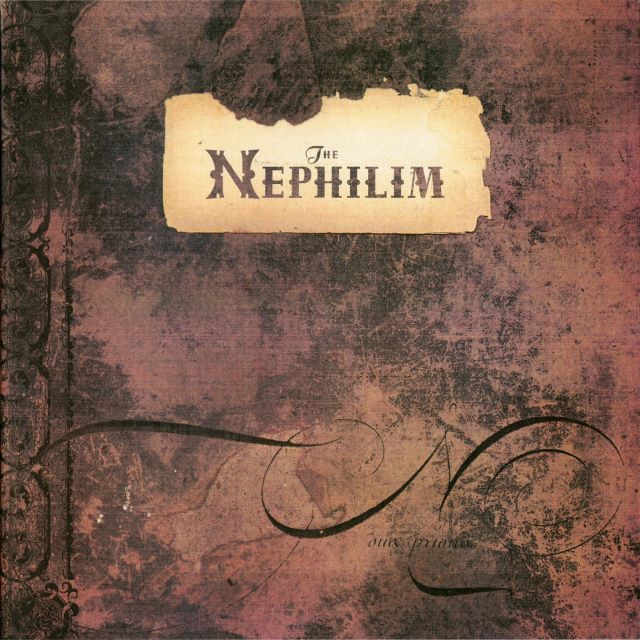
A significant portion of Fields Of The Nephilim’s fan base still considers their sophomore album ‘The Nephilim’ their best album. And while I personally prefer its follow-up ‘Elizium’, it is easy to understand why. It certainly delivers on the promise that the band’s somewhat underdeveloped debut album ‘Dawnrazor’ occasionally showed. Despite frequently being accused of merely copying The Sisters Of Mercy, their second album features Fields Of The Nephilim crafting its own sound that is indebted to gothic rock as much as it is to psychedelic rock and the soundtracks of the westerns they modelled their stage garb after.
Despite the fact that it’s obviously the same musicians playing on them, the original three Fields Of The Nephilim albums each are a world of their own. ‘The Nephilim’ is significantly more refined and cinenmatic in scope than ‘Dawnrazor’, but not as ethereal and melodic as ‘Elizium’. The derisive “gruff Andrew Eldritch” label that Carl McCoy often got is not entirely unjustified here, but though I prefer his cleaner approach on ‘Elizium’, it certainly fits the desperate, yet somehow defiant mood of ‘The Nephilim’. The production is ambitious, adding a layer of keyboards and samples in a way that doesn’t even feel like an added layer, but rather an integral part of the songs.
In addition, the band had not yet shed its Morricone-isms on ‘The Nephilim’. And while it would be easy to incorporate those into the overall sound in a way that sounds like they were trying to be clever, Fields Of The Nephilim does it rather seamlessly, enhancing the atmosphere instead. Opening track ‘Endemoniada’ is easily the best example of this. More than half of the track is spent building towards the explosive, but brooding main section through low-key arpeggios and slide guitar bits that seem to suggest a solitary desert night. The dynamics of the song are nothing short of incredible.
‘Endemoniada’ is hardly the only highlight here, however. More concise tracks like the venom-filled ‘Chord Of Souls’ and the incredible ‘Moonchild’ would soon become live staples and the combination between McCoy’s intense vocals and Tony Pettitt’s equally melodic as atmospheric bass lines provide the basic structure for ‘Celebrate’ and the classic – though slightly overlong – ‘Last Exit For The Lost’. Elsewhere, Tony Wright and Peter Yates make the most out of the broad two guitar approach, often by mixing chiming arpeggiated chords and massive reverberating riffs, as evidenced by the dark, shimmering cinematics of ‘Love Under Will’ and ‘The Watchman’.
With all the elements Fields Of the Nephilim employs here, it is easy to end up with an album that sounds pretentious or simply laughable, but somehow, it works. ‘The Nephilim’ cemented the band’s reputation as the new hopefuls for fans of the darker end of the rock spectrum in the late eighties. Even the less notable songs on ‘The Nephilim’ are very much worth hearing and work wonders for the dynamics of the album. It also finds the perfect middle ground between the raw aggression of ‘Dawnrazor’ and the psychedelia-infused ambition of ‘Elizium’. An excellent album by a band that would never be content doing what others have already done.
Recommended tracks: ‘Endemoniada’, ‘Moonchild’, ‘Celebrate’, ‘Love Under Will’
 Kevy Metal
Leave a comment